Import Export Business in India: The Complete 2026 Starter Guide (Licenses, Products, Financing & Mistakes to Avoid)
Learn how to start an import export business in 2026: licenses, IEC, profitable products, finance, digital tools like EximPe, and key mistakes.
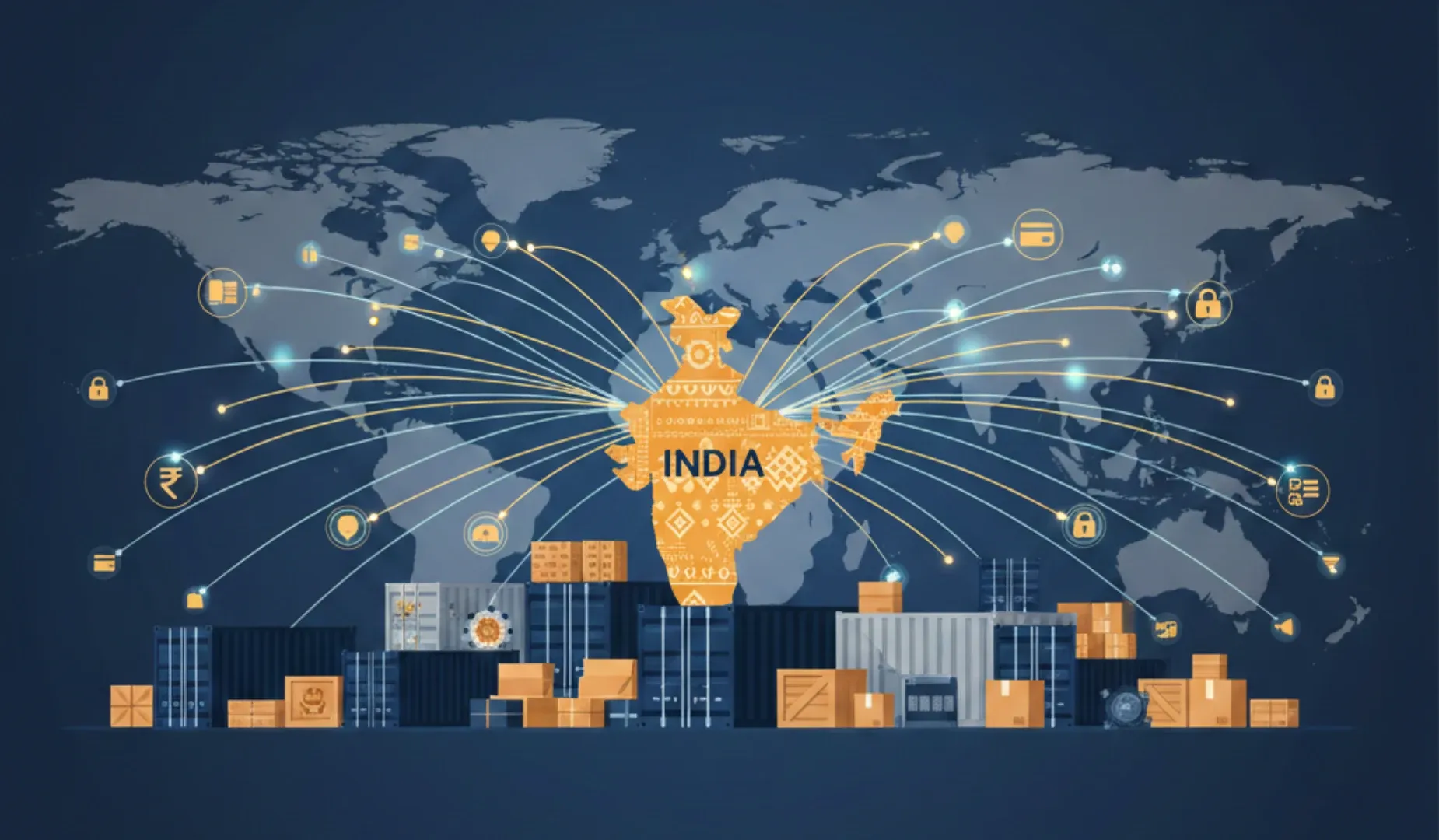
Starting an import-export business in India in 2026 means tapping into a huge global demand while leveraging India’s strong manufacturing base and digital payment ecosystem. With IEC registration now fully online, smarter export finance schemes, and RBI-licensed cross-border platforms, it’s far easier to begin if you follow the right steps and avoid common mistakes.
Introduction
If you’ve ever thought, “I want to sell to the world, but I don’t know where to start,” this guide is for you. In 2026, India’s export sector spans everything from textiles and pharma to chemicals, food, and digital services, creating opportunities for both product and service exporters.
Regulations like IEC, FEMA, GST, and RBI guidelines can feel intimidating, but the processes have become largely digital and standardized, especially for small businesses and first-time traders. At the same time, government schemes such as the Interest Equalisation Scheme (IES) and export credit insurance through ECGC are making finance and risk management more accessible for MSMEs.
This guide walks you through the fundamentals, what import-export really is, which business model to choose, how to get licenses like IEC, how to finance your orders, tools to manage cross-border payments, and the biggest mistakes to avoid so you don’t burn capital on your first few shipments.
What Is Import Export Business?
At its core, an import-export business buys goods or services in one country and sells them in another, earning a margin on price by value addition, or logistics efficiency. Exports can be of physical products (like garments, chemicals, machinery) or services (IT, consulting, marketing, digital goods).
Any Indian individual or entity doing cross-border trade must obtain a 10‑digit Importer Exporter Code (IEC) from the Directorate General of Foreign Trade (DGFT). The IEC acts as your unique trade identity for customs, banks, and DGFT benefits and is now fully integrated with PAN and other databases for better compliance tracking.
- Importing – bringing foreign products into India for resale, manufacturing, or consumption.
- Exporting – selling Indian goods/services abroad, either directly to end customers or via distributors.
- Re‑exporting – importing goods into India and then exporting them again (often after light processing or packaging), common in high‑value niches like electronics and luxury goods.
Why Start Now?
India’s total exports of good and services have hit record levels in recent years, driven by strong demand in petroleum products, gems and jewellery, pharma, textiles, and engineering goods. That means global buyers are already used to sourcing from India, you just have to find the right product, right market and right international buyer.
The government continues to extend schemes like IES to lower export credit costs for MSME manufacturers, while ECGC insurance and export promotion schemes reduce payment and country risk.
Types of Import-Export Business Models
You don’t have to start as a full-fledged manufacturer-exporter. You can begin lean and evolve as you grow.
Major Business Models (2026)
Merchant and e‑commerce export models are popular 2025–26 onwards because they are asset‑light and let you test products with small consignments while still qualifying for IEC and export benefits. Service exports (software, design, consulting) are also booming, with RBI and FEMA frameworks treating them similarly in terms of foreign inward remittances and compliance.
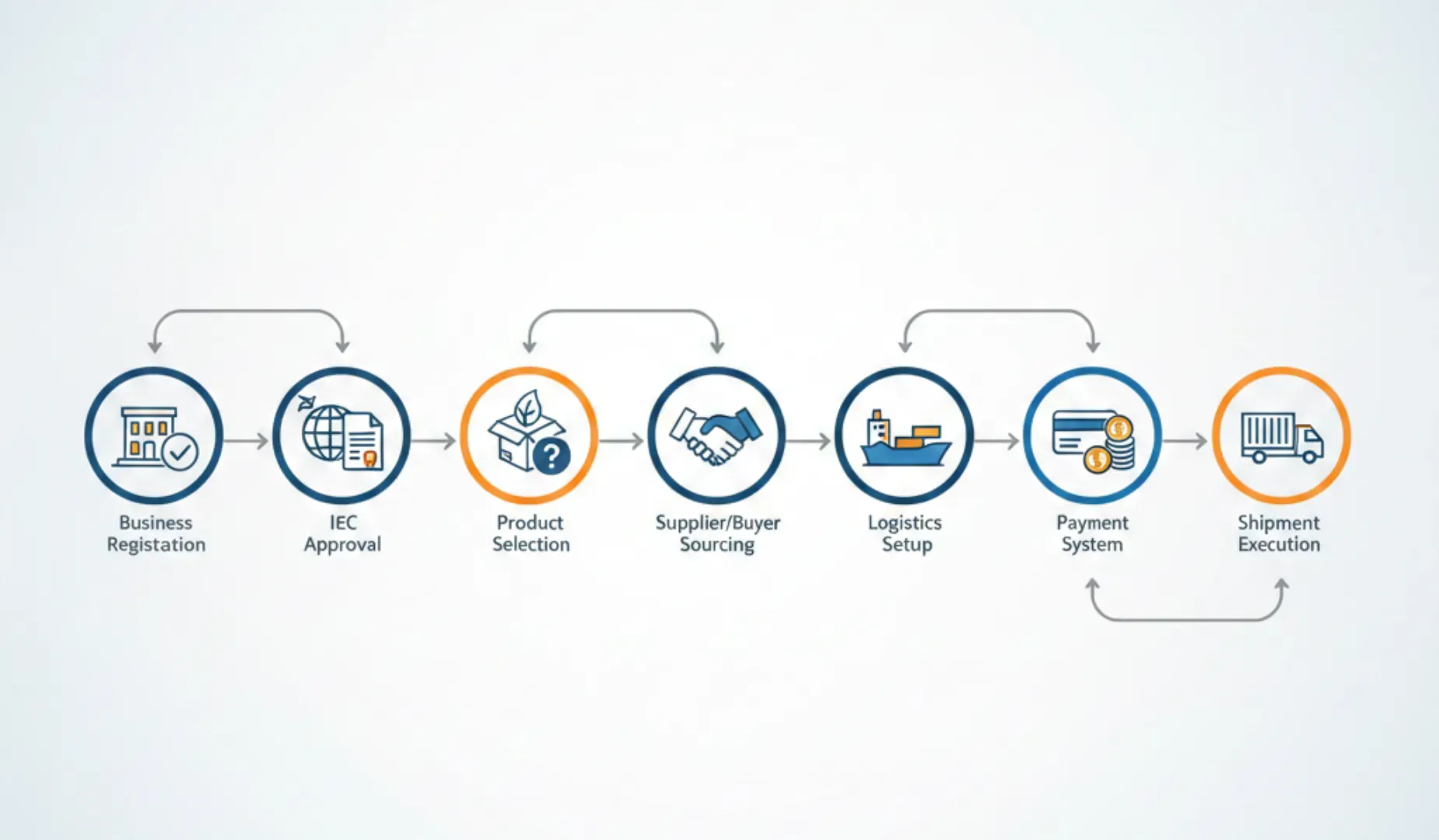
Step-by-Step: How to Start an Import-Export Business in India (2026)
Step 1: Choose Niche & Products
Start with one clear niche where India has proven export strength or where you have access/knowledge, for example textiles, handicrafts, chemicals, auto components, packaged food, or digital services.
Validate demand using:
- Global marketplaces (Amazon, Alibaba, Etsy search volumes).
- Trade data portals and DGFT/Export Promotion Council reports.
- Social media and website.
- Foreign Trade Offices and Embassies.
Step 2: Business Registration
- Sole proprietorship – fastest, less compliant and good for micro exporters
- Partnership/LLP – if you’re starting with co‑founders.
- Private Limited Company – better if you plan to raise capital or work with large enterprise clients.
Ensure you have PAN, Aadhaar, GST registration, and a registered business address before applying for IEC and bank account.
Step 3: Get IEC (Import Export Code)
IEC is mandatory for most import/export activities and is issued online by DGFT as a 10‑digit number linked to your PAN. The application is filed through the DGFT portal (ANF‑2A), documents are uploaded digitally, and the government fee is currently ₹500.
Key points for to remember:
- Aadhaar‑based e‑KYC and online verification are mandatory.
- IEC details must be confirmed/updated annually on the DGFT portal, even if there are no changes.
- IEC is integrated with PAN and other databases for automated checks, reducing manual scrutiny.
If you get stuck, detailed, up‑to‑date walkthroughs are available on platforms like EximPe’s IEC guide, which explains the process and documents in simple language.
Step 4: Open a Business Bank Account
Open a current account in your business name with a bank that is comfortable handling export-import transactions and issuing documents like FIRA/e‑FIRA, e‑BRC, and AD code letters.
- SWIFT capabilities and charges.
- Turnaround time for FIRA/e‑BRC issuance.
- Export credit limits and packing credit options.
Step 5: Source Products
If you’re a merchant exporter:
- Identify reliable manufacturers via industrial clusters, trade fairs, and B2B platforms.
- Lock in basic MOQs, quality specs, packaging standards, and lead times.
If you’re a manufacturer exporter:
- Align your production capability and quality systems with foreign buyer requirements (certifications like ISO, organic, CE, etc., depending on product).
Step 6: Product-Specific Compliances
Many product categories need extra licenses and certifications, especially food, pharma, cosmetics, electronics, and chemicals.
Examples include:
- FSSAI for food products.
- CDSCO approvals for pharma/medical devices.
- BIS/ISI for certain electronics and consumer goods.
Always cross-check Foreign Trade Policy notifications, DGFT trade notices, and importing‑country standards for your HS code.
Step 7: Logistics Partners
Choose your logistics setup based on shipment size and buyer expectations:
- Courier / Express (DHL, FedEx, UPS) – samples, small parcels, high‑value low‑weight goods.
- Air freight – faster but more expensive, used for fragile and urgent orders.
- Sea freight (LCL/FCL) – best for bulk shipments and lower per‑unit costs.
Important: Compare freight forwarders and CHAs (Customs House Agents) on rates, documentation support, and experience with your product category.
Step 8: Payment Terms
Clearly define payment terms in your proforma invoice/contract:
- Always take advance payment for first order.
- Letter of Credit (LC) for larger/high‑risk deals.
- Milestone‑based or periodic billing for services.
Use platforms that provide transparent FX rates and faster settlements so you’re not stuck waiting weeks for funds or losing margin in hidden markups. You can use EximPe for all your export-import payment.
EximPe is a cross‑border payments fintech that has received in‑principle RBI approval for a Payment Aggregator Cross‑Border (PA‑CB) licence, specifically to handle export and import flows for Indian businesses. Our platform focuses on SMEs, manufacturers, and service exporters, and has already processed over 450 million USD in transactions for 5,000+ customers.
Core Export Finance Options
Common export finance options in India include pre-shipment credit (packing credit), post-shipment credit, Packing Credit in Foreign Currency (PCFC), and bill discounting, offered by banks against confirmed export orders or invoices. These facilities fund raw materials, production, packaging, and the period between shipment and payment receipt.
Strong Export Categories from India
Recent data shows strong performance in:
- Petroleum products and petrochemicals.
- Gems and jewellery (gold, diamonds, gemstones).
- Pharmaceuticals and formulations.
- Textiles and garments (cotton, ethnic wear, home textiles).
- Engineering goods, auto components, and machinery.
- Organic and inorganic chemicals.
- Processed food, spices, tea, coffee, basmati rice.
- Leather goods and footwear.
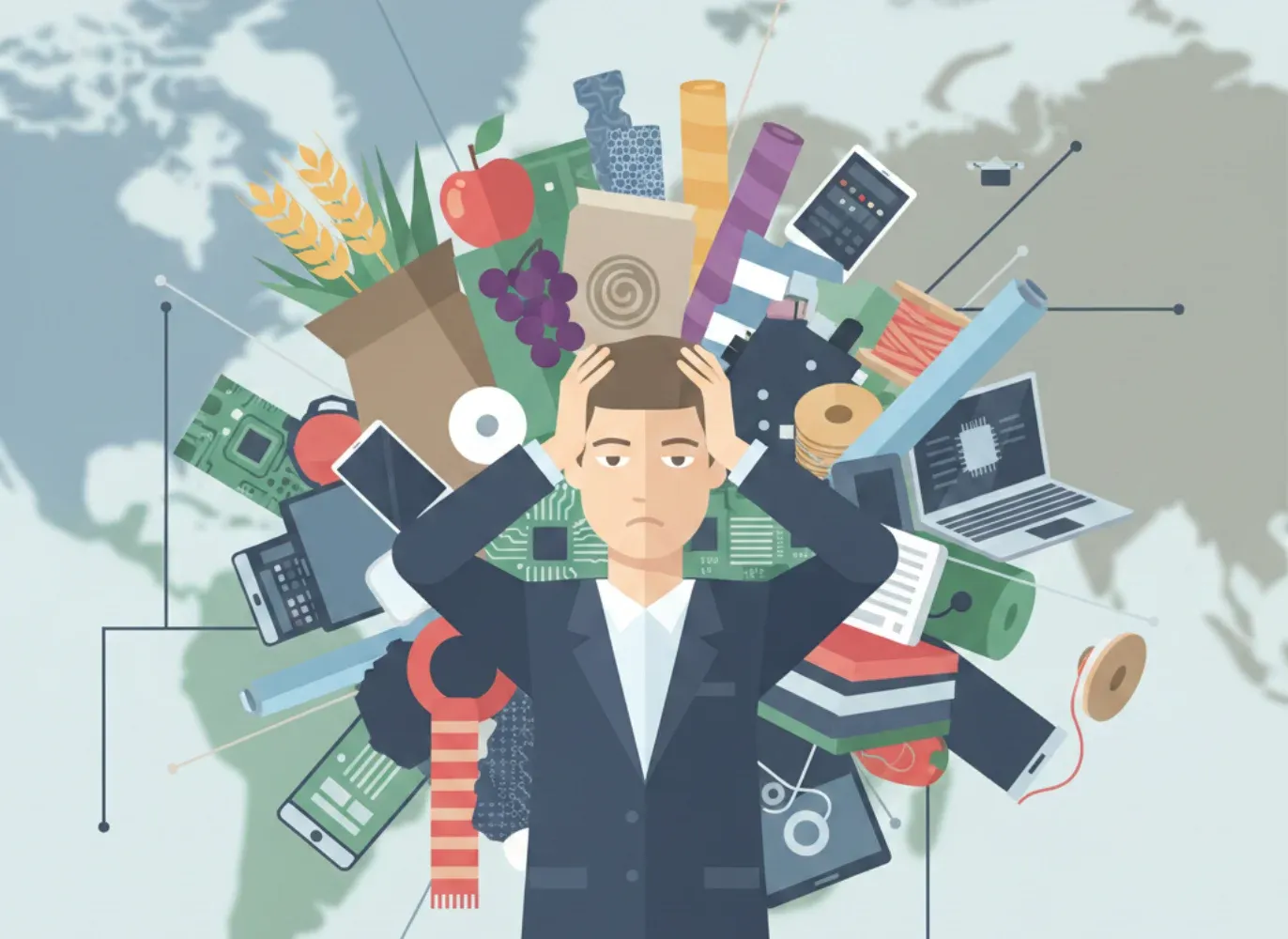
Common Mistakes to Avoid
Let’s go through the classic traps that cost new importers/exporters the most money.
Mistake #1: Starting Without a Clear Niche
Many beginners say, “I’ll export anything that sells,” and end up juggling unrelated categories with no depth.
Mistake #2: Ignoring Compliances
Some traders operate informally using others’ IECs or neglect annual IEC updates, which can lead to blocked shipments or trouble during audits.
Mistake #3: Underestimating Working Capital Needs
First‑time exporters often assume full advance payment, in reality, many serious buyers expect partial advances or credit terms.
Mistake #4: Taking FX and Payment Terms Lightly
Accepting PayPal or SWIFT, without calculating fees, FX spreads, and settlement time kills margins. Traditional cross‑border transfers can involve hidden mark‑ups and long delays.
Mistake #5: Weak Documentation & Record-Keeping
Missing invoices, mismatched values between GST returns and shipping bills, or not collecting FIRA/e‑BRC can impact you when claiming export incentives or during GST/DGFT audits.
Mistake #6: Choosing the Wrong Logistics Partner
Going with the absolute cheapest forwarder often means poor documentation support, vague transit times, and weak customer service if things go wrong.
Frequently Asked Questions
Do I need an IEC even for small exports or service exports?
IEC is required for all import and export goods, But, it is not required for export or import of services.
How long does it take to get an IEC in 2026?
Its is realtime in most cases. Can take upto 3 days in case of any discrepancy.
What is the Interest Equalisation Scheme (IES)?
It’s an interest subsidy on export loans. IES lowers the cost of pre‑ and post‑shipment rupee export credit by giving eligible exporters a 3 percent interest rate reduction, which banks later claim back from RBI.
Which products are easiest to start exporting from India?
Categories like textiles and garments, gems and jewellery, pharma, chemicals, processed foods, tea, coffee, and certain engineering goods already have strong export volumes and established markets.
How can I avoid getting stuck with unpaid invoices from foreign buyers?
Start new relationships with advance payments or secure instruments like Letters of Credit. Combine this with ECGC insurance or bank‑backed trade finance products so that buyer or country default doesn’t wipe you out.
Is it possible to manage import-export mostly online?
Mostly yes, IEC application, DGFT filings, IES registration, and many customs interactions are online now. Tools like EximPe further centralise payments, FX, and compliance documentation, meaning you can run a lean, remote‑friendly import-export operation with only critical physical touchpoints like inspections or factory visits.
Dipankar Biswas
I am an international trade, Supply Chain & Logistics Management professional with more than 8 years of in-depth experience in the Industry. I also create youtube videos @Global Vyapar (200K+ Subscribers).