AD Code: Meaning, Full Form, Registration Process, Format & Complete Guide (2026)
Learn what AD Code is, full form, 14-digit format, ICEGATE registration process, documents required, and EDPMS/IDPMS role for exports & imports.
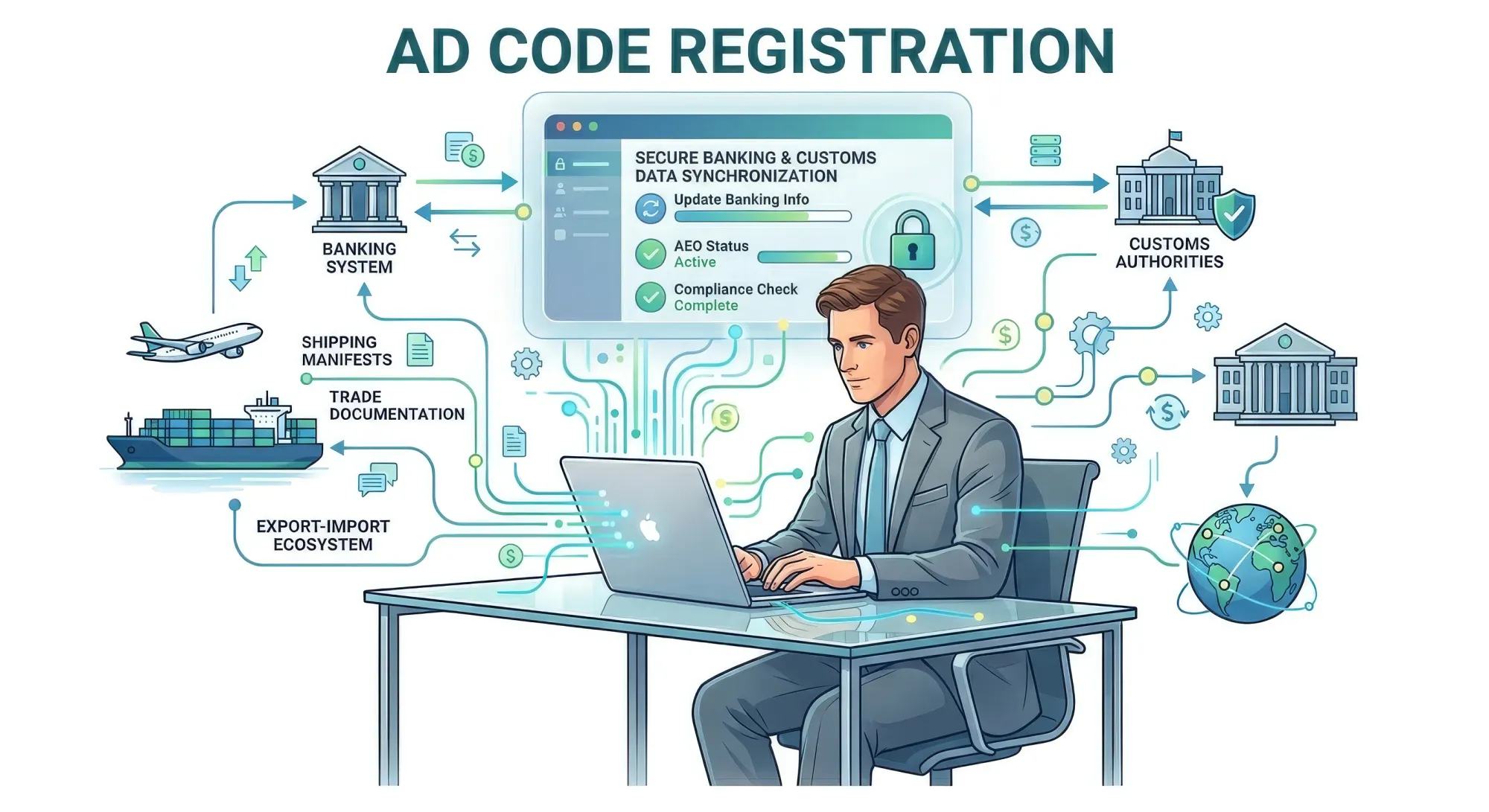
Every new exporter in India eventually sees the same error on ICEGATE: “AD Code not registered – Shipping Bill cannot be processed.” In plain language, AD Code is a 14‑digit number issued by your bank that connects your current account with Indian Customs and RBI for foreign exchange tracking. Without it, shipping bills, Bills of Entry, BRCs and export incentives cannot be processed. This guide explains what AD Code means, how the 14‑digit format works, how to register it on ICEGATE, when to update it, and the mistakes that cause rejections.
What Is AD Code? (AD Code Full Form & Meaning)
- AD Code stands for Authorised Dealer Code.
- It is a unique 14‑digit numerical code issued by a bank that is authorised by the Reserve Bank of India (RBI) to deal in foreign exchange (Category‑1 Authorised Dealer bank).
- It is issued against your current account with an RBI‑authorised AD Category‑1 bank.
- The bank issues an AD Code letter on its official letterhead, capturing the code, your IEC, account number, and branch details.
- The AD Code is then registered with Indian Customs via ICEGATE, linking your bank account with customs data for both exports and imports.
Purpose of the Authorised Dealer Code
- All export receipts and import payments flow through legitimate RBI‑authorised banking channels.
- Customs systems (ICEGATE/ICES) and RBI systems (EDPMS/IDPMS) can trace each shipping bill and Bill of Entry back to a specific bank account and AD branch.
- Foreign exchange flows remain FEMA‑compliant and fully auditable in real time.
In short, AD Code is the bridge between your IEC, your bank account, Customs, and RBI.
AD Code Format: Understanding the 14‑Digit Structure
First 4 digits - Bank Code
Next 3-4 digits - Branch code
Remaining 6-7 Digits - Uniques Serial No.
Example: AD Code: 12345678901234
- 1234 – Bank Code (issued by RBI)
- 5678 – Bank Branch Code
- 901234 – Unique running number for that branch/customer
Why Is AD Code Important? (Role in Export‑Import Business)
A. Customs Clearance – Shipping Bill & Bill of Entry
AD Code is a mandatory field on shipping bills and Bills of Entry.
- For exports, the EDI system (ICES via ICEGATE) will not allow shipping bill generation unless a valid AD Code for that IEC is present in the system.
- For imports, the Bill of Entry also captures the AD Code, ensuring import payments route through the declared bank and branch.
- Even e‑commerce exports via courier (CSB‑V) require an AD Code to be listed for correct forex and incentive tracking.
B. Foreign Exchange Tracking – EDPMS & IDPMS
RBI relies on two systems to track trade transactions: EDPMS (Export Data Processing and Monitoring System) and IDPMS (Import Data Processing and Monitoring System).
- EDPMS: Tracks each export’s shipping bill from Customs and matches it with the corresponding inward remittance reported by the AD bank, issuing e‑BRC once realised.
- IDPMS: Tracks each Bill of Entry and ensures outward remittances (ORMs) from AD banks match the underlying import entries.
In both systems, AD Code is the “single link” between Customs and the AD bank, allowing RBI to enforce FEMA timelines for realisation and payment.
C. Export Incentives & GST Refunds
Government schemes such as Duty Drawback, RoDTEP and IGST refund use AD Code‑linked bank details to credit benefits:
- Customs pulls bank account and AD Code information from the registration to push incentive payments and refunds.
- If AD Code and bank account are not correctly registered and mapped, refunds and scheme credits get stuck even if shipping bills are error‑free.
D. FEMA & RBI Compliance
Because each AD Code belongs to an RBI‑authorised dealer bank, all inflows and outflows under that code are subject to FEMA and RBI circulars.
- EDPMS/IDPMS data, matched via AD Code, is used to flag delayed realisations, under‑invoicing or over‑invoicing.
- This provides a robust audit trail and protects genuine exporters and importers from unnecessary manual scrutiny.
AD Code vs IEC Code: Key Differences
IEC gives your business the legal identity in foreign trade, while AD Code connects that identity to a specific bank branch so Customs and RBI know where money will come in and go out.
Documents Required for AD Code Registration
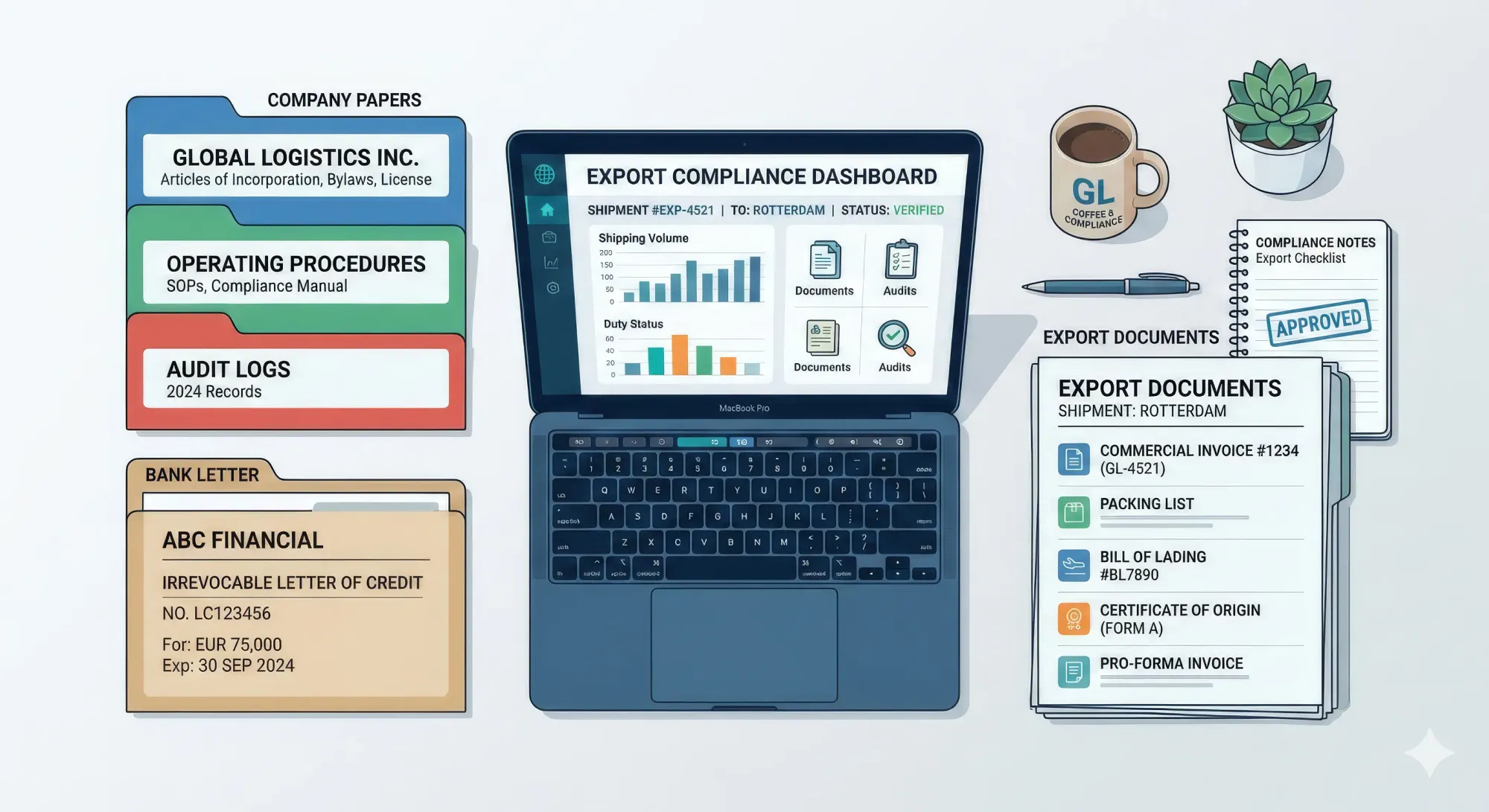
- AD Code letter from bank - Official letterhead in prescribed format with 14‑digit AD Code, account number, IEC, IFSC, stamp and signature.
- IEC certificate – self‑attested copy.
- PAN card – of company/proprietor, self‑attested.
- GST registration certificate – self‑attested.
- Cancelled cheque – of the current account linked to the AD Code.
- Class 3 Digital Signature Certificate (DSC) – for online ICEGATE filing and signing of the request.
- Business registration proof – Incorporation Certificate / Partnership Deed / MSME Udyam etc.
- Board resolution/authorisation letter – for companies and LLPs authorising the signatory.
Some Customs Houses may also seek supporting documents like bank statements or IT returns, but this varies port‑wise.

How to Register AD Code: Step‑by‑Step Process
Step 1: Upload documents via e‑Sanchit
- Log in to ICEGATE (icegate.gov.in) with your IEC‑based credentials.
- Go to Filing Services -> e‑Sanchit and upload the AD Code letter, IEC, PAN, GST, cancelled cheque, etc., to generate DRN/IRN numbers.
Step 2: Submit AD Code registration request
- Navigate to Financial Services -> Bank Account Management -> AD Code Registration.
- Enter bank name, branch, AD Code number (14‑digit), account number, IFSC, and port code.
- Tag the earlier uploaded IRN numbers and sign the request using Class 3 DSC.
Step 3: Verification and approval
- Complete OTP verification if prompted, then submit.
- Customs officer under the “CLK” role at that port reviews and approves within 1–3 working days in most cases.
Step 4: System‑wide availability
- Once approved, the AD Code becomes usable across all customs locations in India.
When to Update or Re‑Register Your AD Code
AD Code is lifetime valid, but you must update or re‑register when:
- Changing bank: Moving your current account to another bank, obtain a new AD Code from the new bank and register it on ICEGATE.
- Closing the old account: If the original AD Code‑linked account is closed, it should be de‑registered and replaced.
- Change in entity details: Name/PAN/IEC changes due to merger, conversion from proprietorship to company, etc., must reflect in the AD Code letter and registration.
- Bank/branch merger: If your bank merges or branch codes change, banks may issue a fresh AD Code letter and you need to update registration at the parent port.
The process is essentially the same as a fresh registration, but you may be asked to attach a bank letter confirming closure or change of the earlier account.

Common AD Code Registration Mistakes & Rejection Reasons
Mistake #1: Name Mismatch Across Documents
One of the biggest reasons for AD Code rejected on ICEGATE is mismatch between name on IEC, PAN, GST, and the bank letter.
Mistake #2: Wrong AD Code Letter Format
Some banks issue generic letters that do not match the format prescribed in the latest customs public notice.
Mistake #3: Incorrect Port Code or IFSC
Selecting the wrong Customs Location Code (port code) or entering an IFSC that does not match the bank letter triggers system rejection.
Mistake #4: DSC Issues
Expired DSC, non‑Class 3 DSC, or DSC not correctly mapped with ICEGATE ID causes submission errors.
Mistake #5: Poor Scanned Documents
Blurry or low‑resolution scans where stamp/signature are not visible are frequently rejected.
Mistake #6: Bank Branch Mismatch
Branch shown on the AD Code letter must align with the IFSC and address you enter. Any mismatch flags the application.
Mistake #7: ICEGATE System Glitches
Occasionally, ICEGATE throws generic errors (e.g., certain error codes) unrelated to your documents. Re‑attempt after some time, clear browser cache, or raise a ticket with the ICEGATE helpdesk.
AD Code for Imports
Many blogs talk only about AD Code for exports, but it is equally important for imports.
- When you file a Bill of Entry, the AD Code is captured and then sent into IDPMS.
- IDPMS uses this AD Code to match each BoE with the outward remittance made through the AD bank, ensuring import payments reflect actual goods received.
- Missing or wrong AD Code on BoE means payment reconciliation in IDPMS fails, which can cause FEMA compliance issues and bank/RBI queries.
- The same AD Code‑linked account is typically used for online payment of customs duties through ICEGATE.
AD Code Sample Letter and Bank Letter Format
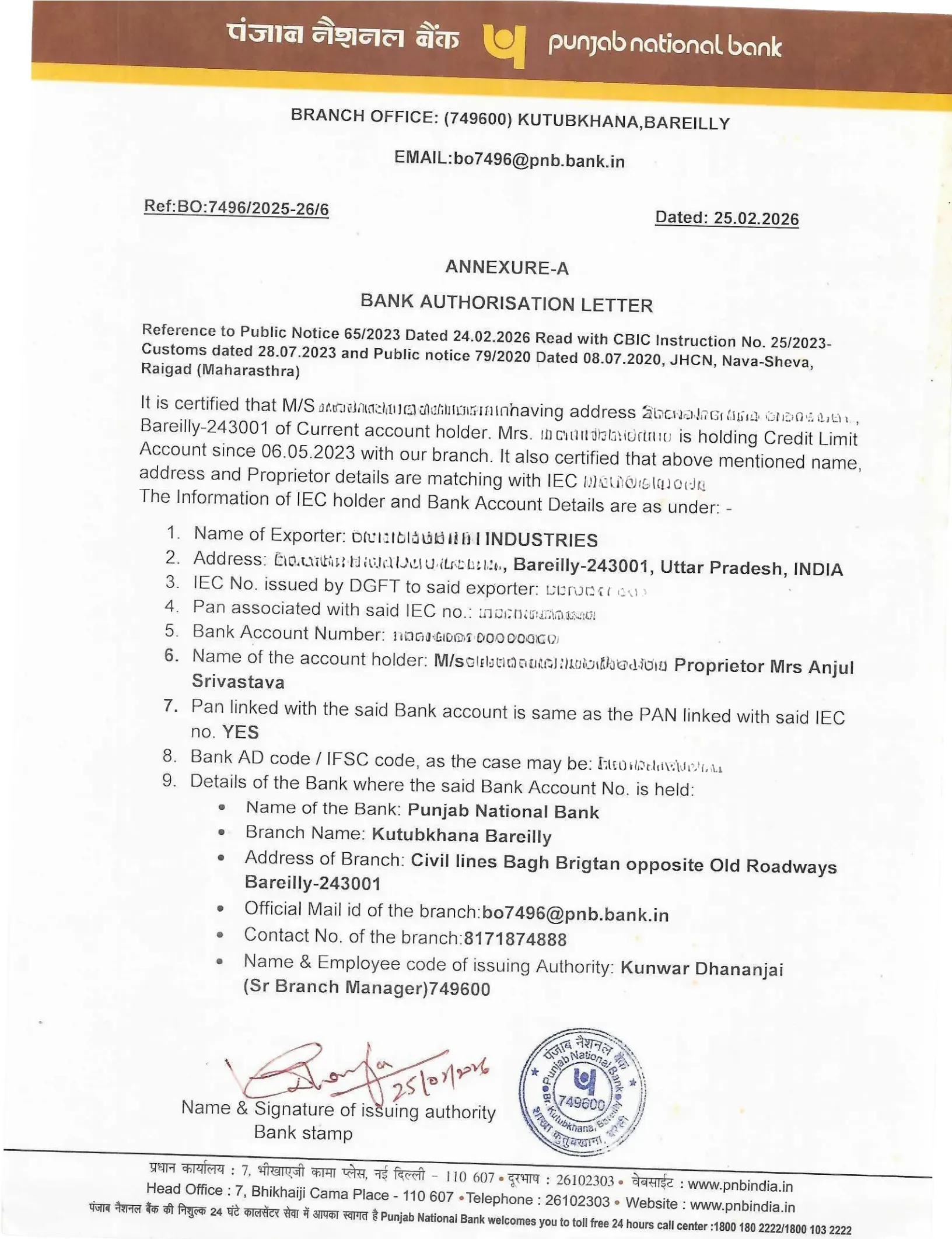
A typical AD Code letter format will show the following items on bank letterhead:
- Bank name and branch address
- Exporter/importer name exactly as per IEC
- Current account number used for exports/imports
- 14‑digit Authorised Dealer Code (AD Code)
- IEC number
- IFSC code of the branch
- Date, bank seal, and authorised signatory’s name and signature
FAQs on AD Code
What is the full form of AD Code?
AD Code stands for Authorised Dealer Code, a 14‑digit code issued by an RBI‑authorised bank to link your current account with foreign exchange transactions for export and import.
Who issues the AD Code?
Your bank issues the AD Code, provided it is an RBI‑authorised Category‑I AD bank dealing in foreign exchange. The code is then registered with Customs via ICEGATE.
Is AD Code required for both exports and imports?
Yes. AD Code is mandatory for generating shipping bills (exports) and is captured on Bills of Entry (imports) to enable tracking in EDPMS and IDPMS.
Does AD Code expire?
AD Code itself generally has lifetime validity, there is no periodic renewal. However, if you change banks, close the account, or undergo major entity changes, a new AD Code registration is required.
How much does AD Code registration cost?
There is no government fee for AD Code registration on ICEGATE. Banks typically do not charge for issuing the AD Code letter either. Your main cost is obtaining a Class 3 DSC if you do not already have one.
Can I have multiple AD Codes?
Yes. If your business maintains current accounts with multiple AD banks, you can obtain multiple AD Codes, each registered separately on ICEGATE.
What is the difference between AD Code and IFSC Code?
AD Code is a 14‑digit code that identifies the bank and branch as your authorised dealer for forex transactions, IFSC is an 11‑character code that identifies the branch in the domestic electronic payment system (NEFT/RTGS/IMPS). Both are used together for customs refunds and incentives.
Can I use a savings account for AD Code?
No. The AD Code must be linked to a current account used for business transactions, as foreign trade is a commercial activity subject to GST, FEMA, and other compliance requirements.
Dipankar Biswas
I am an international trade, Supply Chain & Logistics Management professional with more than 8 years of in-depth experience in the Industry. I also create youtube videos @Global Vyapar (200K+ Subscribers).