Freight Forwarder vs NVOCC vs Shipping Line: Who Does What for Importers
Confused between freight forwarder, NVOCC and shipping line? Learn who moves cargo, who sells space and who manages end‑to‑end imports.
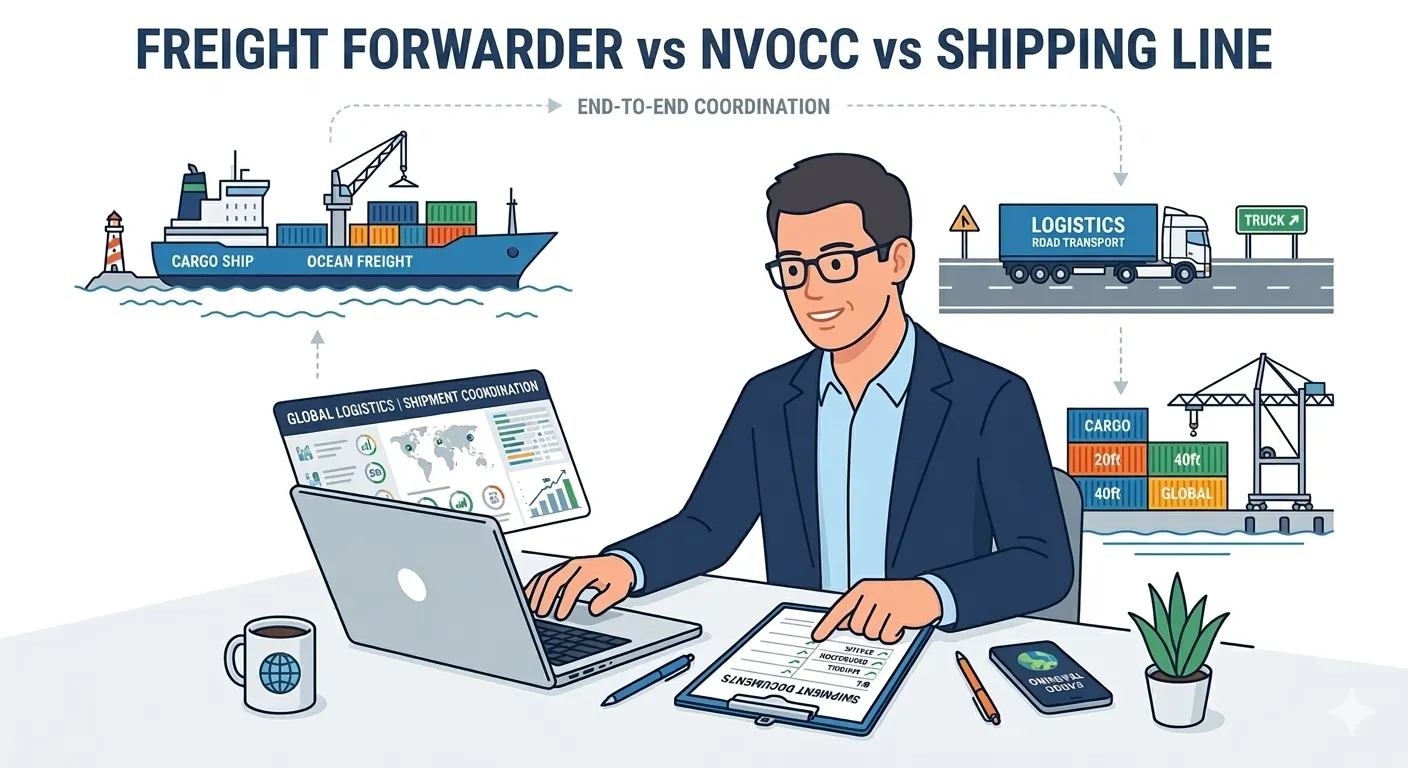
Many new importers treat the freight forwarder, NVOCC and shipping line as the same “shipping guy” and then get frustrated when no one takes full ownership of the shipment. By clearly understanding who moves the cargo, who sells space, and who manages the end‑to‑end process, importers can cut costs, reduce delays and know exactly whom to call when something goes wrong.
This article breaks down freight forwarder meaning, NVOCC meaning and what is shipping line in simple language, with a practical lens for importers who import from China to India or similar trade lanes.
Who Does What
There are three core roles in ocean logistics for imports:
- Shipping Line (VOCC – Vessel Operating Common Carrier): Owns/operates vessels, often owns containers, and issues the Master Bill of Lading (MBL).
- NVOCC (Non‑Vessel Operating Common Carrier): Does not own vessels, buys space from carriers, issues its own House Bill of Lading (HBL) and legally functions as a carrier.
- Freight Forwarder: An agent or logistics architect who coordinates shipments across sea, air, road, rail, usually without owning vessels, and often without acting as the carrier of record.
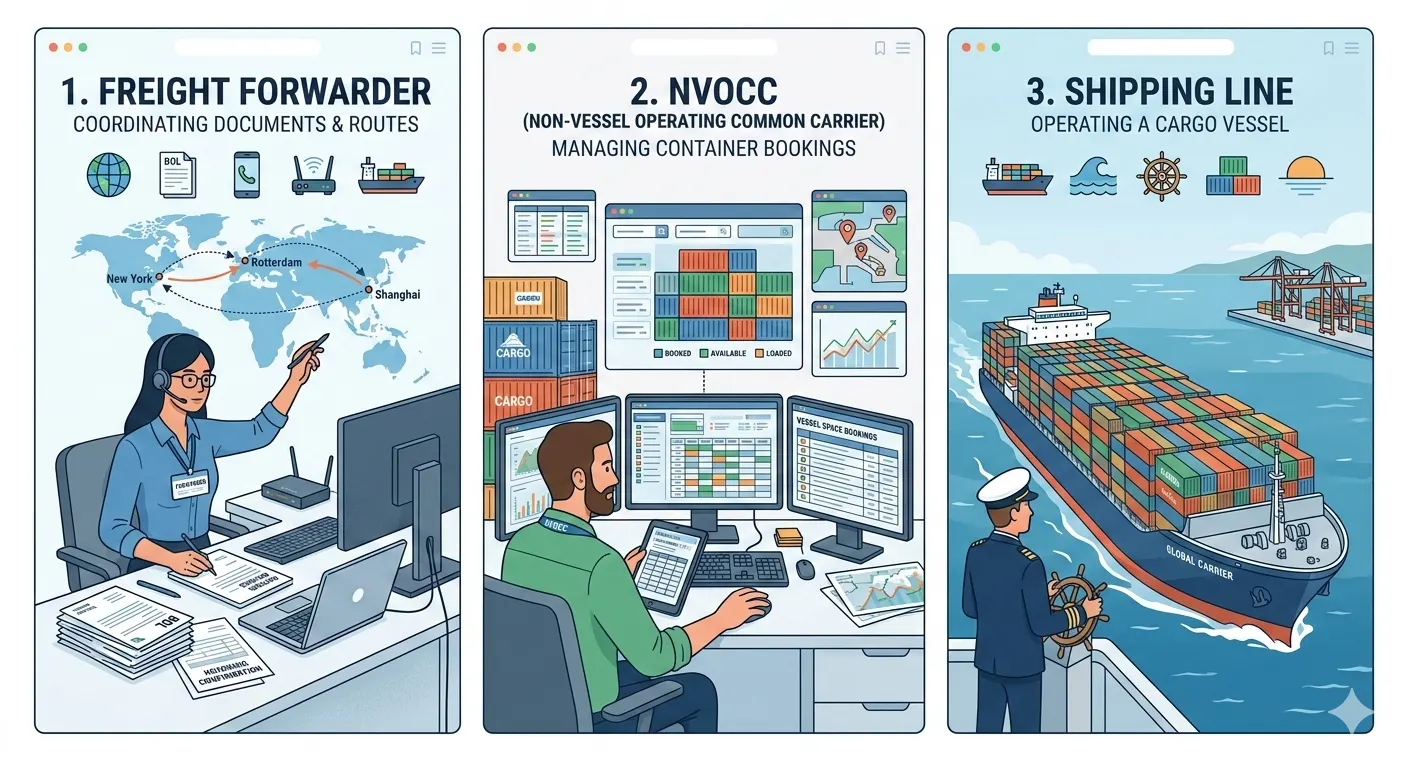
Shipping Line vs NVOCC vs Freight Forwarder
Shipping Line (VOCC): The Actual Ocean Carrier
A shipping line, or Vessel Operating Common Carrier (VOCC), is the company that owns or operates container vessels and often maintains its own fleet of containers. It physically moves containers between ports and typically issues the Master Bill of Lading, which is the legal contract of carriage between the carrier and the party that booked the cargo.
Global shipping line companies include Maersk, MSC, CMA CGM, COSCO Shipping Line and regional players like Emirates Shipping Line, all of which run scheduled services on major trade lanes.
What Shipping Lines Do for Importers
From an importer’s perspective, especially when importing from China to India, the shipping line does three core things:
- Sells ocean freight space: Mostly for full container loads (FCL) and, on some services, for less-than-container loads (LCL) via their own consolidation programs.
- Defines schedules and routings: The line decides which ports the vessel will call, transit times, transhipment hubs and cut‑off times.
- Controls allocation and rollovers: In peak seasons, the line controls which containers get loaded or rolled over to the next sailing, heavily impacting reliability for importers.
Freight Forwarder: Your Logistics Agent
Freight forwarder meaning in simple terms: an agent who plans, coordinates and supervises the transport of goods from origin to destination on behalf of the shipper or importer, usually without operating ships. Forwarders work with shipping lines, airlines, trucking companies, rail operators, warehouses and customs brokers to build a complete logistics solution.
They may:
- Book space with shipping lines or NVOCCs.
- Prepare and coordinate shipping documents.
- Arrange customs clearance through brokers.
- Manage cargo insurance, warehousing and sometimes door‑to‑door delivery.
Because of this orchestration role, global associations like FIATA describe the freight forwarder as the “architect of transport”.
What Freight Forwarders Do for Importers
For an importer, especially a small or mid‑size company importing from China, the freight forwarder is usually the main logistics partner.
Key ways they help:
- Compare rates across carriers/NVOCCs: Forwarders collect shipping line and NVOCC quotes and present an all‑in import freight quote that includes ocean freight plus key origin and destination charges.
- Book and manage shipments: They handle booking with the chosen carrier, coordinate container pick‑up or LCL consolidation, and manage cut‑offs and documentation.
- Prepare import documents: Commercial invoice, packing list, BL instructions, ISF/AMS (for certain countries), certificates and any trade‑specific docs.
- Coordinate with customs brokers: In India and elsewhere, they work with licensed customs brokers to classify goods correctly, file entries and pay duties.
- Advise on HS codes and Incoterms: While final HS classification is the importer’s legal responsibility, experienced forwarders flag obvious issues and explain the impact of FOB vs CIF vs other terms on cost and risk.
NVOCC: Carrier Without Ships
NVOCC full form is Non‑Vessel Operating Common Carrier. An NVOCC provides all the services of an ocean carrier, issuing its own House Bill of Lading, setting freight rates and accepting cargo liability, without operating vessels itself.
Instead, it buys space from shipping lines (VOCCs) under volume contracts and resells that space to shippers, forwarders or other intermediaries.
To the shipping line, the NVOCC is recorded as the shipper, while to the importer or exporter, the NVOCC is the carrier of record under the HBL.
What NVOCCs Do for Importers
For importers, NVOCCs are especially valuable when:
- Using LCL consolidation: They consolidate small shipments from multiple shippers into one FCL, making LCL consolidation for importers cheaper and more regular.
- Seeking competitive rates: Because they buy in bulk, NVOCCs can often negotiate aggressive NVOCC rate markups over their wholesale contracts that are still cheaper for SMEs than direct line rates.
- Needing priority space in peak season: Carriers tend to protect large NVOCC allocations, so bookings through a strong NVOCC may face lower rollover risk.
When Should an Importer Use Whom?
The “right” partner depends on shipment size, frequency and the importer’s internal capabilities.
Conclusion
For importers, especially those importing from China to India, the key is not to memorise every legal nuance but to clearly understand roles.
The shipping line is the physical ocean carrier, the NVOCC is the carrier without ships that sells and manages space under its own BL, and the freight forwarder is the logistics architect and agent who designs and runs the end‑to‑end movement.
Once this distinction is clear, decisions about whom to call for rates, tracking or problem‑solving become much simpler, and logistics cost and risk can be managed far more intelligently.
FAQs
What is the difference between a freight forwarder, NVOCC and shipping line?
A shipping line (VOCC) owns or operates vessels and physically moves containers between ports.
An NVOCC does not own ships but buys space from carriers, issues its own House Bill of Lading and acts as a carrier in law.
A freight forwarder is a logistics architect who arranges transport and documentation across modes on behalf of the importer, usually without acting as the main carrier.
For a new importer, who should I talk to first?
If you are a new or small importer, start with a freight forwarder.
They can compare shipping line and NVOCC options, give you an all‑in quote, handle documents and coordinate with customs so you do not have to manage multiple parties on your own.
Who actually owns the vessels and moves my container on the sea?
The shipping line (also called VOCC) owns or operates the container vessels and often its own containers.
Your box physically moves on a ship controlled by the shipping line, even if your booking is routed through an NVOCC or freight forwarder.
What does a freight forwarder do for importers from China to India?
A freight forwarder helps you get rates, chooses the right carrier or NVOCC, books shipments, prepares shipping documents, coordinates export and import customs and can arrange door‑to‑door delivery from your Chinese factory to your Indian warehouse.
If my cargo is damaged, whom do I file a claim against?
You normally claim against the party that issued your Bill of Lading.
If you booked directly with a shipping line, you claim against the line, if you booked through an NVOCC, you claim against that NVOCC, if your forwarder issued the transport document, you follow their claim process and terms.
How do I choose the right freight forwarder for imports from China?
Shortlist forwarders with proven China–India experience, proper licenses, clear all‑in quotes, digital tracking and fast, transparent communication.
Ask them to explain each charge, their carrier/NVOCC partners and how they will handle delays, rollovers and customs issues.
Dipankar Biswas
I am an international trade, Supply Chain & Logistics Management professional with more than 8 years of in-depth experience in the Industry. I also create youtube videos @Global Vyapar (200K+ Subscribers).