Personal Import vs Commercial Import in India (2026): A D2C Playbook for Foreign & Chinese Brands
Learn when to use personal import vs full commercial import in India. A 2026 D2C playbook for foreign & Chinese brands selling cross‑border.
Listen to article
Audio version (0% complete)
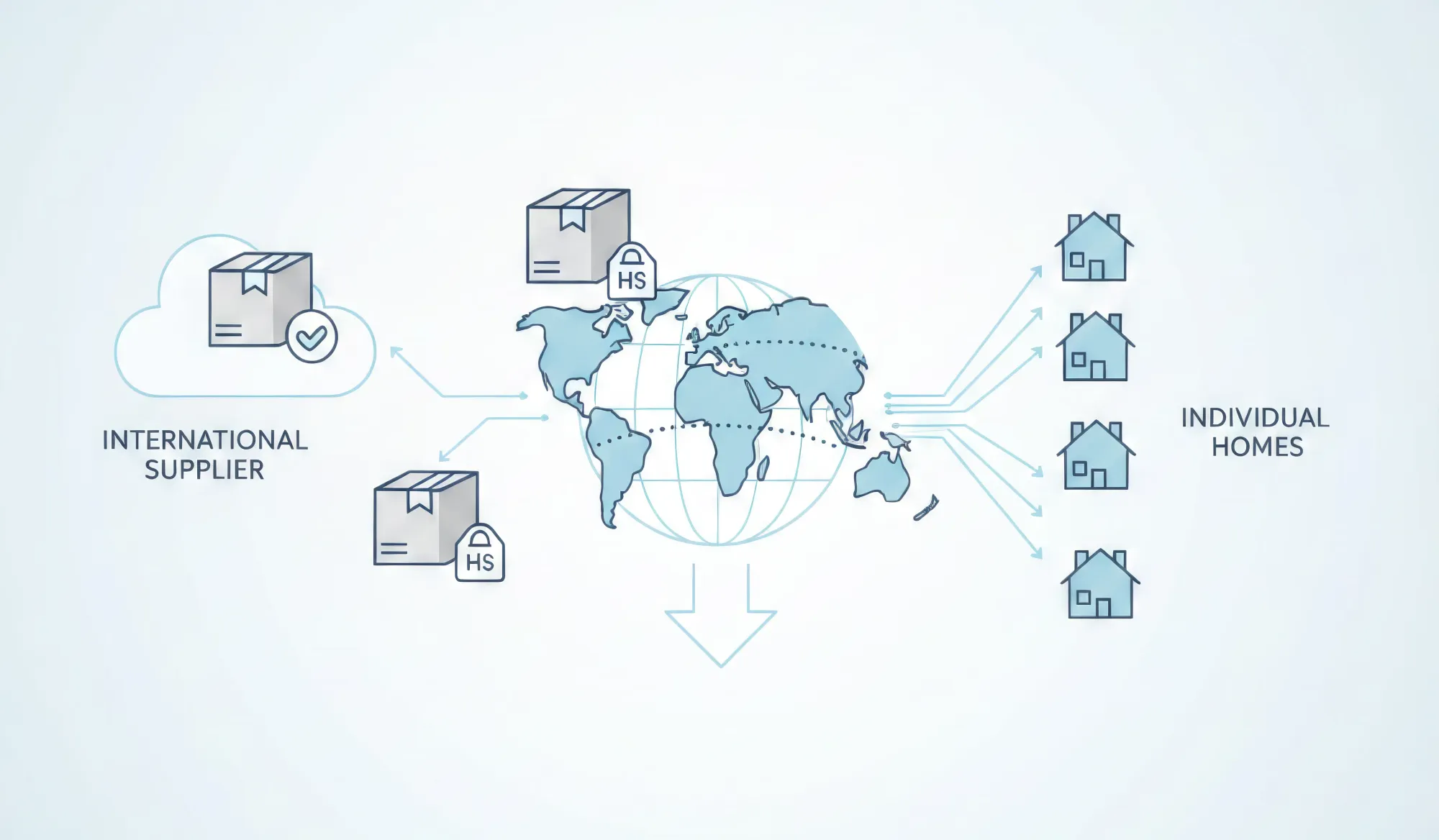
For global and Chinese brands, India offers two very different ways to reach consumers, ship each order as a “personal import” under HS Code 9804, or invest in full commercial imports with heavy compliance. This blog explains how to use personal-import/ D2C method smartly for market entry, and when to graduate to a fully compliant commercial import stack.
Why “Personal vs Commercial Import” Matters in 2026
India is pushing hard to grow cross‑border trade and e‑commerce, including new incentives for courier‑mode exports and a broader goal of raising its global trade share toward 10 percent by 2047. CBIC has also extended export benefits such as Duty Drawback and RoDTEP to e‑commerce shipments via courier, signalling that small parcels are now a mainstream trade channel.
For foreign, especially Chinese brands, this creates a tempting path: ship directly to Indian consumers from overseas instead of going through importers or distributors. The catch is that commercial imports into India trigger a dense web of regulations (BIS, WPC, EPR, FSSAI, Legal Metrology, DGFT, RBI, GST), while personal imports under Chapter Heading 9804 can face a lighter regime if used correctly.
What Is a Personal Import in India (HS Code 9804)?
Personal imports are dutiable goods imported for an individual’s personal use or consumption, not connected with trade, manufacture, agriculture, or furtherance of business, and not intended for resale. Such consignments generally fall under Chapter Heading 9804 of the Customs Tariff, with separate tariff treatment from normal goods chapters.
Chennai Customs clarifies that “all dutiable goods imported for personal use” are classified under 9804 except specific exclusions like motor vehicles, alcoholic beverages, tobacco products, certain licensed goods, and printed books. These goods still pay customs duty, but often under a concessional personal‑use structure compared to standard B2B imports.
Main channels for personal imports
Personal imports typically move through three channels:
- Foreign Post Office (postal parcels) – Small packets and parcels handled by India Post’s Foreign Post Offices, cleared under Postal Imports Regulations.
- Registered courier and air express – Shipments handled by authorised couriers under the Courier Imports and Exports (Electronic Declaration and Processing) Regulations, 2010.
- Passenger baggage (accompanied/unaccompanied) – Goods carried in travellers’ baggage, governed by separate baggage rules, less relevant to D2C brand flows.
For cross‑border D2C brands, postal and registered‑courier modes are the primary enablers because they allow direct B2C delivery from an overseas warehouse to the Indian consumer’s doorstep.
What Is a Commercial Import?
Commercial imports are any imports tied to business activity like resale, manufacturing, business use, or furtherance of trade, typically classified under normal HS codes in Chapters 1–97 and imported by an IEC‑holding entity.
Commercial imports must satisfy not only customs duty but multiple legal layers: DGFT licensing (free/restricted/prohibited/canalised goods), RBI/payment rules, GST and tax compliance, and sectoral laws like BIS (safety standards), WPC (wireless licensing), FSSAI (food), and Legal Metrology (packaging declarations). Customs EDI systems now electronically cross‑check many of these approvals at the time of clearance, so missing documentation routinely leads to holds or re‑export.
If customs believes a consignment declared as personal‑use is actually for business—for example due to repeated imports, commercial quantities, or inconsistent documentation, it can reclassify it as a commercial import, demand full compliance, and levy penalties or confiscate goods.
Personal vs Commercial Import in India
Dimension | Personal Import (CTH 9804) | Commercial Import |
Purpose | Genuine personal use or consumption by an individual, not linked to trade or resale. | Any import connected to business resale, manufacturing, or furtherance of trade. |
HS Code Used | Classified under Chapter 98, Heading 9804 | Classified under the normal Chapters 1–97 based on product description and ITC‑HS |
Typical Channels | Foreign Post Offices, registered couriers, and baggage | Sea cargo, air cargo, ICDs, and sometimes courier when importer is a business with IEC. |
Importer of Record | The Indian consumer (individual) | An Indian business entity |
Duty Structure Style | Often a composite concessional structure: | Standard tariff structure |
Compliance Load (BIS / WPC / EPR / etc.) | Formally, safety and spectrum laws still apply, but enforcement is usually lighter for isolated, genuine personal‑use parcels | Full stack applies: BIS CRS/FMCS, WPC ETA, EPR (e‑waste, battery, plastic), Legal Metrology, FSSAI/CDSCO, BEE star labelling, DGFT licences, etc., depending on category. |
Typical Use Cases | One‑off consumer purchases, early‑stage market testing of small volumes, seeding influencers, or fulfilling small cross‑border D2C orders. | Scaled distribution, marketplace listings, offline retail, B2B supply, and any scenario needing fast delivery, GST credit, and stable supply chains. |
The key conceptual difference is that under personal imports, the consumer is the importer, whereas in commercial imports, a business entity stands in front of customs and all regulators.
Duty structure on personal imports
For personal imports under 9804, CBIC’s policy is to grant concessional basic customs duty via Sl. No. 608 of Notification 50/2017‑Cus, subject to conditions such as genuine personal use and absence of prohibitions under the Foreign Trade (Development and Regulation) Act.
Two important public examples illustrate how this works:
- Courier personal‑use imports (Bengaluru Air Cargo Complex, 2022):
Bengaluru’s public notice shows B2C personal‑use consignments under 9804 assessed at:- 10% BCD on CIF value X
- 10% SWS on BCD (i.e., 1% of X)
- 18% IGST on (X + BCD + SWS) = 19.98%
- Total duty ≈ 30.98% of CIF value X.
Under postal imports, Chennai FAQs highlight that if the total duty on a postal consignment is not more than ₹1,000, it may be exempt, and certain life‑saving drugs supplied free are fully exempt under other entries of Notification 50/2017‑Cus.
Key takeaways for international brands:
- Personal‑use B2C consignments with clear payment evidence can access a defined concessional duty path.
- Duty structures are notified by CBIC and local customs via public notices and can change, brands should always reconfirm rates before designing pricing models.
Major compliance requirements on commercial imports
Compliance | What it covers |
BIS CRS / FMCS | Safety and quality standards for specified electronics, IT goods, toys, appliances, steel, etc. |
WPC ETA | Wireless Planning & Coordination approval for radio/wireless equipment (Wi‑Fi, Bluetooth, RF devices). |
EPR (e‑waste / battery / plastic) | Extended Producer Responsibility for collection and recycling of e‑waste, batteries, and plastic packaging; requires registration on CPCB portal and QR/barcode marking. |
Legal Metrology (Packaged Commodities) | Mandatory declarations on retail packs, MRP, net qty, month and year of manufacture/import, importer details, etc. |
FSSAI | Food safety licensing and product approvals for food, nutraceuticals, certain cosmetics, and ingredients. |
CDSCO / Drugs & Cosmetics | Registration and licensing for drugs, certain cosmetics, and medical devices. |
BEE (Star Labelling) | Energy efficiency star labels for notified appliances (ACs, refrigerators, etc.). |
DGFT Restricted‑Items Licence | Import authorisations for products notified as restricted (e.g., certain laptops/PCs, telecom and IT gear). |
For electronics especially, recent practice has been simultaneous enforcement, DGFT licences, BIS registration, and EPR barcodes are checked together through ICEGATE and related systems.
Do BIS, WPC, and EPR Apply to Personal Imports?
The BIS Compulsory Registration Orders are framed around electronics and IT goods that are “manufactured or imported for sale” in India. BIS FAQs explicitly state that products imported solely for demonstration, development, or testing are outside the ambit of the compulsory registration order, provided they are not put into retail circulation.
Similarly, many EPR and WPC obligations are built around entities who place products on the Indian market, not one‑off consumers who import a single unit for personal use. This has led to a practical view that genuine, isolated personal‑use imports under 9804 are not the primary target of these heavy compliance schemes.
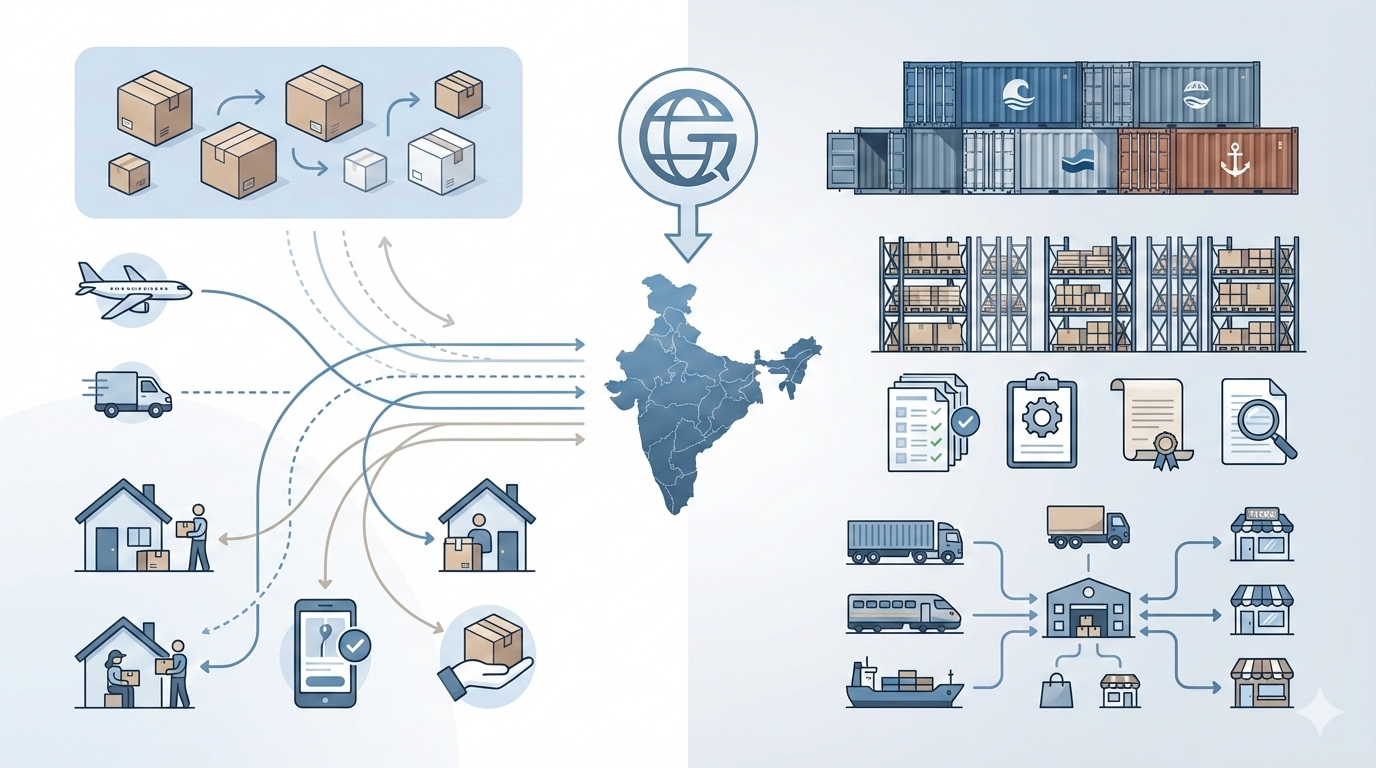
How Personal‑Import D2C from China to India Actually Works
Operational flow in courier/postal mode
For a typical China‑to‑India D2C order:
- An Indian consumer places an order on a foreign website/store/socials and pays in foreign currency or via EximPe.
- The foreign seller ships from its warehouse (e.g., in China) via an authorised courier or postal operator, addressing the parcel directly to the Indian consumer.
- The parcel is declared under HS 9804 with a B2C invoice clearly naming the Indian individual as consignee and describing goods for personal use.
- The courier files the courier manifest and Courier Bill of Entry electronically under the Courier Import Regulations and presents parcels to customs for screening and assessment.
Authorised couriers handle KYC (ID/address collection), electronic declarations, coordination with customs, and collection of duties and taxes from the consignee before delivery.
One D2C Order: China Warehouse to Indian Customer Doorstep (Personal Import)
Step 1 – Customer places order
Indian consumer orders on the foreign brand’s website/app, paying online; order confirmation and invoice are generated with the consumer’s full name, address, and contact details.
Step 2 – Brand prepares shipment
The brand (or 3PL in China) picks, packs, and labels the product, ensuring accurate description, quantity, and declared value on commercial invoice and airway bill.
Step 3 – Selects courier/postal partner
The shipment is handed to an authorised express courier (e.g., DHL, UPS, etc.) or a postal partner that has clearance arrangements in India.
Step 4 – Declare as personal import under 9804
The seller or its logistics partner classifies the goods under CTH 9804 where appropriate, indicating “for personal use – B2C sale” rather than “gift,” and avoids prohibited or restricted items.
Step 5 – Courier files manifest and Bill of Entry
Before arrival, the courier files an Express Cargo Manifest (ECM‑I) and then an electronic Courier Bill of Entry for the consignment, grouped with others arriving on the same flight.
Step 6 – KYC and duty assessment
In India, the courier collects KYC documents (Aadhaar, passport, PAN, or voter ID) and delivery address from the consignee, and customs applies the personal‑import duty structure (e.g., around 42.08% for qualifying B2C imports under 9804).
Step 7 – Duty payment by customer
The courier pays assessed duty to customs on behalf of the consignee and recovers it, often as a “duty and tax” charge before or at the time of delivery.
Step 8 – Customs examination (if any)
If selected, the parcel is opened and examined, undervaluation, misdeclaration, or restricted goods can lead to revaluation, fines, or seizure.
Step 9 – Final delivery
Once cleared and duties are paid, the courier delivers the parcel to the customer, usually within a few days to a couple of weeks depending on routing and handling.
What the brand must get right: description and valuation, use of correct HS 9804 where justified, avoidance of prohibited categories, and clean paperwork proving that each parcel is a genuine, paid B2C sale.
Practical Checklists for Foreign & Chinese Sellers
Before you lean on personal‑import D2C, confirm:
- Product fit:
- Not prohibited/restricted by DGFT or other regulators.
- Not in categories explicitly excluded from 9804 (vehicles, alcohol, tobacco, licensed goods, printed books).
- Risk profile:
- No high‑risk safety/spectrum issues (or you accept higher scrutiny for items like RF devices and large lithium batteries).
- Documentation & labelling:
- Clear B2C invoice naming the Indian individual as consignee; accurate description and realistic value (CIF).
- HS 9804 used only where personal‑use conditions truly apply.
- Courier/postal partner capability:
- Registered as Authorised Courier partner who are able to file ECM, Courier Bills of Entry, and handle customs interactions.
- Strong KYC process: collects Aadhaar/passport/PAN/voter ID and delivery address as per CBIC KYC circulars.
- Customer communication:
- Clear T&Cs that duties and taxes may be charged at delivery and that delivery times can be longer than domestic orders.
- Transparent returns/refusal policy if duty is higher than expected.
Use this checklist as a gate before routing any SKU via 9804.
FAQ
Frequently Asked Questions
HS Code 9804 covers all dutiable goods imported for personal use, excluding motor vehicles, alcoholic beverages, tobacco products, certain licensed goods, and printed books.
Largely no. DGFT Notification 35/2015‑2020 and CBIC Circular 4/2020 effectively prohibit gifts via courier/post except for life‑saving drugs and Rakhi, and customs FAQs emphasise that gifts up to ₹5,000 are not exempt from duty anymore.
Formally, BIS CRS orders apply to electronics “manufactured or imported for sale,” with explicit carve‑outs for goods imported only for demonstration, development, or testing, not for retail sale.
Once monthly orders and repeat purchases reach meaningful scale, marketplaces or distributors demand local stock, and unit economics suffer under composite personal‑import duty, it is time to transition.