PayGlocal vs EximPe for Foreign Merchants: How Global Companies, PSPs and Fintechs Should Collect INR from India
Compare PayGlocal vs EximPe for collecting INR. RBI PA-CB licensed options for global merchants, PSPs, and fintechs without an Indian entity.
Listen to article
Audio version (0% complete)
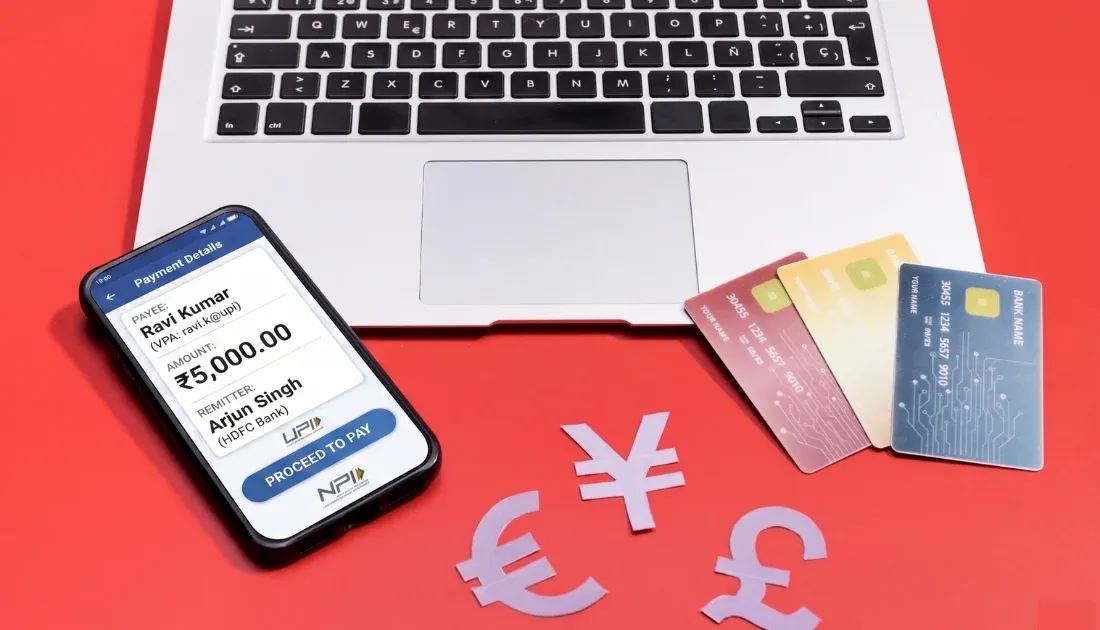
India is now a market where serious foreign merchants treat “how do we collect INR via UPI and local methods, with offshore settlement, under RBI’s PA‑CB regime?” as a core strategy question, not a side project. PayGlocal and EximPe both sit in this new, regulated layer, the choice between them is less about “is this legal?” and more about whether your India checkout is card‑first or UPI‑first.
Why INR collections from India now matter
India is one of the fastest‑growing digital economies, with UPI and other local rails now powering the majority of online consumer payments. For a global SaaS, marketplace, gaming, travel, or edu platform, India has moved from "interesting" to "core" in the revenue mix.
Indian customers increasingly expect to pay in INR using UPI, netbanking, and popular wallets, while pure international‑card flows tend to see higher friction and lower authorisation rates. RBI’s Payment Aggregator - Cross Border (PA-CB) framework has turned what used to be a patchwork of bank arrangements into a clearly regulated category of non‑bank aggregators, so the default path for foreign merchants is now "pick a PA-CB licence holder and plug into Indian rails."
RBI PA‑CB – what foreign merchants actually need to know
The PA-CB regime is RBI’s way of directly regulating any non-bank entity that aggregates cross‑border payment flows for import and export of goods and services. It sits on top of the older online payment-gateway circulars and brings those "collection agent" and OPGSP‑style models into a single, supervised framework under the Payment and Settlement Systems Act and FEMA.
In simple terms, PA-CBs handle inward flows (Indian customers paying foreign merchants) and, where authorised, outward flows (Indian customers being paid out, or Indian merchants paying foreign counterparties). RBI’s Master Direction expects PA‑CBs to maintain dedicated collection accounts, strong KYC/KYB, AML/CFT controls, and robust tech and escrow setups. For a foreign merchant collecting INR, using a PA-CB licensee like PayGlocal or EximPe means the underlying structure - FX handling, documentation, and consumer protection is aligned with RBI rules rather than being a bespoke workaround.
Who are PayGlocal and EximPe under PA‑CB?
PayGlocal is a cross‑border payments fintech based in Bengaluru that offers domestic and international payment‑gateway services, fraud‑prevention tools, alternate payment methods and multi‑currency accounts. In late 2025 it received final approval from RBI to operate as a Payment Aggregator - Cross Border - Inward & Outward (PA‑CB‑I&O), on top of its earlier PA‑O licence, allowing it to support both inbound and outbound online flows for Indian and global businesses.
EximPe is a cross‑border payments infrastructure company that started by powering over 500 million dollars in bank‑led trade payments across Asia corridors before obtaining its own final PA‑CB licence. With this authorisation, EximPe can directly enable global merchants to collect from Indian customers via UPI, cards, wallets, local bank transfers and netbanking, with settlement routed to offshore accounts in their preferred currencies.
Both are regulated, RBI‑authorised PA‑CB players; the real question is whether your India strategy is UPI‑first and multi‑rail (EximPe) or card‑first with broader two‑way flows (PayGlocal).
Payment methods: UPI‑first vs card‑first
UPI has become the dominant rail for Indian digital payments, with consumers using it for everything from low‑ticket P2P transfers to large‑ticket e‑commerce and bill payments. Card‑only cross‑border flows tend to see higher declines on Indian‑issued cards, especially when the merchant of record is offshore and the transaction is routed over international acquiring.
EximPe: UPI‑first, multi‑rail
EximPe’s PA‑CB licence specifically allows it to aggregate UPI, cards, wallets and local bank transfers/netbanking for collections from Indian customers, and its own positioning is “UPI‑led cross‑border payments.” A single checkout can expose UPI as the primary option, while also giving buyers netbanking, major Indian wallets and cards, which is what Indian customers expect to see today. EximPe also emphasises recurring and subscription use cases via UPI mandates.
Payment‑method comparison
Capability | EximPe | PayGlocal |
RBI licence (PA‑CB) | Final PA‑CB‑I&O (inward & outward) | Final PA‑CB‑I&O (inward & outward) |
UPI | Yes – core rail for collections | Yes – via INReach/local methods |
UPI AutoPay / mandates | Supported | Confirm with provider (not clearly detailed publicly) |
Netbanking / local transfers | Yes – local bank transfers & netbanking | Yes – domestic payment gateway supports local methods |
Indian wallets | Yes – wallets alongside UPI and cards | Confirm with provider (alternate methods mentioned generically) |
Cards from Indian customers | Yes – domestic card acceptance | Yes – strong domestic card gateway |
International cards | Yes – cross‑border card acceptance | Yes – international payment gateway core feature |
Other alternate methods | Focused on Indian local rails | Explicit “alternate payment methods” in stack |
Settlement flows, currencies and FX
From a finance team’s perspective, three questions that matters: “Where does the INR go, in what currency do we receive, and how fast and clean is the documentation?”
EximPe: offshore settlement with automated docs
With PA‑CB authorisation, EximPe can collect in INR from Indian customers and settle to merchants’ offshore accounts in their preferred currencies, positioning itself as a way to accept INR without setting up an Indian entity, bank account or local tax registration. It markets T+0, T+1 settlement speed – typically 24 hours – which is materially faster than many traditional bank‑led cross‑border collection flows. EximPe also automates FEMA‑compliant e‑FIRA issuance and purpose‑code tagging for every transaction, reducing the manual export‑proof and reconciliation work for finance and audit teams.
PayGlocal: multi‑currency accounts
PayGlocal offers a multi‑currency account stack that lets businesses collect payments locally in currencies like USD, GBP, EUR, CAD and AUD, and globally in 33 currencies from 180+ countries via a global currency account. In the India context, its PA‑CB‑I&O licence means it can settle cross‑border flows in multiple currencies while helping clients manage compliance and generate downloadable FIRC‑style documentation from its dashboard, although exact currency lists, settlement cycles and FX pricing need to be confirmed commercial‑by‑commercial.
For both providers, your finance team should focus on:
- Choice of settlement currency, and whether it matches your treasury structure.
- Settlement delay (T+0, T+1 vs T+2 or longer).
- FX spread and pricing transparency.
- Availability of export documentation (e‑FIRA/FIRC), purpose codes and reconciliation reports.
Onboarding, KYC and compliance for foreign‑incorporated merchants
Under RBI’s Master Direction, PAs (including PA‑CBs) must conduct full KYC/KYB, meet net‑worth criteria, run strong AML controls and maintain dedicated collection/escrow accounts. For you as a foreign merchant, that translates into a structured onboarding process and clearer expectations.
EximPe
EximPe positions itself as a PA‑CB specifically for international merchants and emphasises that you can accept INR without setting up an Indian company, bank account or local tax registration. The foreign entity becomes the merchant of record, KYC is done on foreign corporate documents, and the company markets a go‑live time of around 24–48 hours in typical cases. Automated purpose‑code tagging and e‑FIRA generation per transaction mean a lot of FEMA and export‑proof complexity is handled by the platform rather than by your finance team.
PayGlocal
PayGlocal, by virtue of its PA‑CB‑I&O and PA‑O licences, is also subject to RBI’s onboarding, KYC/KYB, escrow and reporting standards. Public material makes it clear that it works with both Indian exporters and overseas merchants, suggesting it can onboard foreign entities to accept INR via local rails, though exact SLAs, supported legal jurisdictions and required documents are not detailed and should be confirmed.
EximPe vs PayGlocal: side‑by‑side table
Here’s a buyer‑focused snapshot of the two under RBI’s PA‑CB regime, based on public information.
Dimension | EximPe | PayGlocal |
RBI licence posture | Final PA‑CB‑I&O for cross‑border collections | Final PA‑CB‑I&O + PA‑O for online payments |
Supported flows | Inward collections from Indian customers to foreign merchants. Supports outward too. | Inward and outward flows (pay‑in and pay‑out) |
Core thesis | UPI‑led, multi‑rail collections for global merchants | Card‑first gateway with local methods and multi‑currency accounts |
UPI support | Yes – primary rail | Yes – UPI for Indian consumers |
UPI AutoPay / mandates | Supported | Yes – UPI for Indian consumers |
UPI AutoPay / mandates | Supported in roadmap | Confirm with the provider |
Netbanking / local transfers | Yes – local bank transfers and netbanking | Yes – via domestic gateway stack |
Indian wallets | Yes – alongside UPI and cards | Confirm with provider |
Card support | Indian and international cards | Strong domestic and international card support |
Settlement currencies | Offshore settlement in preferred currencies (multiple majors) | Multi‑currency accounts with 33 currencies supported |
Typical settlement timing | Marketed T+0, T+1 (24–48 hours) for cross‑border collections | Confirm with provider (not stated publicly) |
e‑FIRA / FEMA documentation | Automated e‑FIRA and purpose‑code tagging per transaction | Downloadable FIRC‑style documentation from dashboard; confirm scope |
Ideal customer profiles | Foreign merchants, PSPs and fintechs needing UPI‑first local methods with offshore settlement | Indian exporters and global merchants seeking card‑first, two‑way flows and multi‑currency accounts |

When PayGlocal is right for you
Pick PayGlocal when your India strategy is card‑centric and you have meaningful two‑way payment needs.
- You already run a global card‑heavy checkout and your Indian users are comfortable with card‑first flows, with UPI and domestic methods as supporting rails.
- You want a single platform for both inward and outward PA‑CB flows - for example, collecting from global customers and paying out to Indian or foreign counterparties in one multi‑currency stack.
- You value multi‑currency accounts that let you collect locally in dozens of currencies and manage cross‑border liquidity and compliance from one console.
In those scenarios, PayGlocal’s PA‑CB‑I&O licence and multi‑currency gateway DNA can be a strong fit.
When EximPe is right for you
Choose EximPe when UPI and Indian local methods are central to your India growth thesis.
- Your Indian customers expect to pay primarily via UPI, with netbanking, wallets and cards as secondary methods, and you want all of these rails in a single checkout.
- You need recurring billing via UPI mandates for subscriptions, SaaS or membership models, and want an India‑native solution rather than forcing international cards.
- You are a foreign company, PSP or fintech that wants to accept INR without setting up an Indian entity, with settlement in major currencies to offshore accounts and automated e‑FIRA/FEMA documentation.
- You want a partner whose roadmap is explicitly UPI‑led and who is targeting 1 billion dollars in annualised UPI‑led cross‑border transactions, signalling long‑term focus on this corridor.
In short: if UPI is “nice to have,” either provider can work. If UPI is “non‑negotiable, first‑class,” EximPe is the more opinionated fit. If PayGlocal and EximPe are both on your list, read the neighbouring breakdowns too: Razorpay vs EximPe for foreign merchants, where Stripe in India falls short, and what stays restricted with PayPal in India for foreign merchants.
FAQs
Frequently Asked Questions
With EximPe international merchants can accept INR without setting up an Indian company, bank account or local tax registration. PayGlocal’s PA‑CB‑I&O licence allows it to support overseas businesses accepting payments from Indian consumers, but the exact entity and tax setup should be confirmed with PayGlocal and your advisors.
Yes - both PayGlocal and EximPe support UPI collections from Indian customers as PA‑CB licensees, though EximPe offers UPI as the primary rail for global merchants while PayGlocal offers it alongside card‑centric flows.
With EximPe foreign merchants can typically be onboarded and receive funds in 24-48 hours once KYC is complete. PayGlocal does not publish specific SLAs, so you should ask for indicative timelines during evaluation.
e‑FIRA (electronic Foreign Inward Remittance Advice) is a bank‑issued proof of foreign exchange receipt that supports export‑proceeds reporting and FEMA compliance; EximPe automates this per transaction for PA‑CB collections, reducing manual coordination with banks. PayGlocal provides downloadable FIRC‑style documentation from its dashboard, but you should confirm how it aligns with your auditors’ expectations.
No - this is an operational comparison to help product, payments and procurement teams think about India under RBI’s PA‑CB framework. You should work with regulated partners and professional legal and tax advisors to design your specific flows and entity setup