Bill of Lading: The Complete Guide to Meaning, Types, Tracking & Examples
Understand what a Bill of Lading (B/L) is in shipping. Learn its meaning, format, types, examples, and importance in international trade with this complete guide
Listen to article
Audio version (0% complete)
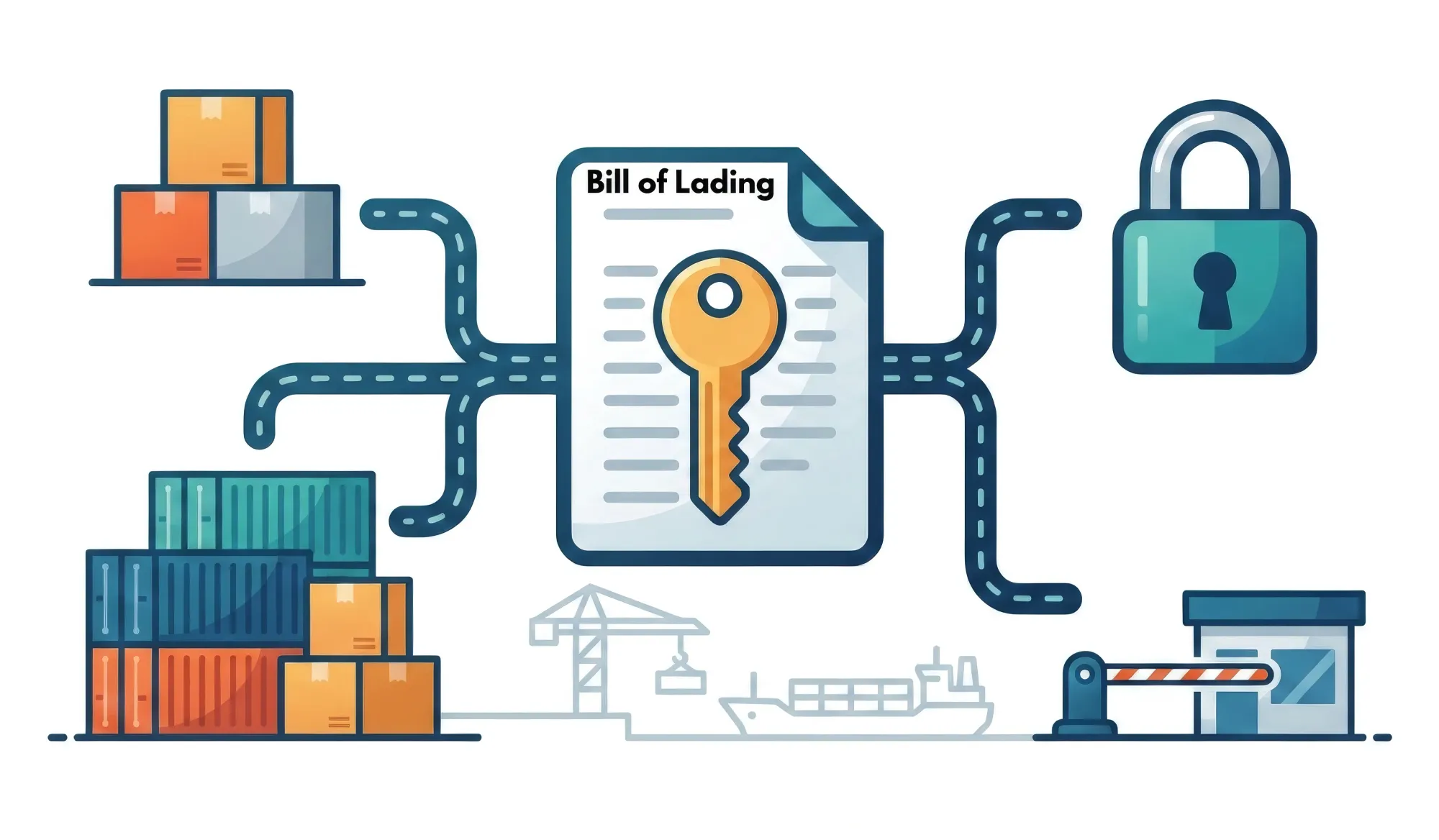
A Bill of Lading (B/L or BOL) is a legal document issued by a carrier to a shipper that serves three critical functions: (a) it acts as a receipt confirming goods were received, (b) a contract of carriage outlining transport terms, and (c) a document of title representing ownership of the goods. This essential shipping document details the type, quantity, and destination of cargo, enabling secure international trade transactions between buyers, sellers, and carriers.
A bill of lading (B/L) is the core shipping document in international trade. In simple terms, it’s your proof that the carrier received your cargo, the contract for transporting it, and the paper that controls who can claim the goods at destination.
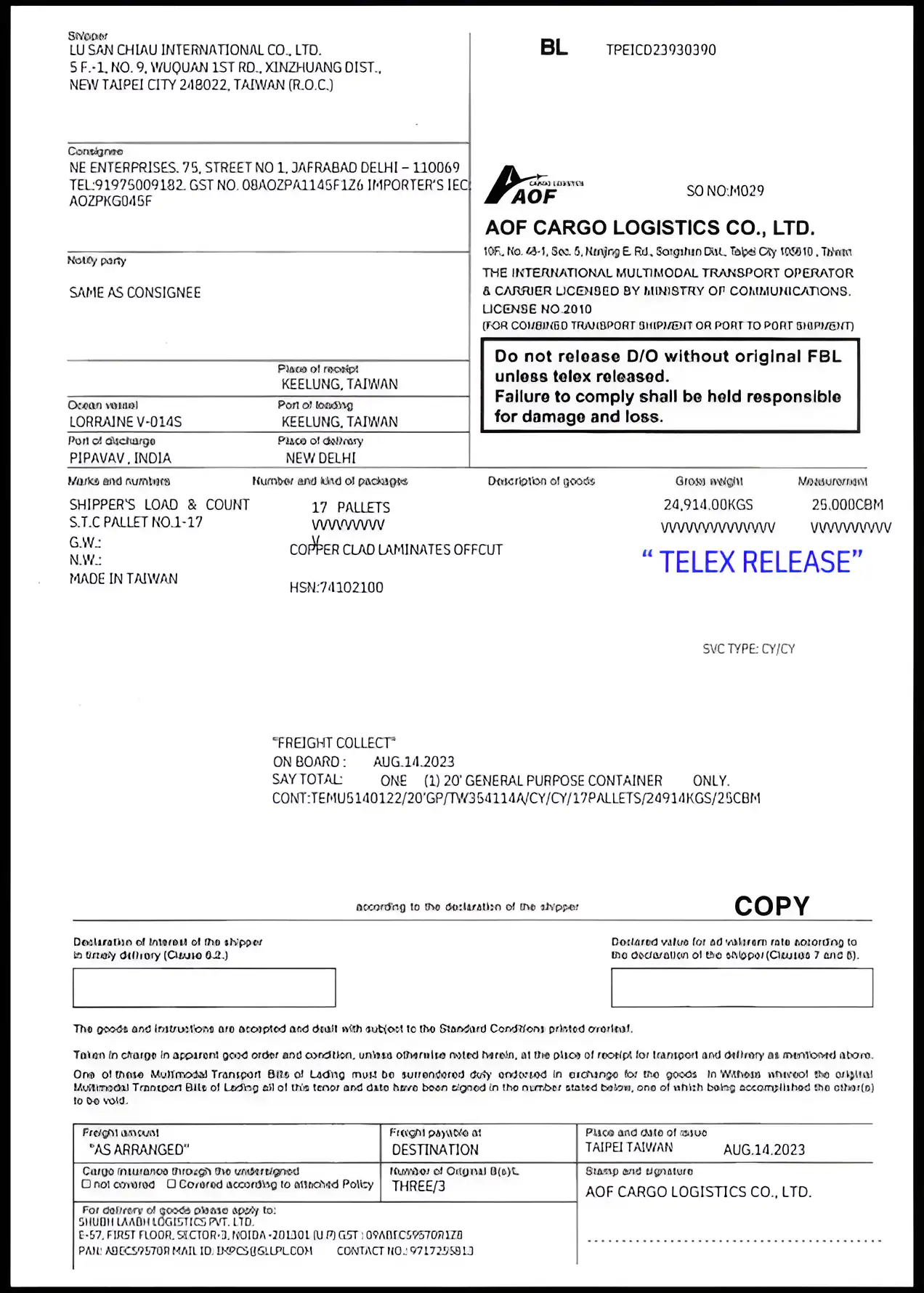
What is a Bill of Lading?
The Bill of Lading has been used in international trade since the 1600s, it was create by Spanish merchants to describe cargo and confirm quantities received by carriers. Today, it remains one of three crucial documents in international trade, alongside insurance policies and commercial invoices.
The 3 Core Functions of a Bill of Lading
- Receipt of Goods – Confirms that the carrier received the cargo in the specified condition and quantity.
- Contract of Carriage – Establishes the terms and conditions under which goods will be transported, including the destination, transport mode, and carrier responsibilities.
- Document of Title – It represents legal ownership of the goods. The holder can claim the cargo upon arrival, sell it in transit, or use it as collateral for trade finance.
Who Issues a Bill of Lading?
The Bill of Lading is issued by the carrier or their authorized agent to the shipper upon receiving the goods. Key issuers include:
- Ocean Carriers (shipping lines like Maersk, MSC, CMA CGM) – Issue Master Bills of Lading (MBL)
- Freight Forwarders/NVOCCs – Issue House Bills of Lading (HBL)
- Carrier Agents – Issue bills on behalf of the shipping line
Only licensed Non-Vessel-Operating Common Carriers (NVOCCs) can issue House Bills of Lading, though not all freight forwarders hold NVOCC licenses.
Types of Bill of Lading
Type | Description | Use Case |
Master Bill of Lading (MBL) | Issued by the ocean carrier to the freight forwarder | Full container loads (FCL) |
House Bill of Lading (HBL) | Issued by freight forwarder/NVOCC to the shipper | Consolidated shipments (LCL) |
Negotiable (Order) B/L | Transferable by endorsement; states "to order" | Trade finance, Letters of Credit |
Non-Negotiable (Straight) B/L | Consigned to a specific named party; cannot be transferred | Direct shipments, prepaid goods |
Clean B/L | No notations about cargo damage or defects | Required for L/C transactions |
Claused (Dirty) B/L | Contains remarks about damaged or defective goods | Documents cargo condition issues |
House Bill of Lading vs Master Bill of Lading
Understanding the difference between HBL and MBL is very important for managing consolidated shipments.
Feature | House Bill of Lading (HBL) | Master Bill of Lading (MBL) |
Issuer | Freight forwarder/NVOCC | Ocean carrier (shipping line) |
Consignee | Actual buyer/importer | Freight forwarder at destination |
Coverage | Single shipper's cargo | Single shipper's cargo |
Trackable | Only through forwarder | Directly on carrier websites |
Use | LCL shipments | FCL or consolidation containers |
Seaway Bill of Lading Explained
A Seaway Bill (also called Express Bill of Lading) differs significantly from a traditional Bill of Lading. It serves only two of the three B/L functions, (a) acting as a receipt of goods and contract of carriage but (b) not as a document of title.
Key Characteristics
- Non-negotiable: Cannot be transferred or endorsed
- No original required: Consignee collects cargo without presenting original documents
- Faster release: Eliminates delays waiting for physical documents
- Cannot be used as collateral: Not accepted for Letters of Credit financing
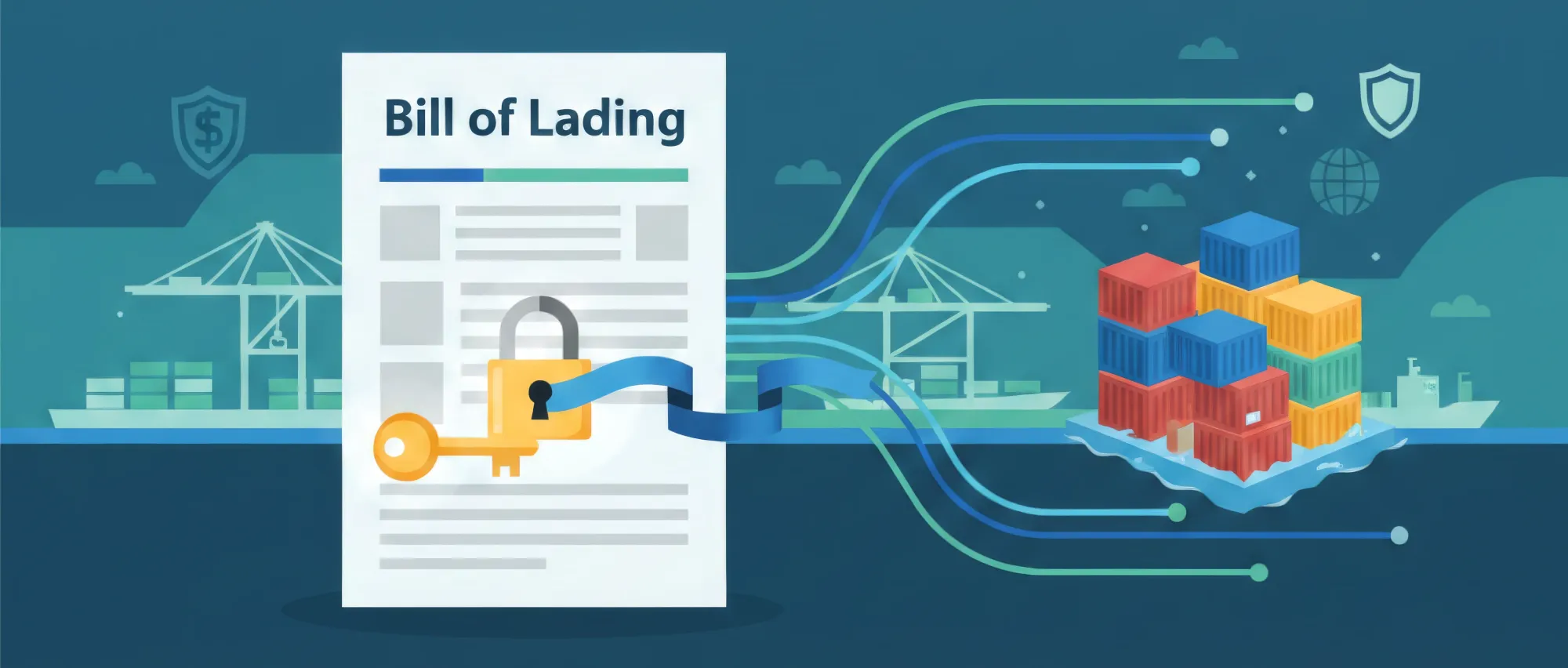
Electronic Bill of Lading (eBL)
The shipping industry is rapidly transitioning from paper to electronic Bills of Lading. By mid 2025, eBL adoption reached 11%, i.e. up from just 1% in 2021.
Benefits of eBL
- Speed: Reduces document processing from 3-7 days to minutes
- Cost savings: McKinsey projects $6.5B annual savings with full adoption
- Environmental: Could save 28,000 trees annually
- Security: Digital signatures and cryptography prevent fraud
Bill of Lading Tracking
Bill of Lading numbers vary by carrier but typically follow these patterns:
- Usually 9-20 characters (letters and numbers)
- Often includes the carrier's SCAC code as a prefix
- Format: SCAC + unique identifier
Examples by Carrier:
- Maersk: MAEU123456789
- MSC: MEDU1234567
- COSCO: 6012345678
- Hapag-Lloyd: HLCU1234567890
Tracking Methods
Method 1: Carrier/ Shipping Line Websites
- Navigate to the carrier's tracking section
- Select "Bill of Lading" as reference type
- Enter BL number and view shipment status
Method 2: Third-Party Platforms
- Platforms like Track-trace, ShipsGo, TrackCargo, and Ocean by Traqo offer universal tracking
- Auto-detect carriers from BL numbers
- Provide consolidated views across multiple shipments
Method 3: Freight Forwarder Portal
- House Bill numbers typically require tracking through your forwarder
- Master Bills can be tracked directly with carriers
Common Bill of Lading Mistakes
Mistake #1: Incorrect Commodity Description
Mistake #2: Wrong Piece Count
Mistake #3: Shipper/Consignee Errors
Mistake #4: Choosing Wrong B/L Type
Mistake #5: Not Following L/C Instructions
Mistake #6: Missing Notify Party
Mistake #7: Hazmat Declaration Errors
Mistake #8: Missing Service Contract Number
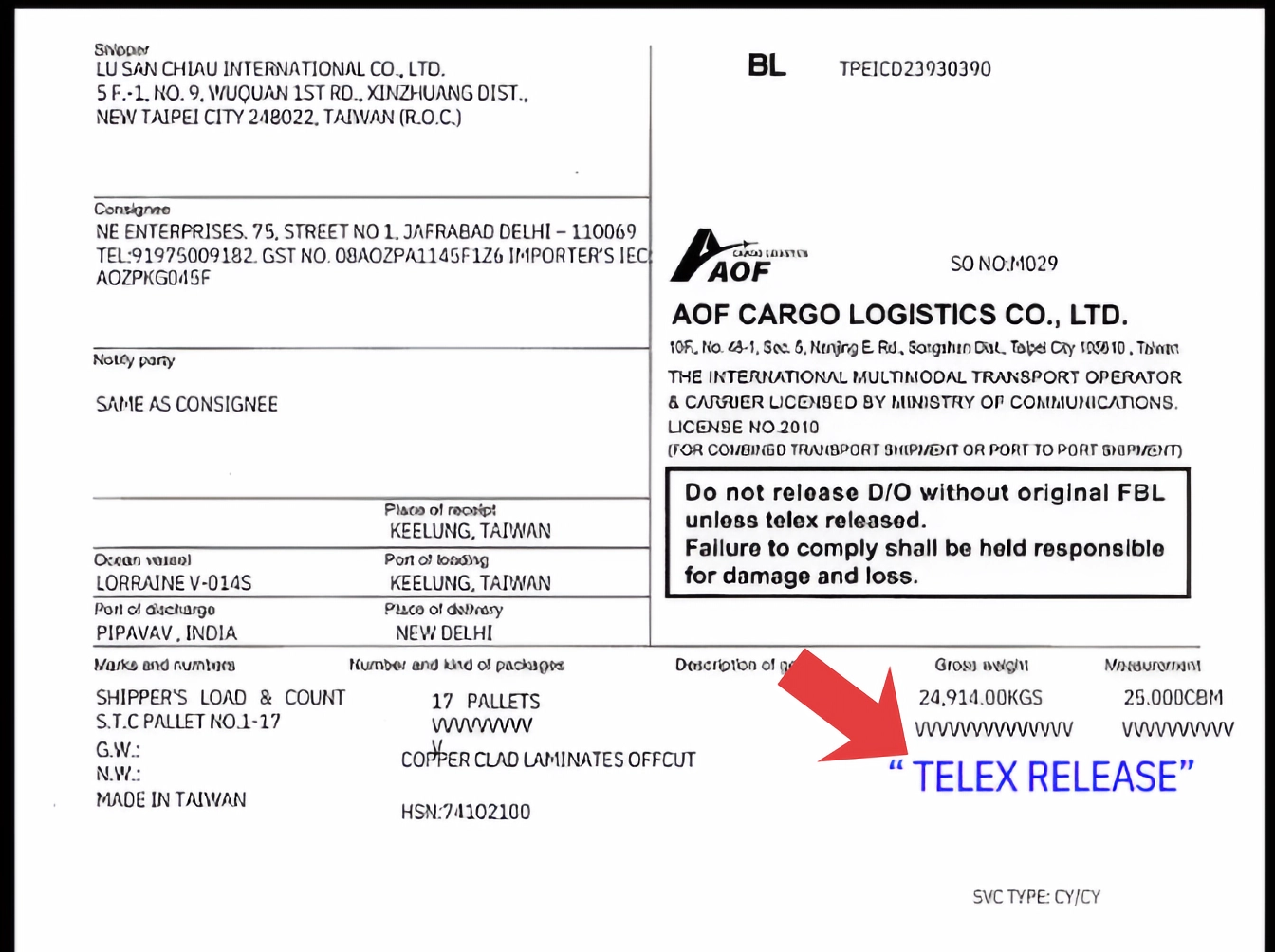
Telex Release and Surrender Process
A Telex Release allows cargo to be released to the consignee without presenting original Bills of Lading at the destination.
The Process - How it works?
Step 1: Original B/L is issued to shipper after vessel sails
Step 2: Shipper surrenders all original B/L copies to the shipping line/agent at origin
Step 3: Carrier verifies surrendered bills match issued originals
Step 4: Carrier sends Telex Release message to destination agent authorizing cargo release
Step 5: Consignee collects cargo without original documents (after paying any due charges)
Important Restrictions
- Telex Release applies only to Straight (non-negotiable) Bills of Lading
- Cannot be used with negotiable/order Bills endorsement process required instead
- Typically incurs a Telex Fee charged by the carrier
Surrendered B/L vs Telex Release vs Seaway Bill
Method | Original B/L Issued? | Where Surrendered? | Speed |
Original B/L | Yes | Destination port | Slowest |
Surrendered B/L | Yes, then returned | Origin port | Medium |
Telex Release | Yes, then surrendered | Origin (electronic release sent) | Fast |
Seaway Bill | No original issued | N/A | Fastest |
Frequently Asked Questions
Frequently Asked Questions
A Bill of Lading can serve as a document of title, making it negotiable for ocean freight. An Air Waybill (AWB) is always non-negotiable and does not confer title.
Generally, no. House Bill numbers are tracked through your freight forwarder's system, not directly on carrier websites. Only Master Bill of Lading numbers, booking numbers, or container numbers work for direct carrier tracking.
For original negotiable B/Ls, this creates significant complications. You'll typically need to provide a Letter of Indemnity (LOI) backed by a bank guarantee before the carrier releases cargo. For non-negotiable B/Ls or telex released shipments, loss is less problematic since originals aren't required.
eBL transactions can be completed in minutes to hours, compared to 3-7 days for paper B/Ls that require physical courier delivery across continents.
Use negotiable B/Ls when payment is made through Letter of Credit, you may sell cargo in transit, or you need the B/L as collateral. Use non-negotiable B/Ls when dealing with trusted parties, payment is already received, or you prioritize fast cargo release over payment security.