Complete Freight Cost Calculation Guide 2026: Master Air, Sea, and Road Shipping
Master how to calculate freight cost in 2026. Understand freight cost, Volumetric Weight formula & hidden surcharges for air, sea, and road.
Listen to article
Audio version (0% complete)
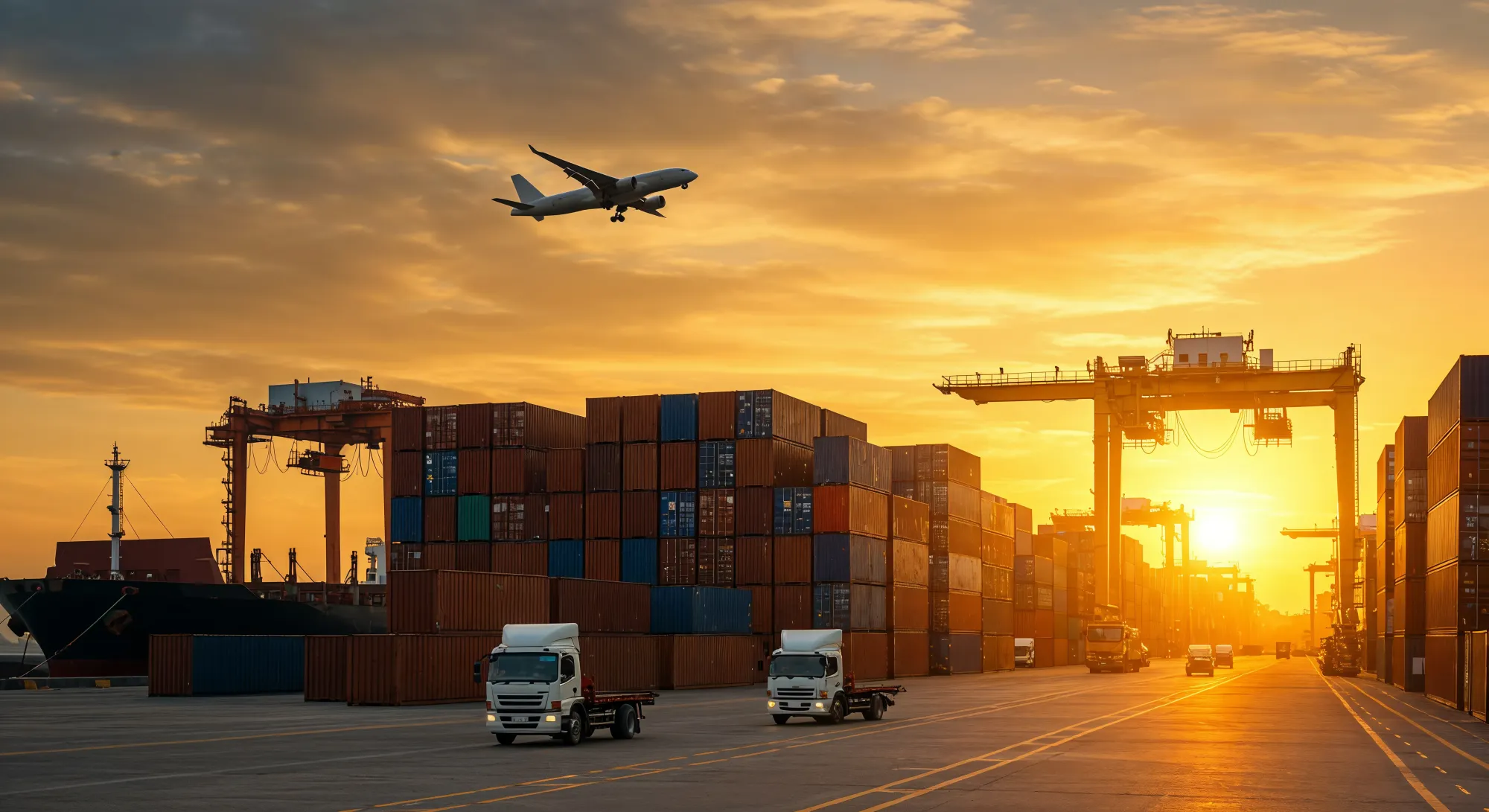
Freight cost is where most Indian importers and D2C brands get surprised, the shipping line quote looks low, but by the time you add local charges, duties, and delays, the landed cost explodes. This guide breaks down how to calculate freight cost for sea, air, and road in simple steps, so you can predict your total landed cost and choose the right mode for each shipment.
What Exactly Is Freight Cost? (Vs Total Landed Cost)
In simple terms, freight cost is what you pay to move cargo from point A to point B by sea freight, air freight, or road freight, usually the “base freight” quoted by the carrier or freight forwarder.
But as an importer, you care about total landed cost, which includes freight plus all the India-side and origin-side costs.
A practical total landed cost formula for imports into India looks like this:
- Base freight (ocean freight / air freight / road freight)
- Origin local charges (pick‑up, stuffing, documentation, origin THC)
- Destination port/airport charges (THC, CFS/ICD charges, shipping line local charges, DO fee)
- Customs duties (BCD, SWS, social welfare surcharge), IGST on imports, anti‑dumping duty if applicable
- Customs clearance charges in India (CHA fees, documentation)
- Last‑mile transport and delivery (CFS/ICD/port/airport to factory or warehouse)
- Compliance and warehousing costs (bonded warehouse charges, fumigation, inspection, EPR etc.)
If you only look at the base ocean freight or air freight quote, you will always underestimate your actual cost.
CBM, Weight and Chargeable Weight Explained
Before you touch any sea freight calculator or air freight calculator, you need three basics: CBM, actual weight, and chargeable weight.
What is CBM and how do you calculate it?
CBM (cubic meter) is the volume of your shipment.
For boxes/pallets:
- CBM = Length (m) × Width (m) × Height (m) × Number of packages
Example (1 pallet): 1.2 m × 1.2 m × 1.5 m = 2.16 CBM.
If you have 4 identical pallets: 2.16 × 4 = 8.64 CBM.
Sea freight W/M: 1 CBM = 1,000 kg
For LCL ocean freight, the standard is:
- 1 CBM is treated as equivalent to 1,000 kg (1 ton) for rating.
- Freight is charged on W/M (weight or measure):
- CBM
- or weight in tons (actual kg ÷ 1,000)
- You pay on whichever is higher.
Air freight: volumetric weight 1 CBM = 167 kg
For air freight, airlines don’t just look at actual kilos - they also compute volumetric (dimensional) weight:
- Common air rule: 1 CBM = 167 kg
- Volumetric weight (kg) = CBM × 167
- Chargeable weight = higher of actual weight vs volumetric weight
Road / LTL freight: different DIM factor
For road/LTL freight, many carriers use a different density ratio:
- A typical industry rule of thumb: 1 CBM = 300–333 kg for trucking, to reflect how bulky cargo uses space in the truck.
Exact factors vary by carrier, but the principle is the same: compare actual kg vs DIM‑based kg and charge on whichever is higher.
Micro example: 2.4 CBM and 800 kg
Imagine you’re importing a shipment that is:
- Total CBM: 2.4
- Actual weight: 800 kg
For sea freight (LCL):
- Weight in tons = 800 ÷ 1,000 = 0.8 ton
- Chargeable W/M = higher of (2.4 vs 0.8) = 2.4 W/M
For air freight:
- Volumetric weight = 2.4 × 167 = 401 kg
- Chargeable weight = higher of (800 kg vs 401 kg) = 800 kg
So for this shipment, sea freight is charged on volume, air freight is charged on actual weight.

How to Calculate Sea Freight Cost (FCL and LCL)
FCL vs LCL – When to Choose What
FCL (Full Container Load) means you book an entire container (20 ft or 40 ft) for your cargo.
LCL (Less than Container Load) means your cargo shares a container with other shippers, and you pay based on W/M instead of a flat container price.
Cost logic in simple terms:
- FCL
- Flat rate per container (e.g., per 20 ft or 40 ft) within weight limits.
- Best when your CBM is high enough that sharing doesn’t save much.
- LCL
- Rate per W/M (1 CBM or 1,000 kg, whichever is higher).
- Best for smaller volumes, or when you don’t want to wait to fill a container.
Many forwarders suggest you start comparing LCL vs a 20 ft FCL once you cross roughly 15-20 CBM, because at that point the FCL flat rate can be competitive with W/M‑based charges.
Factor | LCL (Less than Container Load) | FCL (Full Container Load) |
How you pay | Per W/M (1 CBM or 1,000 kg, whichever is higher) | Flat rate per container (20 ft / 40 ft) |
Best for | Small to mid‑size shipments, low CBM | Larger shipments, usually 15-20+ CBM |
Control over container | Shared with others | Full control (packing, sealing) |
Risk of delays | Higher (depends on consolidation/de‑consolidation) | Lower (fewer consolidation steps) |
Local charges | Often higher per CBM (handling, CFS) | Flat per container, easier to predict |
Local Port Charges and Hidden Costs in Ocean Freight
Beyond the ocean freight rate, Indian importers routinely face:
- Terminal handling charges (THC) at origin and destination ports.
- CFS charges in India (handling, storage, de‑stuffing for LCL).
- BL fee, seal charges, VGM/documentation charges.
- Shipping line local charges and DO (delivery order) fee.
On top of that, you have demurrage, detention and ground rent - technically separate from ocean freight but directly triggered by port delays:
- Demurrage: charges for containers staying too long inside the port/terminal.
- Detention: charges for keeping the container too long outside the port (with importer).
- Ground rent: storage charges at port, CFS, or ICD yard.
A few practical tips to reduce these:
- Clear Sea IGM status and documentation early on ICEGATE, so customs and faceless assessment don’t delay your cargo.
- Use a proactive CHA/freight forwarder to pre‑file documents and follow up with FAG/PAG.
- Plan truck movement and CFS/ICD selection so you don’t lose days between vessel arrival and gate‑out.

How to Calculate Air Freight Cost (Volumetric Weight in Action)
Air Freight Formula and Rate Structure
Most airlines and air freight forwarders quote something like:
- “₹ X per kg, minimum 45 kg” or slabs such as 0-45 kg, 45-100 kg, 100+ kg.
To get to a realistic air freight cost, they follow this sequence:
- Calculate actual weight (gross kg, including packaging).
- Calculate volumetric weight:
- Volume (CBM) × 167 = volumetric kg (common IATA factor).
- Take the higher of actual vs volumetric as chargeable weight.
- Apply the appropriate slab rate per kg.
- Add fuel surcharge, security surcharge, airline handling and destination handling.
Example (based on typical air method):
- Volume = 0.36 CBM
- Volumetric weight = 0.36 × 167 = 60.12 kg
- Actual weight = 50 kg
- Chargeable weight = 60.12 kg (higher of the two)
Your air freight calculator will show cost on 60.12 kg, not 50 kg.
Air vs Sea Freight: Cost, Time and Use Cases
Parameter | Air Freight | Sea Freight |
Typical transit time | Days (including handling at airports) | Weeks (including port, CFS/ICD handling) |
Cost per kg | High (pay on chargeable weight) | Low (pay per W/M or per container) |
Best for | High‑value, urgent, low‑volume cargo | Bulky, heavy, less urgent cargo |
Documentation | Strict security/compliance, but fewer touchpoints | More steps (BL, Sea IGM, CFS/ICD, port handling) |
Risk of stock‑out | Lower | Higher if planning is weak |
Road Freight and Last-Mile Costs in Import Shipments
FTL vs LTL, and How Road Carriers Charge
Once your shipment lands at a port, CFS, ICD, or airport, road freight decides how expensive your last mile is.
- FTL (Full Truck Load): you book an entire truck - best when you have enough cargo or want speed and control.
- LTL (Less than Truck Load): your cargo shares a truck - cheaper for small loads but may add handling and time.
Road freight in India is usually priced:
- Per km per truck (for FTL).
- Or per kg / per CBM for LTL, using DIM rules like 1 CBM = 300–333 kg to approximate how much space the cargo takes in the truck.
A quick example for LTL:
- Volume: 2 CBM
- DIM factor: 1 CBM = 333 kg >> volumetric weight = 2 × 333 ≈ 666 kg
- Actual weight: 400 kg
- Chargeable weight for road freight = 666 kg (higher of the two).
CFS/ICD, Seaport and Airport Choices and Their Cost Impact
Your choice of CFS vs ICD vs seaport vs airport directly affects:
- Local transport distance (CFS/ICD might be closer or farther from your factory).
- Storage and ground rent costs (CFS/ICD yard vs port).
- Complexity and speed of customs clearance.
Practical tips:
- If your consignee is inland, sometimes using an ICD can reduce road freight cost compared to moving everything from a coastal CFS.
- Check total cost: port‑to‑ICD rail + ICD charges + last‑mile trucking vs direct haul from port CFS.
- For time‑sensitive air shipments, choose airports with strong cargo handling to reduce storage and handling charges.
Incoterms and “Who Pays Freight” (FOB, CIF, CFR, DAP, DDP)
Incoterms decide who pays freight and local charges - you or your supplier.
In simple language:
- FOB (Free on Board):
- Seller delivers goods onto the vessel at origin port.
- Buyer (importer) pays main ocean freight, destination port charges, customs, and delivery.
- CFR/CIF (Cost and Freight / Cost, Insurance and Freight):
- Seller arranges and pays main ocean freight up to Indian port (and insurance in CIF).
- Buyer pays Indian port charges, customs duties, and local delivery.
- DAP / DDP (Delivered at Place / Delivered Duty Paid):
- Seller arranges transport to your door, in DDP, they also pay customs duties and taxes.
- You pay an all‑in price but have less visibility into freight cost components.
A Freight Cost Checklist for Indian Importers
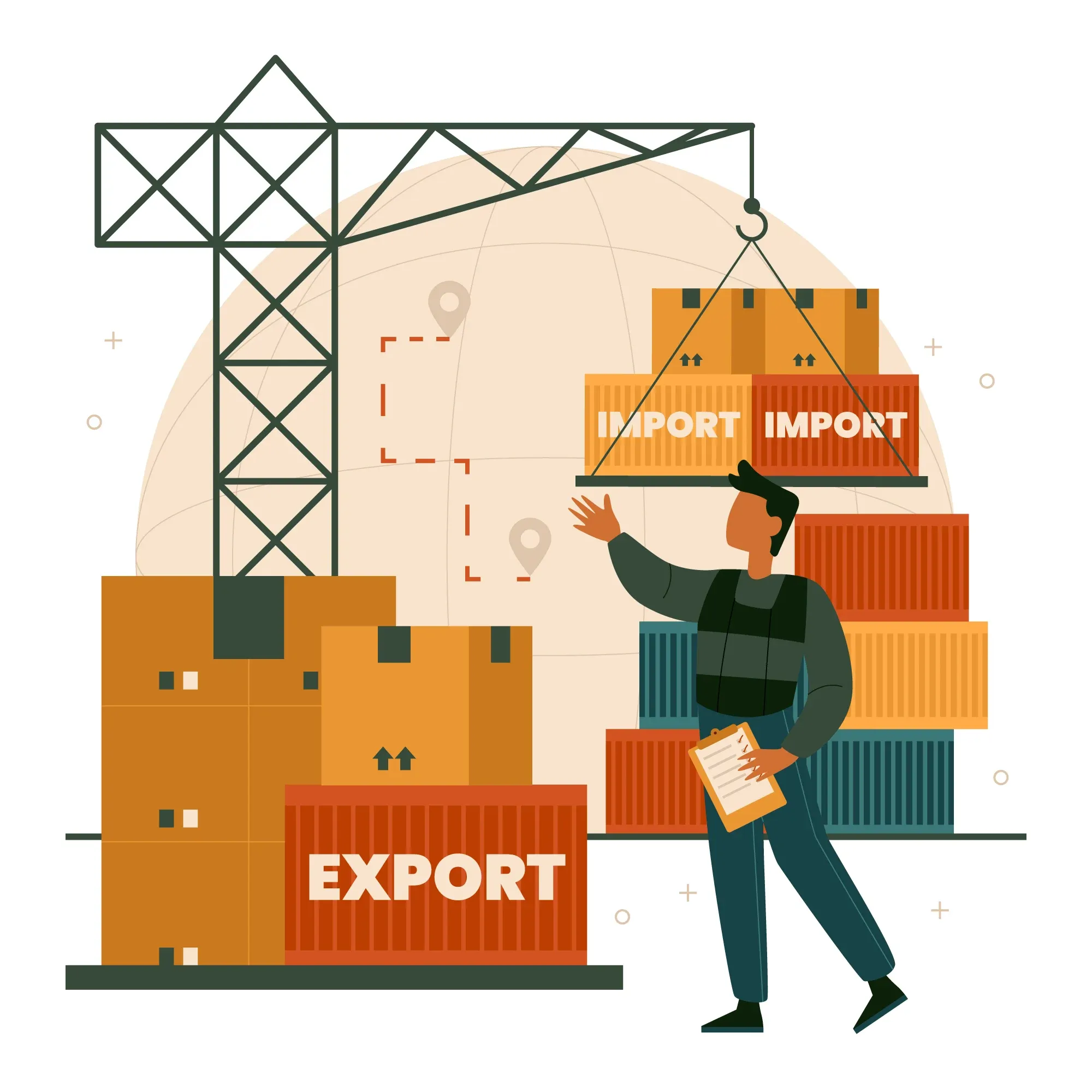
Here’s a simple checklist you can use as a freight cost calculator framework for every shipment.
- Decide the mode (air / sea / road)
- Based on product value, urgency, and shipment volume.
- For small, urgent shipments, check air freight cost per kg from China to India vs sea freight per CBM; for large volumes, start with ocean freight.
- Calculate CBM and chargeable weight
- Use a CBM calculator (L × W × H in meters × number of packages).
- For sea freight (LCL): compute W/M = max(CBM, weight in tons).
- For air freight: compute volumetric weight = CBM × 167 and compare with actual kg.
- For LTL road freight: apply trucking DIM factor (e.g., ~300–333 kg per CBM, depending on carrier).
- Get base freight quotes (FCL/LCL/air/road)
- Use ocean freight calculators and air freight calculators for quick benchmarks, then cross‑check with your trusted freight forwarder or CHA.
- For FCL, compare 20 ft container freight charges vs 40 ft container shipping cost and see which suits your volume.
- Add origin and destination local charges
- Origin: pick‑up, export documentation, origin THC, stuffing.
- Destination (India): THC, CFS charges in India, DO fee, shipping line local charges, BL fee, ground rent risk.
- Add CHA fees and customs clearance charges in India.
- Add customs duty, IGST, anti‑dumping duty where applicable
- Compute assessable value including freight (e.g., under CIF) and apply customs duty calculation on imports plus IGST on imports.
- If your product attracts anti‑dumping duty, factor that in as a separate line.
- Consider customs bonded warehousing charges if you plan to defer duty and spread cash‑flow impact.
- Add warehousing and delay buffers (demurrage/detention)
- Include an estimate for possible demurrage, detention and ground rent based on your past experience and port choice.
- Build a time buffer to handle Sea IGM issues, faceless assessment scrutiny and other customs delays.
Finally, look at total landed cost per unit - not just freight cost per kg, to decide whether your landed selling price and margins still work.
FAQs
Frequently Asked Questions
Start by calculating total CBM (L × W × H in meters × number of packages). For LCL, convert actual weight to tons (kg ÷ 1,000) and take the higher of CBM vs tons as chargeable W/M. Multiply chargeable W/M by the LCL rate per W/M, then add origin and destination local charges like THC, CFS charges and documentation.
Actual weight is simply how many kilos your shipment weighs on the scale. Volumetric weight converts space (CBM) into “virtual” kilos using a density ratio (e.g., 1 CBM = 167 kg for air freight, 1 CBM = 1,000 kg for LCL sea in W/M terms). Chargeable weight is the higher of actual vs volumetric, and that’s what airlines, shipping lines and truckers use to bill you.
There’s no hard rule, but many freight forwarders suggest you start comparing LCL vs a 20 ft FCL once you reach around 15-20 CBM. At that level, the per‑W/M LCL charge plus higher CFS handling can come close to or even exceed a flat FCL container rate. You also get better control, fewer delays and easier cost prediction with FCL.
Small importers can consolidate shipments (LCL or air consol), pick cheaper Incoterms like FOB instead of CIF to negotiate freight themselves, and combine multiple POs into one shipment where possible. Choosing the right gateway (CFS/ICD vs direct port/airport), improving documentation to avoid delays, and negotiating all‑in quotes with clear limits on local charges also helps.
Under FOB, you control and pay for main freight, destination charges and delivery, so you see the full freight cost in your own books. Under CIF or CFR, the supplier pays main freight, but the freight value still enters your assessable value for customs duty calculation in India, and you pay all destination port and customs‑side charges yourself. DAP/DDP shift even more responsibility to the seller but usually at a higher delivered price.