IGST on Imports vs GST on Domestic Purchases: Input Credit, Refund & Common Mistakes (For Indian Import‑Export Businesses)
Understand IGST on imports vs GST on domestic purchases for Indian import-export firms. Learn ITC claims via GSTR-2B/3B, refunds for exporters.
Listen to article
Audio version (0% complete)

For most Indian import‑export companies, IGST paid at customs is not a permanent cost but a cash‑flow item that can be neutralised through input tax credit (ITC) and, for exporters, refunds. The challenge is understanding how IGST on imports differs from GST on domestic purchases, how ITC flows through GSTR‑2B and GSTR‑3B, and where mistakes typically block credit or refunds.
Why IGST on imports matters
Before GST, imports suffered multiple indirect taxes like CVD and SAD, which had their own refund/credit complications. GST replaced these with a single IGST levy on imports to align tax treatment of imported and domestic goods. IGST is charged in addition to customs duties (like BCD and SWS), so it directly affects working capital at the time of clearance.
For import‑heavy businesses, IGST credit is often one of the largest balances in the GST electronic credit ledger, and delays or errors in capturing that credit can materially hit cash flow. Exporters and SEZ‑facing businesses also depend on this import‑related ITC to fund zero‑rated supplies and claim timely refunds.
IGST on imports vs GST on domestic purchases – the basic difference
- IGST (Integrated GST): Charged on inter‑state supplies and imports, collected by the Centre but shareable with states.
- CGST (Central GST): Central component of GST on intra‑state supplies.
- SGST (State GST): State component of GST on intra‑state supplies.
How law treats imports vs domestic supplies
All imports of goods are legally treated as inter‑state supplies until they cross the customs frontier of India, so they always attract IGST, not CGST+SGST. Domestic purchases within a state normally attract CGST+SGST, and inter‑state domestic supplies attract IGST depending on the place‑of‑supply rules under the IGST Act.
IGST on imports is levied under the Customs Tariff Act read with the IGST Act at the same rate as GST on a similar domestic supply, ensuring rate parity between imported and locally supplied goods. In day‑to‑day terms, the main differences for you are the point of levy (customs vs invoice), the document (bill of entry vs tax invoice), and the timing and mode of payment.
How IGST is calculated on imports
For most goods, customs duty and IGST are calculated on this base:
- Assessable value (usually CIF – Cost + Insurance + Freight).
- Add Basic Customs Duty (BCD) on the assessable value.
- Add Social Welfare Surcharge (SWS) on BCD (often 10%, sometimes different).
Compute IGST on: Assessable value+BCD+SWS(+any other applicable duties, except IGST/cess)
Import case (at customs):
- Assessable value: ₹1,00,000
- BCD @10%: ₹10,000
- SWS @10% of BCD: ₹1,000
- Value for IGST: ₹1,11,000
- IGST @18%: ₹19,980
- Total duties/taxes at clearance: ₹10,000 + ₹1,000 + ₹19,980 = ₹30,980.
Domestic purchase case (same economics):
Suppose a domestic supplier sells at a taxable value of ₹1,11,000 plus 18% GST = ₹19,980, invoice value ₹1,30,980. Here, the buyer pays GST to the supplier rather than at customs, but the tax amount (₹19,980) is the same as IGST on imports.
Key point: In both scenarios, you can generally claim ITC of ₹19,980, the BCD and SWS remain costs, while IGST/GST is recoverable if conditions are met.
Aspect | Import (IGST at customs) | Domestic purchase (GST on invoice) |
Tax type | IGST on imports | CGST+SGST or IGST |
Tax amount in example | ₹19,980 IGST at customs | ₹19,980 GST on supplier invoice |
Payment timing | Upfront at clearance (cash/bank via ICEGATE) | As per supplier credit terms |
ITC document | Bill of Entry | GST tax invoice |
ITC nature | Import IGST ITC | Regular input GST ITC |
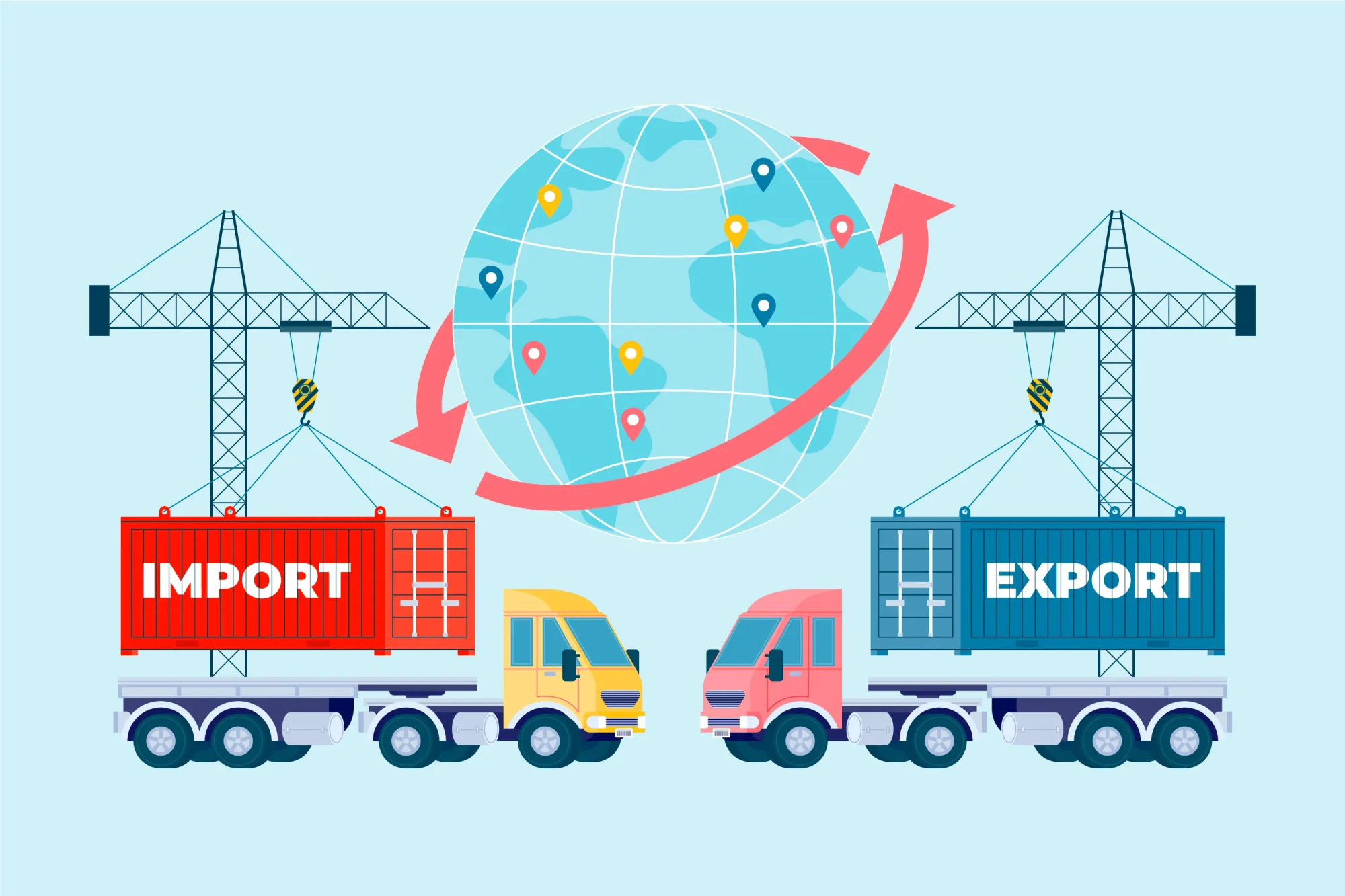
Input Tax Credit (ITC) on IGST paid at customs – step‑by‑step for importers
To claim ITC of IGST paid on imports, broadly ensure:
- You are a registered person with a valid GSTIN.
- Goods are used or intended for use in business for making taxable or zero‑rated supplies (not for personal use).
- You have a valid Bill of Entry with your correct GSTIN and other details.
- IGST paid is actually debited/paid at customs (ICEGATE challan).
- The import entry appears in your GSTR‑2A/2B, or you have strong documentary support if it is missing.
How and when the credit appears and is used
Customs data is transmitted from ICEGATE to the GSTN. IGST on imports then auto‑populates in GSTR‑2A and GSTR‑2B under “Import of goods from overseas/SEZ on Bill of Entry”. You claim the ITC in GSTR‑3B in the relevant month, and the credit moves into your electronic credit ledger.
By law and portal logic, IGST credit must be utilised first to pay IGST liability, and any remaining IGST credit can then be used against CGST and SGST in any order, before using CGST/SGST credits. This makes import IGST ITC highly valuable for overall GST optimisation across pan‑India sales.
Common ITC mistakes specific to imports
Mistake #1 - Wrong GSTIN or details on Bill of Entry: Blocks auto‑population in GSTR‑2B and invites disputes over eligibility.
Mistake #2 - Missing or untracked Bills of Entry: Some BoEs never get claimed, leading to permanent ITC loss.
Mistake #3 - Claiming ITC on non‑business imports or for blocked items: Personal imports or blocked credits (e.g., certain motor vehicles, personal consumption) are not allowed.
Exports, zero‑rated supplies and refunds – how import‑related ITC comes back
Under Section 16 of the IGST Act, exports of goods/services and supplies to SEZ units/developers are treated as zero‑rated supplies, meaning output tax is effectively zero but ITC on inputs remains fully available. This allows exporters and SEZ suppliers to recover IGST paid on imports and other inputs, even though their outward supplies are not taxed in India.
Two export routes and how IGST/ITC flows
There are two main ways to handle exports:
Route | How it works | How import IGST ITC is monetised |
Route 1 - LUT/bond (no IGST) | Export without charging IGST by furnishing LUT/bond. | Claim refund of unutilised ITC accumulated from imports and domestic inputs. |
Route 2 - IGST‑paid exports | Charge and pay IGST on export invoice, then claim IGST refund. | IGST paid on imports flows into ITC ledger and offsets export IGST, refund returns net IGST paid on exports. |
Best practices for import‑heavy companies to stay compliant and cash‑efficient
- Step 1 - Do periodic reconciliations: At least monthly, reconcile. Books (GRN/purchase register) vs Bills of Entry vs GSTR‑2A/2B vs ICEGATE refund status, and investigate every mismatch.
- Step 2 - Maintain separate ledgers for ineligible ITC: Track blocked IGST (e.g., personal, capital goods with restrictions) separately so it never enters refund or utilisation workings.
- Step 3 - Formalise data flow with customs brokers and freight forwarders: Share master data (GSTIN, address, HSN, valuation rules) and require draft BoEs for approval to avoid wrong entries.
- Step 4 - Actively plan ITC utilisation: Use IGST ITC first to clear pan‑India IGST liabilities and then strategically apply remaining credits to CGST/SGST based on updated utilisation rules and portal flexibility.
- Step 5 - Build an internal “GST on imports” SOP: Document who checks what (rates, BoE, GSTR‑2B, refunds), with timelines aligned to return due dates and shipping schedules, so knowledge isn’t person‑dependent.

Conclusion
IGST on imports is not an extra permanent tax, it is a powerful credit and refund mechanism that, if managed well, keeps your landed costs comparable to domestic sourcing while protecting margins. For import‑heavy Indian businesses, disciplined control over BoEs, ITC capture, export refund routes and reconciliation routines can turn IGST from a cash‑flow burden into a strategic tool for funding growth in cross‑border trade.
FAQ
Frequently Asked Questions
For regular importers, IGST on imports is usually available as ITC, which can be used to pay output IGST/CGST/SGST. It is not refunded separately unless your supplies are zero‑rated and ITC remains unutilised.
Yes, once credited to your electronic credit ledger, import IGST ITC can be used first against IGST and then towards CGST or SGST liabilities in any order, subject to the statutory utilisation rules.
Common causes include mismatches between GSTR‑1, GSTR‑3B and shipping bills (especially invoice numbers, values, GSTIN), and ICEGATE errors like SB005. Check that return data and shipping‑bill details exactly match and resolve any listed ICEGATE error codes through the customs officer.
The BoE is the primary document for import ITC, and credit is intended to flow via GSTR‑2B, but where data is missing you may still claim ITC with strong documentation and reconciliations, expect higher scrutiny and keep proof of IGST payment and BoE.
For tax accounting, IGST on imports is a credit item, not a cost, assuming eligibility. Landed cost for pricing typically excludes recoverable IGST but includes non‑creditable duties (BCD, SWS, anti‑dumping), logistics and overheads.