Import Duty from China to India: Taxes, Customs, and Calculation Explained
Complete guide to import duty from China to India: How to calculate, step-by-step import process, best import websites and FAQs.
Listen to article
Audio version (0% complete)
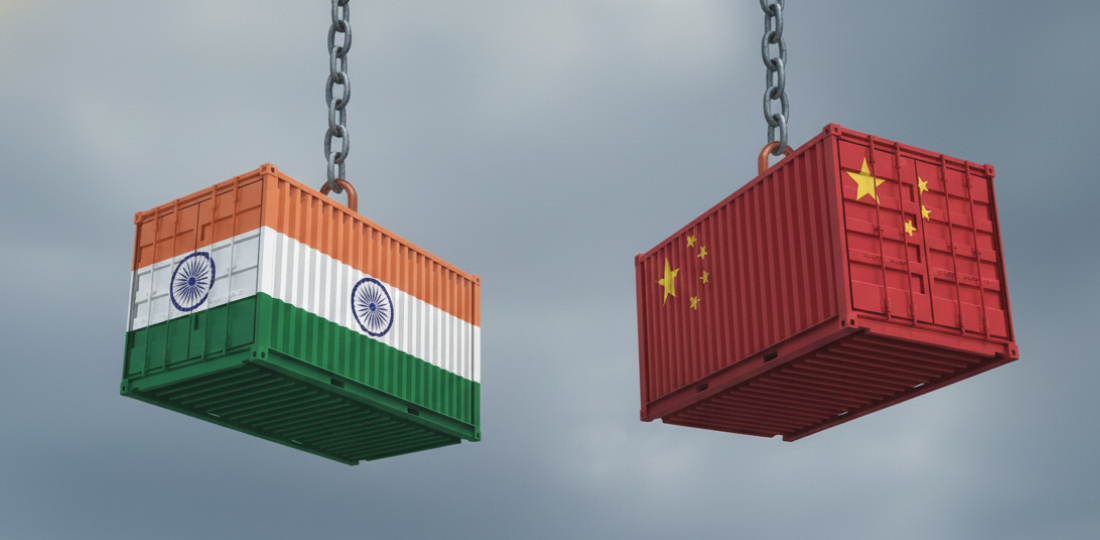
Import duty is a tax imposed by the Indian government on goods imported from other countries, including China. It is usually charged as a percentage of the goods’ value and must be paid before customs releases your shipment.
If you are importing from China, understanding how duties, anti-dumping charges, and GST work is crucial to calculating your true landed cost and keeping your profit margins intact.
What Is Import Duty?
Understanding Import Duty Basics
Import duty is generally an ad valorem tax, which means it is calculated as a percentage of the goods’ total value rather than a fixed amount per unit. In simple terms, the higher the value of your shipment, the higher the absolute duty you pay, even if the percentage rate remains the same.
For customs purposes, duty is usually calculated on the CIF value of your goods i.e., Cost + Insurance + Freight combined, not just the ex-factory or product price alone.
If you import goods worth ₹1,00,000, you might end up paying an additional ₹15,000–₹40,000 in import duties depending on the product type, its HS code, and the applicable duty structure.
Who Pays Import Duty?
The importer of record is responsible for paying import duty. This can be an individual, a proprietorship, or a company whose name appears on the Bill of Entry and customs documents.
If you are buying from Alibaba, 1688, AliExpress, or any Chinese wholesale platform and importing into India under your IEC, you are legally responsible for paying customs duties and taxes in India.
India-China Trade Dynamics
India and China share a large but heavily imbalanced trade relationship. In 2025, bilateral trade was around USD 155.62 billion, with Chinese exports to India at about USD 135.87 billion and Indian exports to China at roughly USD 19.75 billion, resulting in a very high trade deficit for India.
India relies significantly on Chinese imports for electronics, machinery, chemicals, and many critical raw materials, for the full picture of what India imports from China, see our detailed breakdown. To protect domestic manufacturers from cheap underpriced imports, India also imposes anti-dumping duties and safeguard duties on specific Chinese products such as steel, chemicals, textiles, and solar panels, over and above the standard customs duty structure.
What India Imports from China
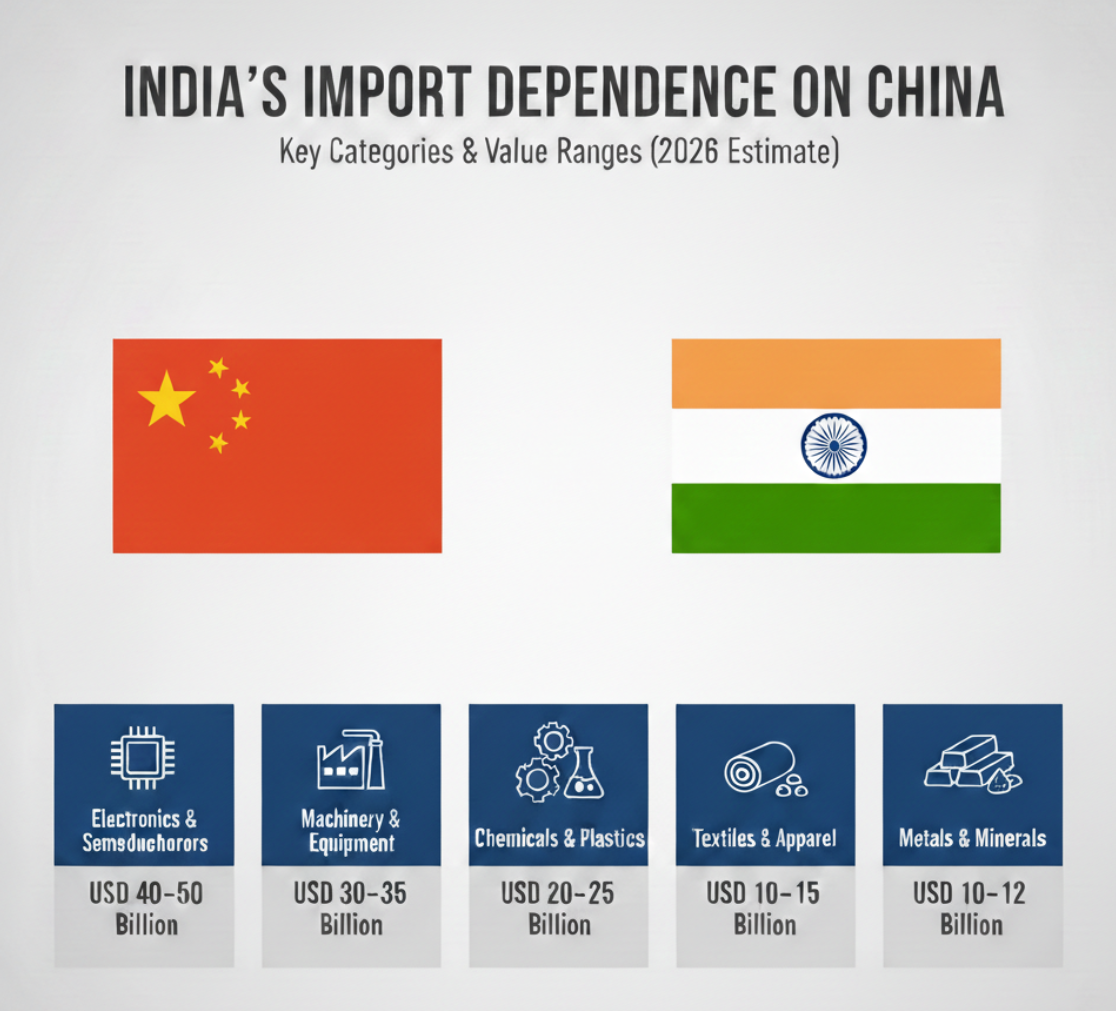
India's massive import bill from China reflects structural imbalances in manufacturing capability:
- Electronics & Semiconductors: USD 40-50 billion annually
- Machinery & Equipment: USD 30-35 billion
- Chemicals & Plastics: USD 20-25 billion
- Textiles & Apparel: USD 10-15 billion
- Metals & Minerals: USD 10-12 billion
For many Indian businesses, especially MSMEs and traders, importing from China remains essential to stay competitive on price and product range.
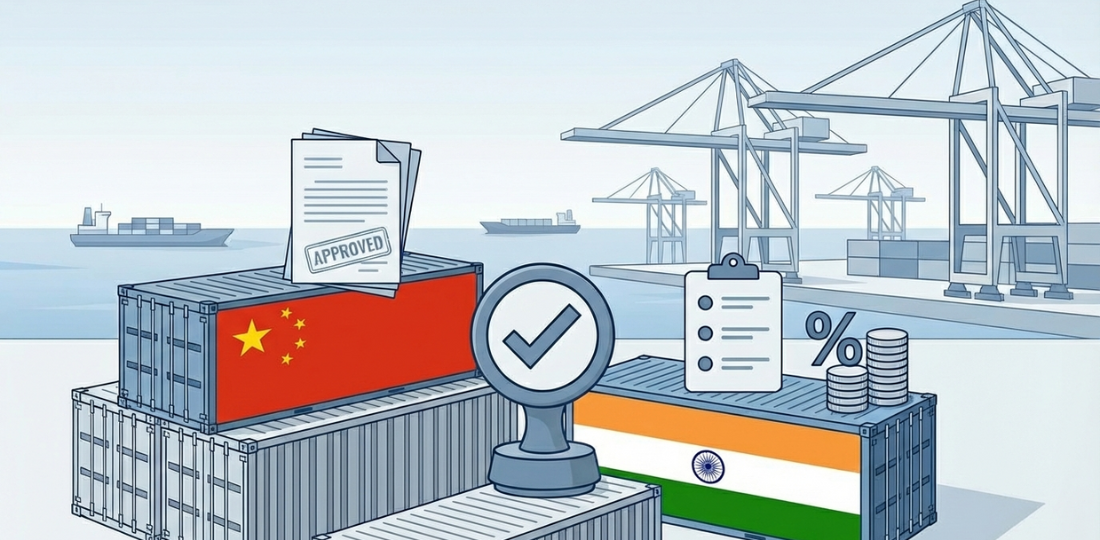
Import Duty Calculation Formula
In practice, your total import tax outgo is made up of multiple components such as Basic Customs Duty (BCD), Social Welfare Surcharge (SWS), IGST, and sometimes Anti-Dumping Duty (ADD).
A simplified version of the calculation looks like this:
Total Duty = BCD + SWS + IGST + ADD (if applicable)
Here’s a step-by-step breakdown, using the CIF value (Cost + Insurance + Freight) as the starting point:
- Step 1: Assessable Value
Assessable Value = FOB (or product cost) + Freight + Insurance = CIF value.
- Step 2: Basic Customs Duty (BCD)
BCD Amount = BCD Rate % × Assessable Value.
- Step 3: Social Welfare Surcharge (SWS)
SWS = 10% × BCD Amount.
- Step 4: Taxable Value for IGST
Taxable for IGST = Assessable Value + BCD + SWS.
- Step 5: IGST on Imports
IGST = IGST Rate % × Taxable for IGST (commonly 18% for many products, but it depends on the HSN).
- Step 6: Anti-Dumping Duty (if applicable)
ADD = ADD Rate % (or fixed amount per unit) × Assessable Value or quantity, depending on the notification.
- Step 7: Total Duty Payable
Total Duty = BCD + SWS + IGST + ADD.
- Step 8: Final Landed Cost
Final Cost to You = Product Value + Total Duty + local logistics and handling charges.
This is why a shipment that looks cheap on paper can become 40-60% more expensive once duties, surcharges, and GST are added, especially when anti-dumping duty applies. For some categories the effective rate is even higher, imported cars are the classic example, which is why car import duty and carnet rules deserve their own guide.
Goods and Services Tax (GST) on Imports
Apart from customs duties, Goods and Services Tax (GST) is also levied on imports into India in the form of Integrated GST (IGST). For importers, IGST on imports works similarly to GST within India but is collected at the time of customs clearance rather than at the point of sale.
Common IGST rates on goods are 5%, 12%, 18%, and 28%, depending on the HSN classification of the product.
The important part: IGST on imports is calculated on a higher base, not just on the product value. The formula customs follows is:
- IGST Taxable Value = Assessable Value (CIF) + BCD + SWS + any other applicable customs duties.
- IGST Payable = IGST Rate % × IGST Taxable Value.
For businesses registered under GST, the IGST paid at import can usually be claimed as Input Tax Credit (ITC) in their GST returns, subject to eligibility and documentation.
How to Import Goods from China to India: Step-by-Step Process
Step 1: Find Your Supplier (Alibaba, AliExpress, etc.)
Best platforms for importing from China:
Step 2: Confirm Price & Terms (FOB vs CIF)
Negotiate clearly whether the price is:
- FOB (Free on Board) – you arrange and pay for freight and insurance.
- CIF (Cost, Insurance, Freight) – supplier covers freight and insurance to the Indian port.
Step 3: Arrange Shipping
Coordinate with a freight forwarder for sea or air shipment depending on your volume, cost, and urgency.
Step 4: Prepare Documentation
Required documents from supplier:
- Invoice
- Packing List
- Certificate of Origin
- Bill of Lading
Your documentation:
- IEC Certificate
- GST Registratio
- AD Code
Step 5: File Customs Declaration (Bill of Entry)
Your customs broker (CHA) will file a Bill of Entry on ICEGATE for customs clearance. This is where you declare product details, HS codes, assessable value, and claim any applicable exemptions.
Step 6: Pay Customs Duty via ICEGATE
Based on the Bill of Entry assessment, you will get the payable amount for:
- BCD
- SWS
- IGST
- ADD or safeguard duty, if applicable
Payment is made online via ICEGATE before customs gives Out of Charge.
Step 7: Customs Clearance & Container Release
After payment and any required examination, customs will release your shipment.
Practical Tips for Importers
To keep your imports from China profitable and compliant, keep these points in mind:
- Always calculate duties on the CIF value, not just the product price.
- Check if your product attracts anti-dumping or safeguard duties, especially in categories like steel, chemicals, textiles, or solar products.
- Account for IGST on imports separately and plan to claim Input Tax Credit if you are GST-registered and eligible.
- Use the correct HSN code to avoid underpayment or overpayment of duty.
- Work with a reliable customs broker or freight forwarder, at least for your first few shipments.
With the right knowledge of ad valorem duties, CIF valuation, GST treatment, and anti-dumping risks, you can import confidently from China while protecting your margins and staying fully compliant with Indian regulations.
FAQ: Common Questions About Importing from China to India
Frequently Asked Questions
Varies by product (5-40% BCD), plus 10% SWS, plus 18% IGST. Chinese goods typically face higher duties due to anti-dumping duties.
Customs duty cannot cannot be avoided, its illegal
Duty can be minimized:
- Use Carnet permits (6-month temporary import)
- Import under trade agreements (zero-duty items)
- Source from FTA countries with lower duties
- Negotiate better FOB prices to offset duty costs
Depends on the product. FTA countries (UAE, UK, Australia, Vietnam, Taiwan) often have lower duties
Yes, IEC is mandatory for every Import
For products like electronics, toys, etc. BIS certification may be required to comply with Indian safety standards