Customs Clearance Process for Imports in India: Step-by-Step Guide
Learn the complete customs clearance process for imports. Step-by-step guide, documents, BoE, duties, CHA, ICEGATE, and avoiding shipment delays.
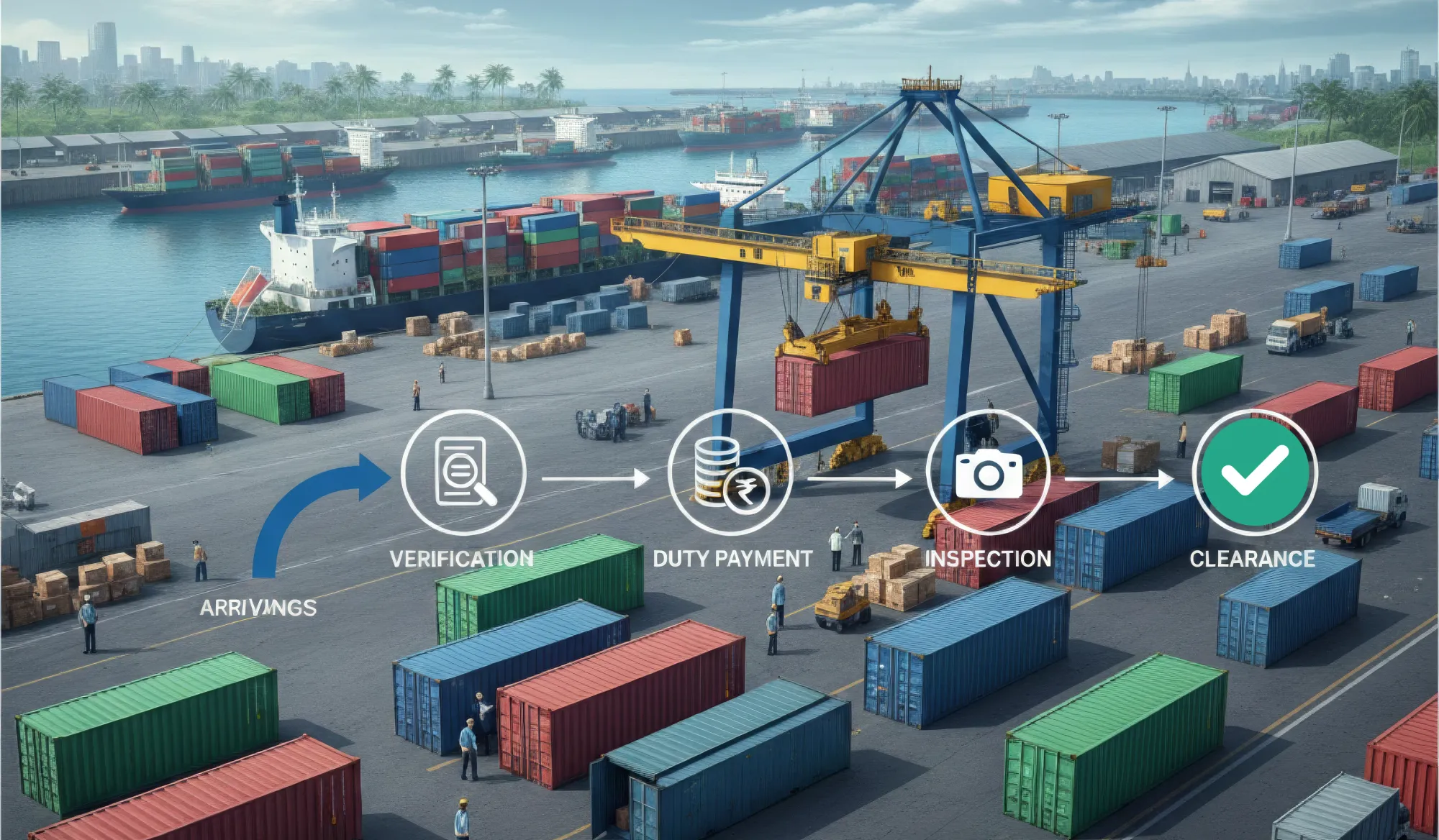
Customs clearance for imports in India is the process of getting your goods legally approved by Indian Customs so they can enter the country, after you submit documents, pay duties, and meet all regulations. It is very crucial to keep your shipments moving on time and to protect your profits, when done wrong, it leads to delays, penalties, and unhappy customers.
Why Customs Clearance is so Crucial for Indian Importers
For any Indian importer, D2C brand, or manufacturer, customs clearance is the gate between “goods have arrived in India” and “goods are in my warehouse and ready to sell.” It covers document checks, duty assessment, and approvals by Indian Customs before cargo is released from the sea port, land port or airport.
Customs clearance is the process through which Indian Customs verifies your imported goods, checks documents, calculates duties & taxes, and finally authorises release of the cargo into India. Only after customs clearance (also known as “Out of Charge”) can you legally take delivery from the port/airport.
Most Common Incoterms Used in Imports
FOB / FCA: Foreign seller handles export clearance, Indian importer handles import customs clearance in India.
CIF / CFR: Seller pays for freight (and sometimes insurance), but import customs clearance in India is still usually the buyer’s responsibility.
DAP / DDP: Under DAP, seller delivers to destination but buyer normally handles import clearance, under DDP, seller may also bear import duties and clearance, though this is less common in practice.
Key Stakeholders in the Import Customs Clearance Process
Importer / Consignee: Owner of the goods, obtains IEC, shares accurate documents, decides HS code in consultation with experts, and ensures duties are paid on time.
Customs Broker / CHA: Licensed professional who files the Bill of Entry, interacts with customs electronically and on the ground, and coordinates clearance.
Freight Forwarder: Organises international transport, consolidations, and often coordinates with CHA and shipping line/airline.
Shipping Line / Airline: Moves cargo physically and files Import General Manifest (IGM) and issues Delivery Order (DO).
Customs Department / Officers: Assess value and classification, decide examination requirements, and issue Out of Charge once satisfied.
Documents Required for Import Customs Clearance in India
IEC (Importer Exporter Code) – Mandatory registration from DGFT for any business importing into India.
Commercial Invoice – Shows buyer, seller, price, currency, terms, and product details.
Packing List – Explains how goods are packed, number of boxes, weights, dimensions.
Bill of Lading (BL) / Air Waybill (AWB) – Transport document issued by shipping line or airline.
Bill of Entry (BoE) – Electronic declaration filed with Customs via ICEGATE, used for assessment and duty calculation.
Purchase Order / Contract – Supports valuation and trade terms if customs asks.
Insurance Certificate – Confirms insurance coverage for CIF valuation when applicable.
Licences / Registrations – DGFT licences, FSSAI, PQ, CDSCO, BIS, etc., depending on product type.
Certificates – Certificate of origin, analysis, quality, or conformity for specific categories if required.
KYC of the importer with the CHA and custodian (CFS/terminal) is also mandatory and often requested before processing documents.
Customs Duty and Valuation
Assessable Value (AV)
For imports, customs duty is calculated on the assessable value of goods. In most cases, this is based on the CIF value (Cost + Insurance + Freight) plus standard landing charges (often 1 percent of CIF).
Main Types of Customs Duties and Taxes
Basic Customs Duty (BCD) – Main customs duty, based on HS codes.
Social Welfare Surcharge (SWS) – Usually a 10% of BCD
IGST (Integrated GST) – Charged on AV + BCD + SWS at the applicable GST rate for that product.
Other duties (if applicable) – Anti-dumping duty, safeguard duty, or compensation cess for specific categories.
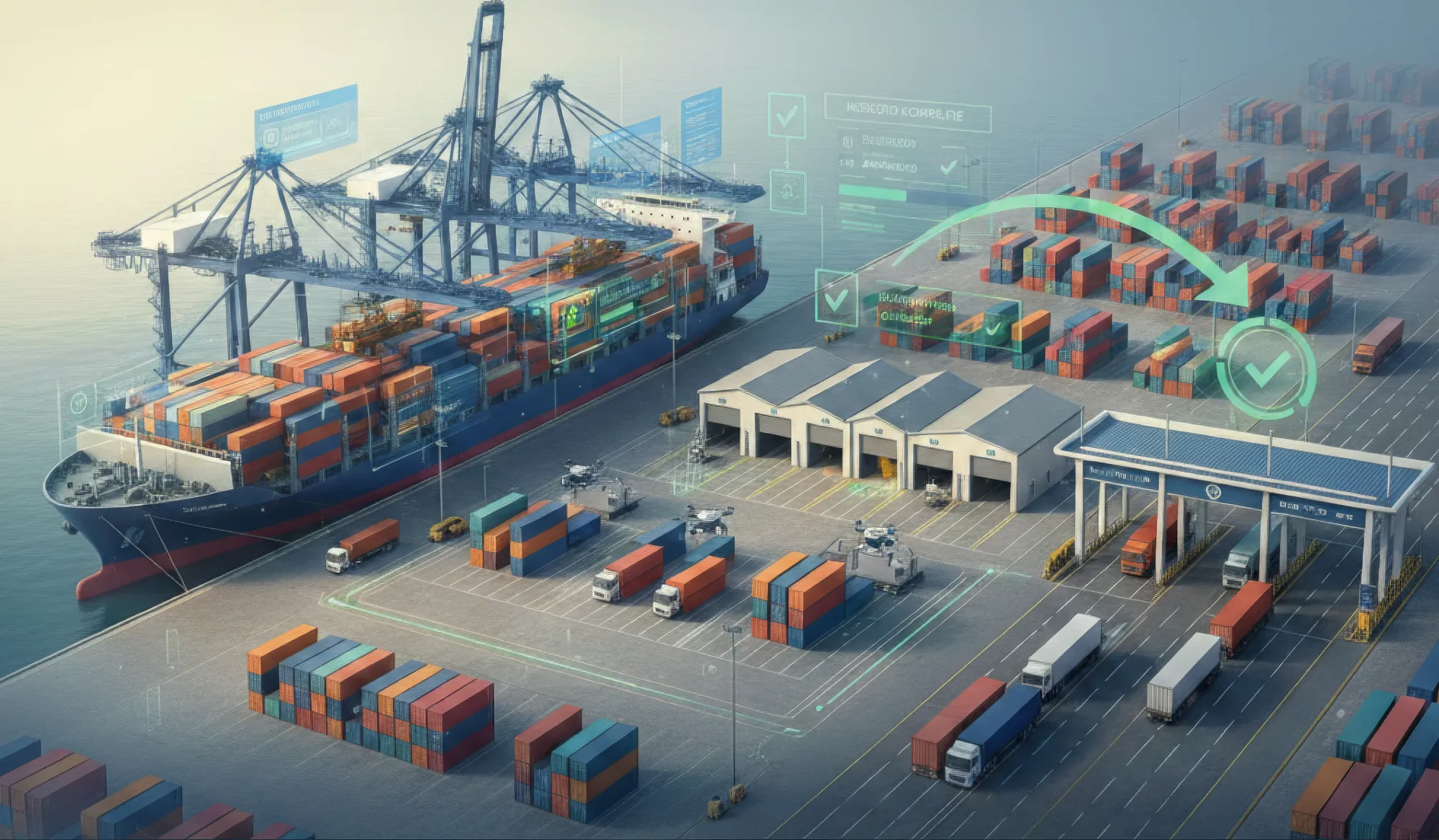
Step-by-Step Customs Clearance Process for Imports in India
Step 1: Shipment Arrival and IGM Filing
The shipping line or airline files an Import General Manifest (IGM) with Indian Customs listing all consignments on board. Only after IGM is registered can importers file or process their Bills of Entry for that vessel/flight.
Step 2: Document Collection from Supplier and Freight Forwarder
Before arrival, collect soft copies of:
- Commercial invoice and packing list.
- BL/AWB.
- Insurance, licences, and certificates if any
Share these with your CHA so they can start preparing the Bill of Entry and classification well in advance.
Step 3: Appointing a Customs Broker / CHA
Most importers issue an authorisation or power of attorney to a licensed CHA. The CHA then registers KYC, verifies documents, and plans HS classification and duty estimation.
Step 4: HS Code Classification and Duty Estimation
The importer and CHA together decide the HS code based on product description, technical specs, and usage. Using that HS code, they estimate BCD, IGST, and any additional duties so you know the expected duty outflow.
Step 5: Filing Online Bill of Entry
The CHA will file the Bill of Entry electronically through ICEGATE, with all key details such as importer, HS code, quantity, value, country of origin, and licences.
- Advance BoE: Filed before vessel arrival to speed up clearance.
- Regular BoE: Filed after IGM filing but within the permitted time window.
Step 6: Customs Assessment – Verification of Value and Classification
Customs officers review the BoE, documents uploaded through e‑Sanchit, and any exemptions claimed.
They may:
- Accept the declaration and facilitate the cargo.
- Raise queries for clarification or additional documents.
- Change classification or value if they see discrepancies.
Important: Reply to queries promptly and completely through ICEGATE to avoid your BoE getting stuck in the queue.
Step 7: Duty Payment by Importer or CHA
Once assessment is complete, the system calculates total duties and taxes payable. Payment is usually done:
- Online via net banking or authorised payment gateways on ICEGATE.
- Through the CHA using the importer’s funds.
Step 8: Customs Examination and Inspection
Based on risk management systems (RMS), cargo may be:
- Facilitated – no examination, released on documents only.
- Partially examined – scanning or sample checks.
- Fully examined – detailed physical inspection.
New importers, sensitive commodities, and shipments with valuation doubts are more likely to be routed to examination.
Step 9: Out of Charge (OOC) Order
If customs is satisfied after assessment and examination, they issue an Out of Charge (OOC) order in the system. This is the formal approval that all duties and regulatory checks are complete and the goods can be released.
Step 10: Port / CFS Charges, DO, and Cargo Gate-Out
After OOC, the importer/CHA must:
- Pay port or CFS handling charges and any storage dues.
- Obtain or confirm the Delivery Order (DO) from shipping line/airline.
- Complete gate formalities and move the cargo out of the terminal to the warehouse or factory
Sea Port vs Air Cargo Customs Clearance in India
The legal customs steps, documentation and compliances are similar for sea and air, but timelines and costs differs drastically:
Best Practices and Checklist for First-Time Importers in India
Before Shipment Leaves Origin
- Confirm HS codes and estimated duties for your products.
- Check if special licences (FSSAI, PQ, CDSCO, BIS) are required.
- Ensure the supplier prepares clear invoices and packing lists with agreed descriptions.
- Get your IEC and GST registrations in place.
Before Cargo Arrival in India
- Appoint a CHA and complete KYC and authorisations.
- Share all documents (invoice, PL, BL/AWB, insurance, licences) with CHA early.
- Decide whether to file an advance Bill of Entry where possible.
- Arrange funds for duty payment and port/CFS charges.
During Customs Clearance
- Respond promptly to any ICEGATE queries raised during faceless assessment.
- Monitor status of BoE and OOC through ICEGATE and updates from your CHA.
- Clear cargo from port/CFS quickly after OOC to avoid storage and detention.
FAQs on Customs Clearance for Imports in India
Do I need IEC for customs clearance?
Yes. An Importer Exporter Code (IEC) issued by DGFT is mandatory for most businesses importing into India, and it is quoted on customs documents like the Bill of Entry.
How long does customs clearance usually take in India?
For compliant shipments with correct documents, clearance at major ports or air cargo complexes often takes around 2–4 days, though it can be faster or slower depending on traffic, examinations, and query resolution
What happens if I don’t clear my shipment on time?
If clearance is delayed, you may incur:
- Port/CFS storage charges (demurrage).
- Container detention charges from the shipping line.
- In extreme delays, cargo may be treated as abandoned as per customs rules
Why is my cargo showing “under examination” status?
This means Customs has routed your shipment for physical or documentary examination, often due to risk parameters, new importer profile, sensitive commodity, or valuation doubts. Your CHA will coordinate inspection, and once completed, the status should move toward Out of Charge if everything is in order.
How can I check customs duty for my product?
You can:
- Use the duty calculators and tariff search tools linked from CBIC/ICEGATE.
- Consult your CHA or freight forwarder for a practical duty estimate before you place orders.