What is an HSN Code? Beginner’s Guide for Indian Importers & Exporters (2026)
Complete HSN code guide for import-export: What is HSN, how to find correct code, HSN Vs SAC, India’s context and FAQs
Listen to article
Audio version (0% complete)
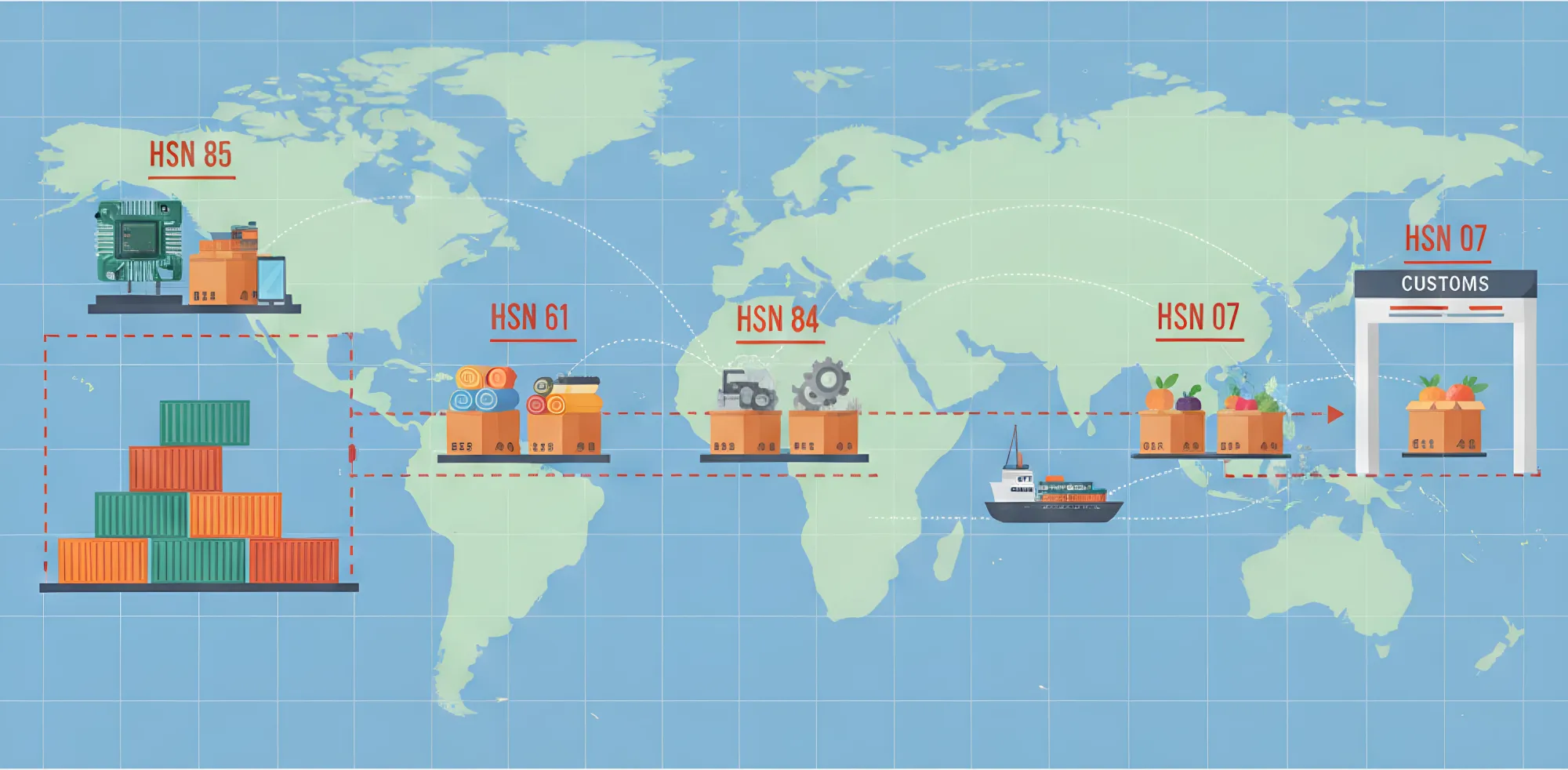
HSN code is a six-digit international standardized system used to classify and identify internationally traded goods for customs purposes. The acronym stands for "Harmonized System of Nomenclature." In India, it's called the HSN code or ITC-HS code when extended to eight digits. These codes determine your import duties, taxes, export benefits, and whether your shipment faces customs delays at the port.
For importers, a single digit error in the HSN code can mean the difference between paying 5% customs duty and 25% customs duty on the same product. For exporters, using the wrong code can disqualify you from export incentives like DRAWBACK or RODTEP benefits worth lakhs of rupees. This is why understanding HSN codes thoroughly is critical for anyone involved in cross-border trade.
What is an HSN Code?
The system is called "Harmonized" because every country in the world uses the same first six digits to classify products. This creates harmony in international trade. An importer in India, Germany, Brazil, or Japan can all reference the same base code for the same product. This uniformity prevents confusion, prevents disputes, and makes trade smoother across borders.
It was introduced by World Customs Organization (WCO), an independent organization based in Brussels, in 1988. Before that, each country had its own classification system, and international trade was far more complicated and prone to disputes.
The Six-Digit International Base Code
The international HSN code consists of six digits + two country specific digits, divided into four pairs. Each pair has a specific meaning:
HSN CODE: 8 5 1 7 1 2 0 0
In India HSN Code is a 8-digit System
In India, the system is known as ITC-HS (Indian Trade Classification based on Harmonized System). It consists of 8 digits:
- First 6 digits: International HSN Code
- Last 2 digits: Indian subclassification
You can easily search and find Indian 8-digit HSN codes using EximPe’s HSN Code Finder Tool to simplify customs documentation and compliance.
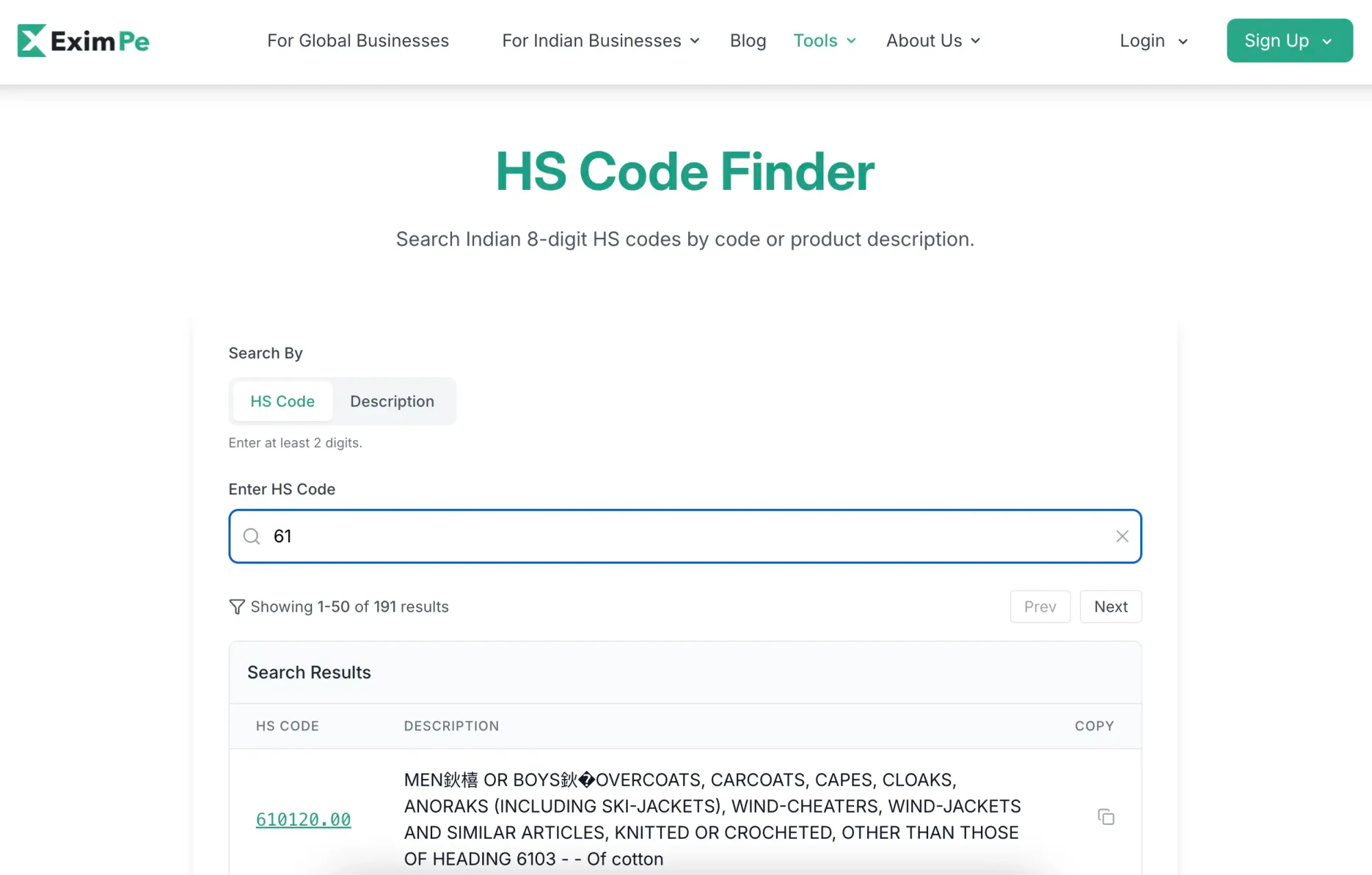
Example of an HSN Code:
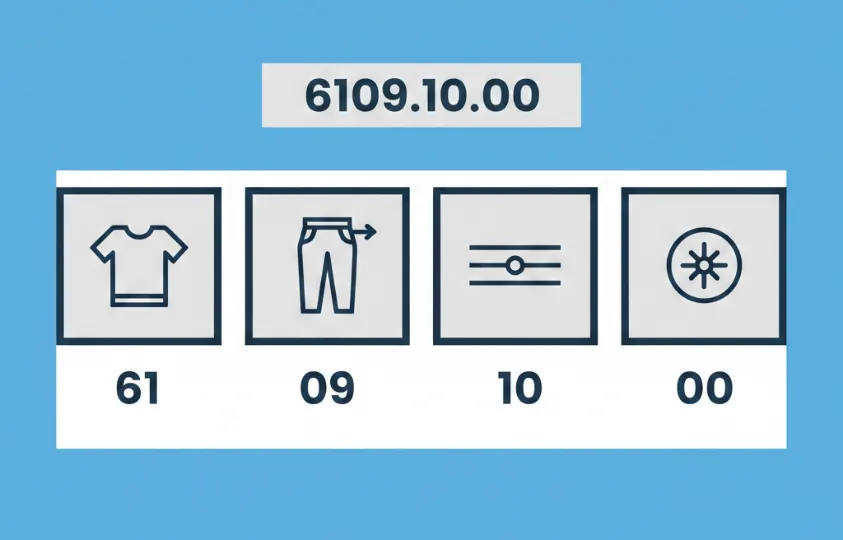
Let’s take HSN code 6109.10.00 for example:
- 61 – Articles of apparel and clothing accessories, knitted or crocheted
- 09 – T-shirts, singlets and other vests
- 10 – Of cotton
- 00 – Country-specific breakdown (used in India, the U.S., etc.)
Organized by Complexity
The HSN system is organized by the degree of manufacturing complexity.
Natural commodities and raw materials appear in the early sections. As you progress through the sections, products become increasingly processed and complex.
Why are HSN Codes Important?
1. Customs Compliance
When officials look at HSN codes, they can figure out the nature of goods. If the HSN codes are wrong, this may lead to delays, being charged, or having the goods taken away.
2. Calculating your Duties and Taxes
The classification of a product will determine how much its duty will be. Proper coding guarantees the correct tariffs are chose.
3. The analysis and statistics of global trade
States and trade-related bodies rely on HSN codes to oversee trade, see how goods are moved, and plan their trade activities.
4. The process of Documentation and Logistics
Companies insert HSN codes on important trade documents, such as the commercial invoice, the shipping bill, and the Bill of Entry.
How to Find the Correct HSN Code for Your Product
These are the steps you can take to find the correct HSN code.
1. Make use of a legally certified HSN Code search tool.
EximPe's HSN Code Finder Tool provides easy ways to search for products using select keywords or descriptions.
2. Use Official Government Resources for HSN Classification
- Indian Tariff Portal (indiantradeportal.in)
- DGFT Portal (dgft.gov.in)
- CBIC Website (cbic.gov.in)
3. Get in touch with Your Customs Broker or Freight Forwarder
They have knowledge that allows them to organize goods accurately and move through customs steps properly.
What is HSN Code in Import and Export?
In both imports and exports, HSN codes:
- Determine duties and taxes
- Are mandatory on shipping invoices
- Guide import/export restrictions
- Help with accurate product classification
For example:
- Importers must declare the HSN code to Indian Customs while filing the Bill of Entry.
- Exporters must include it on shipping documents while filing the Shipping Bill.
HSN Code vs SAC Code
A lot of people confuse HSN with SAC code, and they're actually very different.
SAC = Service Accounting Code — A 6-digit code used to classify services under India's GST system.
SAC codes are for services; HSN codes are for goods.
Conclusion
Everyone involved in international trade, including importers, exporters, and logistics people, needs to grasp what HSN codes do. The HSN code forms the backbone of documentation needed for the global trading system.
With the use of EximPe, you do not need much time to accurately categorize goods and reduce costs. Get started now in making your trade operations less complicated.
FAQs: HSN Code & Its Uses in Trade
Frequently Asked Questions
HSN Code means Harmonized System Code, developed by WCO to create a universal system of naming and coding traded products.
You can access the Indian HSN code list through CBIC, DGFT, or tools like EximPe’s HSN code search.
The first 6 digits are standard globally. However, countries like India add extra digits (up to 8 or 10) for national classification.
Use HSN Code if: You sell physical goods (clothes, phones, food, furniture, etc.)
Use SAC Code if: You provide services (consulting, restaurant, freight, rent, etc.)