Form 15CA and 15CB: How to File, and What They Became in 2026
Form 15CA and 15CB are now Form 145 and 146 under the Income-tax Rules 2026. Which Part to file, the ₹5 lakh rule, and what your bank needs.
Listen to article
Audio version (0% complete)

Form 15CA is the declaration you file before sending money out of India to a non-resident. Form 15CB is the chartered accountant's certificate that supports it when the payment is taxable and crosses ₹5 lakh in a tax year. Together they are how the Income Tax Department sees a foreign remittance before your bank releases it.
Both forms have been renumbered. Under the Income-tax Rules, 2026, Form 15CA is now Form No. 145 and Form 15CB is now Form No. 146. The rule that governs them moved from Rule 37BB to Rule 220, and the sections behind them moved from the Income-tax Act, 1961 to the Income-tax Act, 2025.
The forms do the same job. The Parts are the same, the ₹5 lakh line is the same, the CA certificate works the same way. What changed is every number you would quote to your accountant or your bank, and if you are still working from a section 195 checklist, the section is now 393.
What actually changed
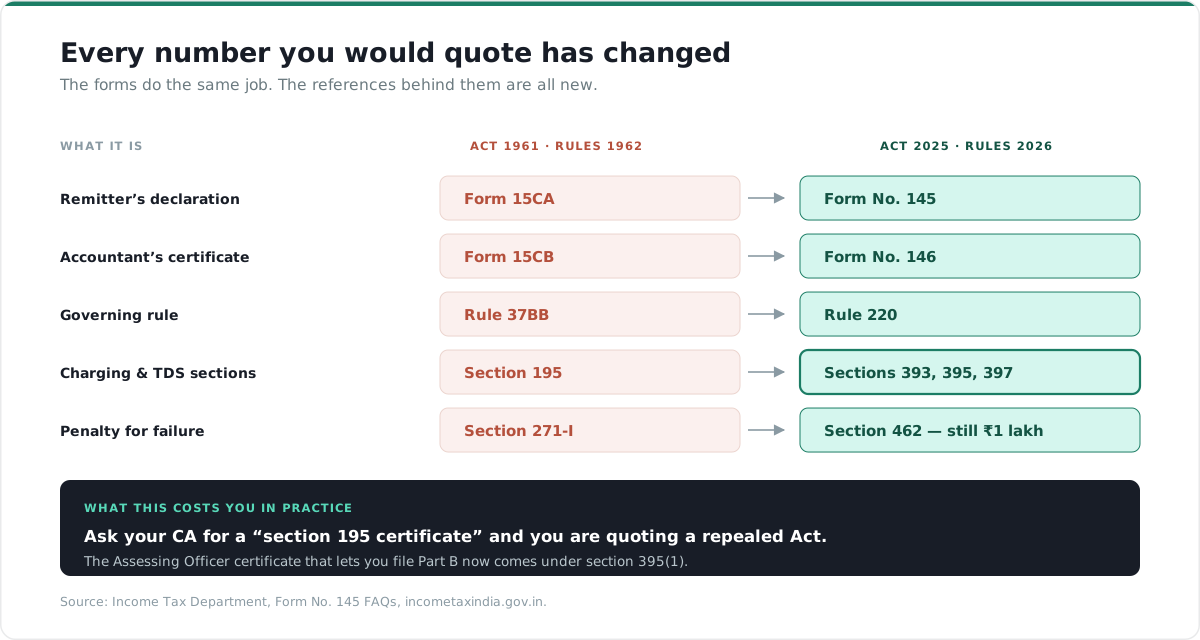
Item | Income-tax Act, 1961 · Rules, 1962 | Income-tax Act, 2025 · Rules, 2026 |
Remitter's declaration | Form 15CA | Form No. 145 |
Accountant's certificate | Form 15CB | Form No. 146 |
Governing rule | Rule 37BB | Rule 220 |
Charging and TDS sections | 195 | 393, 395, 397 |
Penalty for failure | 271-I | 462 |
Two consequences worth holding on to.
Your CA will ask for a section reference. If you tell them "section 195 certificate", you are quoting a repealed Act. The certificate from the Assessing Officer that lets you file Part B now comes under section 395(1).
The penalty provision moved but the amount did not. Up to ₹1 lakh for failing to file, or for filing inaccurate information, now under section 462.
Which form do you actually need? Start here
The answer depends on who you are, not just what you are paying for.
If you are a business paying a foreign vendor - software licences, consultancy, technical services, professional fees, commission, you almost certainly need Form 145. Whether you also need Form 146 depends on two things: is the payment chargeable to tax in India, and does it cross ₹5 lakh in the tax year.
If you are an individual remitting under the Liberalised Remittance Scheme - education fees, family maintenance, travel, investment, and the remittance does not need prior RBI approval, you are exempt. Rule 220 excludes it. Your bank will still want Form A2, but not Form 145.
If you are a Unit in an International Financial Services Centre, you are also exempt under Rule 220.
And there is a third exemption people miss: remittances of a nature specified under the relevant RBI purpose code are outside the requirement. Which is why the purpose code on your remittance is not a formality, it can decide whether you file at all.
The four Parts, and the ₹5 lakh line
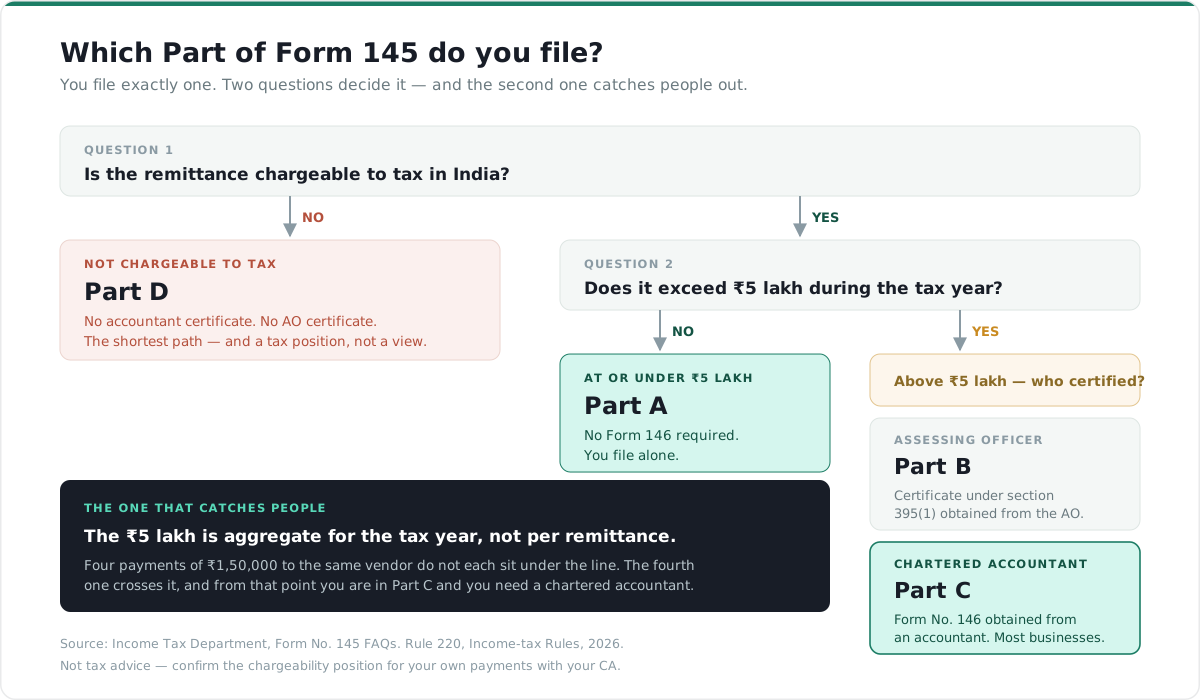
Form 145 has four Parts and you file exactly one of them.
Part D - the remittance is not chargeable to tax in India. No CA certificate, no AO certificate. This is the shortest path and the one most often used wrongly. "Not chargeable" is a tax position, not an opinion about whether it feels taxable.
Part A - chargeable to tax, and the remittance does not exceed ₹5 lakh during the tax year. No Form 146 required.
Part B - chargeable to tax, above ₹5 lakh, and you hold a certificate from the Assessing Officer under section 395(1). You go to the AO instead of a CA.
Part C - chargeable to tax, above ₹5 lakh, and you have obtained Form 146 from an accountant. This is the common route for businesses.
The ₹5 lakh is aggregate for the tax year, not per remittance. This is where people get caught. Four payments of ₹1.5 lakh to the same vendor do not sit under the line, the fourth one crosses it, and from that point you are in Part C and you need a CA.
The decision rule: Not taxable → Part D. Taxable and under ₹5 lakh → Part A. Taxable and over → Part B if you went to the AO, Part C if you went to a CA.
How to file, step by step
Before step 1 - the prerequisite that stalls most first-time filers. If you are going to need Form 146, your CA must be added on the e-filing portal before you start the form. Go to Authorised Partners → My Chartered Accountant(s), add their membership number, assign Form 146 for the relevant year. Miss this and you will reach Part C, be asked for an acknowledgement number that does not exist yet, and stop.
- Assign your CA and let them file Form 146. They will e-verify it with their Digital Signature Certificate and generate a UDIN - an 18-digit number from the ICAI portal.
- Log in to the e-filing portal → e-File → File Forms → select Form No. 145.
- Choose your Part. PAN or TAN is auto-populated. Enter the tax year, filing type and submission mode.
- For Part C, enter the Form 146 acknowledgement number. Once validated, Part C pre-fills from the certificate.
- Complete the remaining fields - remitter details, remittee details, country, currency, amount in INR, date, nature of remittance, and your bank details.
- e-Verify. Digital Signature Certificate or Electronic Verification Code. DSC is mandatory if you are filing with a TAN.
- Save the acknowledgement. You get an acknowledgement number and a transaction ID, plus confirmation by email and SMS.
- Send a copy to your bank. This is not optional, a copy of the filed Form 145 must reach the authorised dealer, electronically or otherwise, before the remittance is made.
Bulk filing: if you are pushing many remittances, the Offline Utility on the e-filing portal lets you prepare the data without an internet connection and upload it as a single zipped XML.
Documents you need: invoices, agreements or contracts for the remittance; remitter, remittee, remittance and bank details; the AO certificate for Part B or Form 146 for Part C; and the one people forget - Form No. 41 and a Tax Residency Certificate if you are claiming a DTAA benefit.
The failure modes that actually bite
No PAN for the remittee. People assume this blocks the filing. It does not. PAN of the remittee is not mandatory, if they do not have one, you provide their Taxpayer Identification Number from their own country instead.
Claiming DTAA without Form 41 and the TRC. You cannot apply a treaty rate on assertion. The Tax Residency Certificate comes from the payee's tax authority and takes time to obtain. Ask for it when you sign the contract, not when the invoice arrives.
EVC when the portal wants DSC. If you are filing under a TAN, the Electronic Verification Code will not complete the submission. You need the Digital Signature Certificate, registered and unexpired.
Filing and then finding an error. Form 145 cannot be edited after submission. You can withdraw it, but only within 7 days. And there is a cascade, withdrawing a Part C filing automatically flips the linked Form 146 to "Withdrawn" status, so your CA has to file again.
Treating the ₹5 lakh as per-transaction. Covered above. It is the single most common misreading and it puts people in the wrong Part.
A stale UDIN. The UDIN on Form 146 is validated in real time against ICAI through an API. A certificate without a live, valid UDIN does not hold.
What happens after you file
Form 145 is integrated with the Department's ITBA system. Filings are risk-profiled, and cases are selected for verification by an Assessing Officer against those parameters.
The part worth knowing: your Form 145 is cross-verified against Form No. 144, the quarterly TDS statement for payments to non-residents, the form that replaced 27Q. TDS on these payments falls under section 393(2), at Table serial number 17.
So the declaration and the TDS return have to agree. If Form 145 says a payment was taxable and the TDS return does not show the deduction, that mismatch is exactly what the risk parameters look for. Filing the form correctly and then deducting incorrectly does not solve the problem, it documents it.
Where the bank fits, and where the money goes
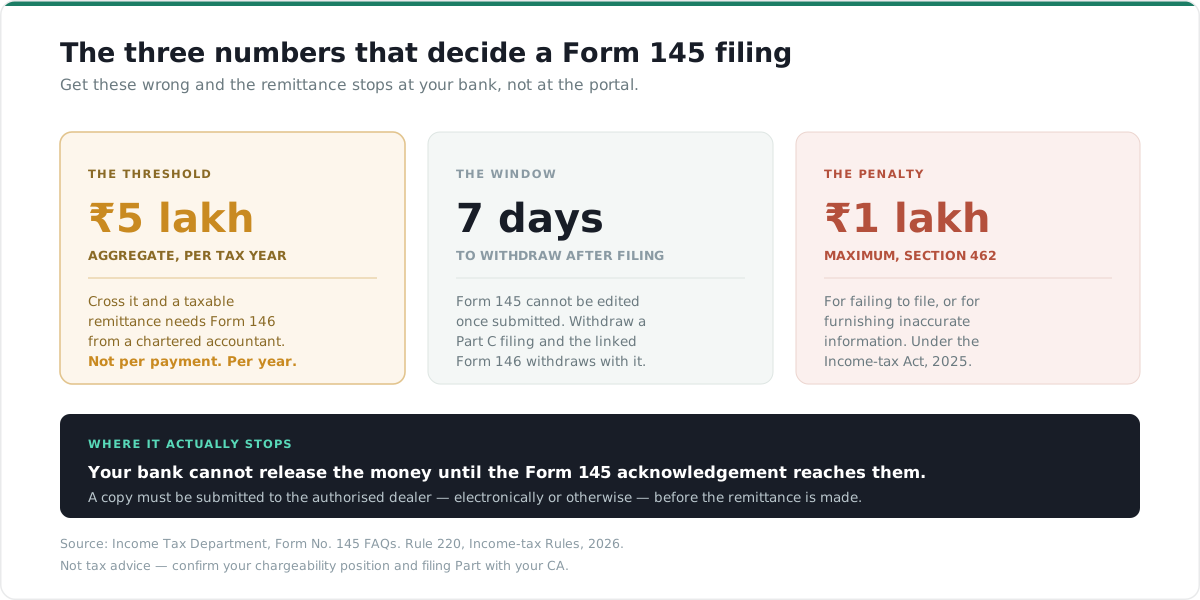
Your authorised dealer bank cannot release the remittance until the Form 145 acknowledgement reaches them. That is the chokepoint. Not the CA, not the portal, the bank, holding your payment until the paperwork lands.
Which means the remittance itself and the compliance around it are one workflow, not two. The purpose code goes on the remittance. The Form 145 nature-of-remittance field has to agree with it. The TDS has to match what the form declared. And the whole thing has to close before your vendor gets paid.
EximPe's AD1 trade accounts run outward remittances through an RBI-licensed route with the purpose code, FX rate and documentation handled inside the transaction rather than chased afterwards.
One boundary worth stating plainly: nobody can file Form 145 for you. It is a declaration by the remitter on the income tax e-filing portal, under your own PAN or TAN, e-verified with your own DSC. A payments partner can make sure the remittance side matches what you declared. The declaration itself is yours.
Related things you should be aware of
Form A2. The bank's own application-cum-declaration for buying foreign exchange. Separate from Form 145 and required on every outward remittance, our guide to Form A2 covers the purpose codes and TCS position.
Import of services and OIDAR. If you are paying for digital or online services from abroad, there may be a GST reverse-charge position alongside the TDS one. Our OIDAR checker tells you whether a service falls inside the definition.
Paying overseas suppliers for goods. A different route with different paperwork - how Indian importers pay overseas suppliers covers TT, LC and open account.
Frequently Asked Questions
Frequently Asked Questions
The form is now Form No. 145 under the Income-tax Rules, 2026. It does the same job as Form 15CA and keeps the same Part A to D structure. The portal, the process and the ₹5 lakh threshold are unchanged.
No. Form 146 - the accountant's certificate, formerly Form 15CB - is required only when you are filing Part C, meaning the remittance is chargeable to tax and exceeds ₹5 lakh during the tax year without an Assessing Officer certificate.
For the tax year, aggregated. Multiple smaller remittances to non-residents add up, and once the total crosses ₹5 lakh the next filing needs Form 146.
Yes. PAN of the remittee is not mandatory. Provide their Taxpayer Identification Number from their country of residence instead.
There is no deadline as such, but it must be submitted before the remittance leaves India, and a copy must reach your bank before they process the payment.
No. Form 145 cannot be edited once submitted. It can be withdrawn within 7 days, and withdrawing a Part C filing automatically withdraws the linked Form 146.
Up to ₹1 lakh under section 462 of the Income-tax Act, 2025, for failure to file or for furnishing inaccurate information.
No. Form 145 applies only to payments going out of India to a non-resident. Inward remittances are a different workflow entirely.
If you are an individual and the remittance does not require prior RBI approval, yes Rule 220 exempts it.