Razorpay vs EximPe for Foreign Merchants: PA‑CB Guide to Receiving Payments from India
Compare Razorpay vs EximPe for foreign merchants receiving payments from India via PA-CB, UPI, cards, and offshore settlement.
Listen to article
Audio version (0% complete)
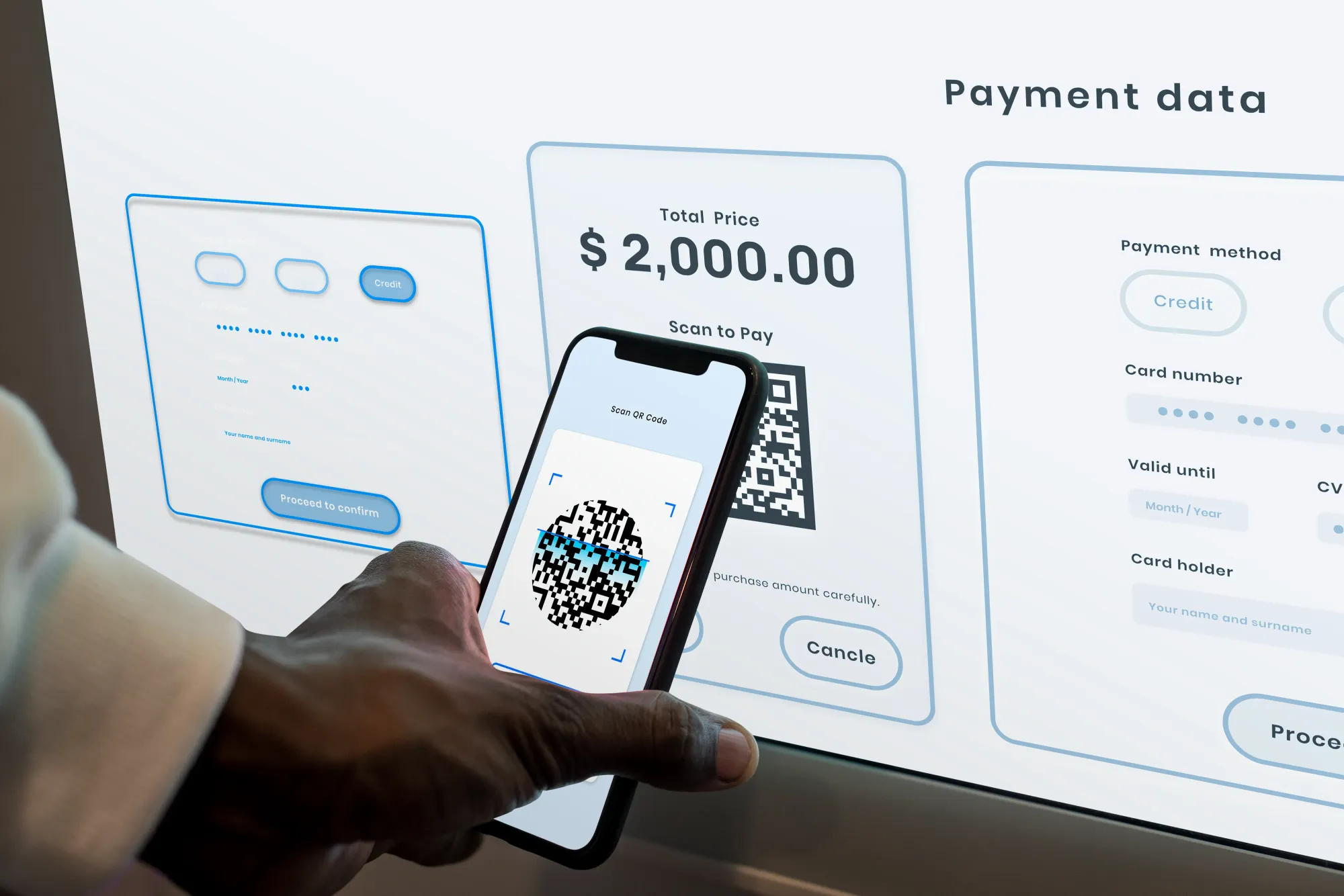
India has quietly become one of the hardest markets to “get right” for foreign merchants: UPI is now the default way to pay, RBI has introduced a dedicated Payment Aggregator – Cross Border (PA‑CB) licence, and global card‑only setups simply don’t convert well anymore. At the same time, both Razorpay and EximPe now hold RBI PA‑CB authorisation and let foreign businesses collect from Indian customers in INR and settle into overseas bank accounts without a local entity.
This article compares Razorpay vs EximPe from the viewpoint of foreign‑incorporated companies, PSPs, fintechs and platforms that want to add India as a receiving corridor—accept UPI, cards and netbanking locally, while keeping banking, tax base and entity structure outside India.
Why this comparison matters in 2026
India is now a UPI‑first market: UPI powers the majority of online transactions and has become the default payment method for everyday commerce, far surpassing credit cards in usage.
RBI has formalised this model through the PA‑CB licence, which allows authorised aggregators like Razorpay and EximPe to legally collect cross‑border payments on behalf of foreign businesses. The practical question for a global product or payments team is therefore not “can I get paid from India?” but “which PA‑CB partner best fits my stack, timelines and compliance burden?”.
India as a payments market: local rails + RBI rules
The first thing to understand is that India is structurally different from card‑first markets like the US or Europe.
- UPI accounts for about 80% of digital transactions in India, driven by mobile‑first usage and bank‑to‑bank instant transfers.
- Domestic networks like RuPay and local netbanking rails have far wider reach than international card schemes, especially outside the top urban centres.
- Credit card penetration is still relatively low, so card‑only acceptance misses a large part of the addressable customer base and often suffers from 2FA/OTP friction and higher decline rates.
On top of this local‑rail reality sits a heavy compliance stack: FEMA governs cross‑border flows, while RBI rules require purpose‑code tagging, export/import documentation and reconciliation in systems like EDPMS and IDPMS for eligible transactions. Finance teams then rely on e‑FIRA/FIRC and purpose‑coded statements as proof that inbound funds from India are compliant export receipts or service payments.
For a foreign merchant, this means that any “India collections” solution has to solve both problems: give you UPI + local rails to drive conversions, and quietly take care of the RBI/FEMA paperwork that your auditors and banks will ask for later.

What is PA‑CB (Payment Aggregator – Cross Border)?
Payment Aggregator - Cross Border is an RBI‑regulated category for entities that aggregate cross‑border current account transactions - essentially, platforms that collect money on behalf of merchants for international trade in goods and services. Instead of every exporter or foreign platform getting their own RBI authorisation, PA‑CB players sit in the middle and handle collections, settlement and compliance within defined rules.
Key rules that matter to a foreign merchant include:
- Transaction limits: PA‑CB flows operate within per‑transaction caps (for example, limits per order value) to keep them in the small‑ticket trade/current‑account bucket.
- No direct FX dealing: PA‑CB entities must route FX through authorised dealer (AD) banks and follow RBI guidance on conversion and settlement, rather than acting as unregulated FX dealers.
- Escrow and settlement segregation: Customer funds are maintained in dedicated accounts and settled to merchants according to RBI‑approved timelines and processes.
- Documentation and reporting: PA‑CBs must support export/import documentation, purpose‑code tagging and reporting into systems like EDPMS/IDPMS so that underlying cross‑border trade is properly recorded.
For foreign businesses, the practical upside is simple: if you integrate with an RBI‑authorised PA‑CB such as Razorpay or EximPe, you can accept local payment methods from Indian customers and receive funds offshore without applying for your own RBI licence.
Razorpay for foreign merchants: what it does well
Razorpay has grown as one of India’s dominant domestic PSPs, powering UPI, cards, netbanking, wallets, EMI, BNPL and subscriptions for hundreds of thousands of Indian merchants. It now also holds RBI’s PA‑CB licence, allowing it to handle both inward and outward cross‑border payments for Indian businesses and global firms tapping Indian customers.
For foreign companies, Razorpay’s “Import Stack” and international offering promise:
- The ability to accept INR from Indian customers via UPI, domestic and international cards, netbanking and other local methods.
- Settlement in foreign currencies (USD, EUR, GBP and others) to overseas bank accounts, with typical timelines around T+2 business days.
- No need for an Indian subsidiary, GSTIN or Indian bank account - Razorpay positions itself as a PA‑CB partner that lets you go live “within days” without a local entity.
Razorpay’s strengths for foreign merchants include a mature dashboard, strong developer ecosystem, high‑scale infrastructure and features like subscriptions, UPI Autopay and support for wallets such as Apple Pay or Google Pay in relevant corridors. For a foreign SaaS, content or marketplace business that wants rich payment features plus India, Razorpay offers familiarity and breadth.
EximPe for foreign merchants: built as a cross‑border PA‑CB
- EximPe comes from the opposite direction: it is a cross‑border payments infrastructure company that has secured final RBI PA‑CB authorisation specifically to power UPI‑led international collections. Licence allows it to process UPI‑led cross‑border transactions at scale and target around 1 billion dollars of such flows by 2028.
Unlike a domestic PSP retrofitting cross‑border, EximPe is designed for foreign‑incorporated merchants, PSPs and platforms: KYC is done on the foreign entity (for example a US Inc., UK Ltd or Singapore Pte. Ltd.), Indian customers pay in INR via UPI, cards, netbanking and wallets, and settlement lands directly in overseas bank accounts in 30+ currencies.
A key design choice is treating compliance as a first‑class product surface rather than a back‑office afterthought: EximPe generates per‑transaction documentation such as e‑FIRA/FIRC equivalents, purpose‑code tagged reports and data feeds that finance teams can map into their own systems and bank reporting. For global PSPs and marketplaces, that “export proof in the box” matters as much as raw payment success.

Razorpay vs EximPe: side‑by‑side comparison for foreign merchants
Dimension | Razorpay (PA‑CB / Import Stack) | EximPe (PA‑CB) |
RBI status | RBI‑authorised Payment Aggregator - Cross Border (inward and outward) | RBI‑authorised Payment Aggregator - Cross Border (inward / outward, UPI‑led cross‑border focus) |
Primary focus | India‑domestic PSP across UPI, cards, payouts, subscriptions, etc. | Cross‑border collections from India for foreign merchants and platforms |
Indian entity / GSTIN / local bank needed | For PA‑CB flows, marketed as “no local entity, no GSTIN, no local bank account required” | No Indian entity, GST or Indian bank is required for onboarding the foreign entity |
Payment methods for Indian customers | UPI, RuPay and international cards, netbanking, wallets, EMI/BNPL, subscriptions | UPI, cards and netbanking, with focus on UPI‑led flows for cross‑border |
Settlement currencies & destination | Settles INR collections into multiple foreign currencies to overseas bank accounts in ~T+2 days | Settles to overseas accounts in 30+ currencies, with UPI‑led conversion in ~T+0 to T+1 days |
Onboarding experience & time‑to‑live | Online flow plus sales/ops review, marketed as “go live in days” without entity | Foreign‑entity KYC with a faster 48‑hour onboarding window |
Compliance outputs | PA‑CB‑compliant, supports documentation and reporting for cross‑border flows | PA‑CB‑compliant, emphasises per‑transaction e‑FIRA/FIRC‑style documents and purpose‑code reports |
Fit as infra for PSPs / marketplaces | Good domestic stack plus cross‑border, good if you also want India‑domestic in one place | Purpose‑built as a cross‑border rail for foreign merchants, PSPs and marketplaces |
From a foreign product or payments team’s perspective, Razorpay feels like plugging into a large, full‑service Indian PSP that also happens to expose a PA‑CB surface to global merchants. You get breadth of features, deep domestic rails and a single vendor story if you ever move into full Indian operations.
EximPe, in contrast, is more like a specialised cross‑border rail: you drop it into your stack to turn “India” on as a corridor, get UPI and local methods, and receive structured compliance outputs without taking a view on domestic Indian acquiring or payouts. For PSPs, orchestration platforms and marketplaces, that narrower but deeper focus on cross‑border can be a better match to how they already design country‑specific processors.
When Razorpay is the right fit
There are clear situations where Razorpay is the sensible choice.
You already run domestic India on Razorpay.
If you have an Indian entity using Razorpay for domestic UPI, cards, payouts and subscriptions, extending into cross‑border collections via its PA‑CB licence keeps operations, reconciliation and vendor management in one place.
- You want one PSP for domestic + cross‑border.
Some global brands plan a deep India footprint-local pricing, local marketing, offline channels, and value having a single PSP that can handle domestic transactions, payouts and cross‑border collections from Indian customers. Razorpay’s breadth means fewer integrations to manage.
- You need advanced subscription tooling tightly integrated with India rails.
For subscription‑heavy SaaS or consumer apps that want UPI Autopay, sophisticated retry logic and domestic EMI schemes as part of a single platform, Razorpay’s subscription suite is a strong draw.
When EximPe is the better fit
EximPe shines when India is strategically important but you want to keep your structure and stack as “foreign‑first”.
- Foreign‑incorporated SaaS or marketplace, India is meaningful but not dominant.
Imagine a Delaware‑incorporated SaaS with 10–20% of revenue coming from India: big enough that UPI‑only customers matter, not big enough to justify an Indian subsidiary, GST registration and full domestic PSP integration. EximPe lets you add UPI, cards and netbanking for Indian customers and settle offshore without changing your corporate footprint.
- PSP, orchestrator or fintech adding India as a corridor.
If you are a PSP, payment orchestrator or embedded‑payments fintech, India is “just one more country” in your routing engine. You want a PA‑CB partner that looks like infra: API‑first, cross‑border‑only, with clean settlement and export documentation that your own platform can surface to downstream merchants. EximPe’s positioning and PA‑CB focus align well with that pattern.
- Marketplace onboarding foreign sellers with zero Indian footprint.
In multi‑sided marketplaces where foreign sellers serve Indian buyers, those sellers often have no Indian presence at all. EximPe can onboard the foreign seller entity directly, while still handling Indian customer payments and RBI documentation under its PA‑CB licence. That keeps India complexity on the platform side, not pushed down to each seller.
Across these scenarios, EximPe's recurring advantages are fast foreign‑entity onboarding, settlement to offshore accounts in many currencies, and automated compliance outputs that slot neatly into finance workflows.

Migration and integration patterns
Most foreign merchants do not rip out their existing global stack, they add PA‑CB rails next to it.
Pattern 1: Add UPI/INR via PA‑CB alongside cards/PayPal
A common approach is to keep your existing global PSP or PayPal integration for non‑Indian customers, and add Razorpay or EximPe as an India‑specific option. Indian users see UPI, local cards and netbanking at checkout, non‑Indian users see your usual mix of cards and wallets.
Pattern 2: Use EximPe as a processor inside a routing engine
PSPs and orchestrators can plug EximPe in as an India processor: your platform decides that “customer country = India” traffic routes to EximPe, while other traffic flows elsewhere. This fits neatly with a hub‑and‑spoke architecture where each country has a specialised provider.
Pattern 3: Use PA‑CB outputs to simplify compliance
Instead of manually chasing banks for FIRC letters and reconciling spreadsheets, finance teams rely on the PA‑CB partner’s export documentation, purpose‑code reports and EDPMS/IDPMS closure support. This reduces back‑office effort and helps during audits or funding rounds where cross‑border compliance is scrutinised.
How to choose a PA‑CB partner for India
When you sit down with your product, payments and finance leads, you can use a simple checklist:
- RBI licence status and scope - Confirm that the provider has final RBI PA‑CB authorisation, not just “in‑principle” approval, and understand whether it supports inward, outward or both.
- Payment methods - Ensure full India coverage: UPI, domestic debit/credit (including RuPay), netbanking and relevant wallets.
- Settlement currencies and timelines - Check which currencies you can receive, typical settlement cycles (T+1 vs T+2) and how bank/corridor differences are handled.
- FX transparency - Ask for clear disclosure of FX mark‑ups over interbank, per‑transaction fees and any additional bank charges, so your effective take‑rate is predictable.
- Compliance tooling - Look at how the provider delivers e‑FIRA/FIRC or equivalent export proof, purpose‑code tagging, and EDPMS/IDPMS support, and how easily this data integrates into your finance stack.
- Integration model - Review APIs, SDKs, sandbox quality, webhook options and how easily you can plug the provider into an existing orchestration or PSP stack.
- Onboarding and support experience - For foreign entities, understand the KYC process, documentation requirements, typical onboarding timelines and ongoing support SLAs.
If you want a broad, “one‑stop” Indian PSP that can also expose a PA‑CB layer, Razorpay is a good candidate. If you want a specialised cross‑border rail optimised for foreign merchants, PSPs and platforms with minimal India footprint, EximPe is built exactly for that role. Still shortlisting? The neighbouring comparisons are worth a read: PayGlocal vs EximPe, where Stripe in India works and where it doesn’t, and what’s restricted with PayPal in India.
FAQs
Frequently Asked Questions
The PA‑CB licence allows an entity to aggregate cross‑border current account transactions (for example, export-import of goods and services) and handle collection, FX conversion and settlement under RBI rules. Using a licensed PA‑CB means your flows are running on regulated rails with mandated safeguards for settlement, documentation and reporting, which reduces regulatory risk for your business.
Yes. Both Razorpay and EximPe support collections from Indian customers via UPI, cards and netbanking in INR, and then settle those funds into foreign‑currency accounts overseas. The specific currencies and corridors depend on your provider, but USD, EUR and SGD are among the common options.
Razorpay positions onboarding for foreign businesses as “within days” once KYC and technical integration are complete, leveraging its PA‑CB licence. EximPe takes roughly a 48‑hour window to complete foreign‑entity KYC and activate collections, assuming documentation is in order. Exact timelines can vary by sector, risk profile and completeness of your documents.
Under RBI rules, PA‑CB providers must support export/import documentation, purpose‑code tagging and reporting into EDPMS/IDPMS, which typically translate into e‑FIRA/FIRC‑style proofs and transaction reports for merchants. Razorpay and EximPe both provide compliance documentation, with EximPe emphasising per‑transaction export proof and detailed purpose‑code reports designed for finance and audit teams.