What Is a Merchanting Trade Transaction? The 2026 Guide to RBI Rules, FEMA Compliance & What Changed on 1 October
Merchanting trade under FEMA 2026: the six-month remittance rule, what changed on 1 October 2026, GST treatment and what your AD bank decides
Listen to article
Audio version (0% complete)
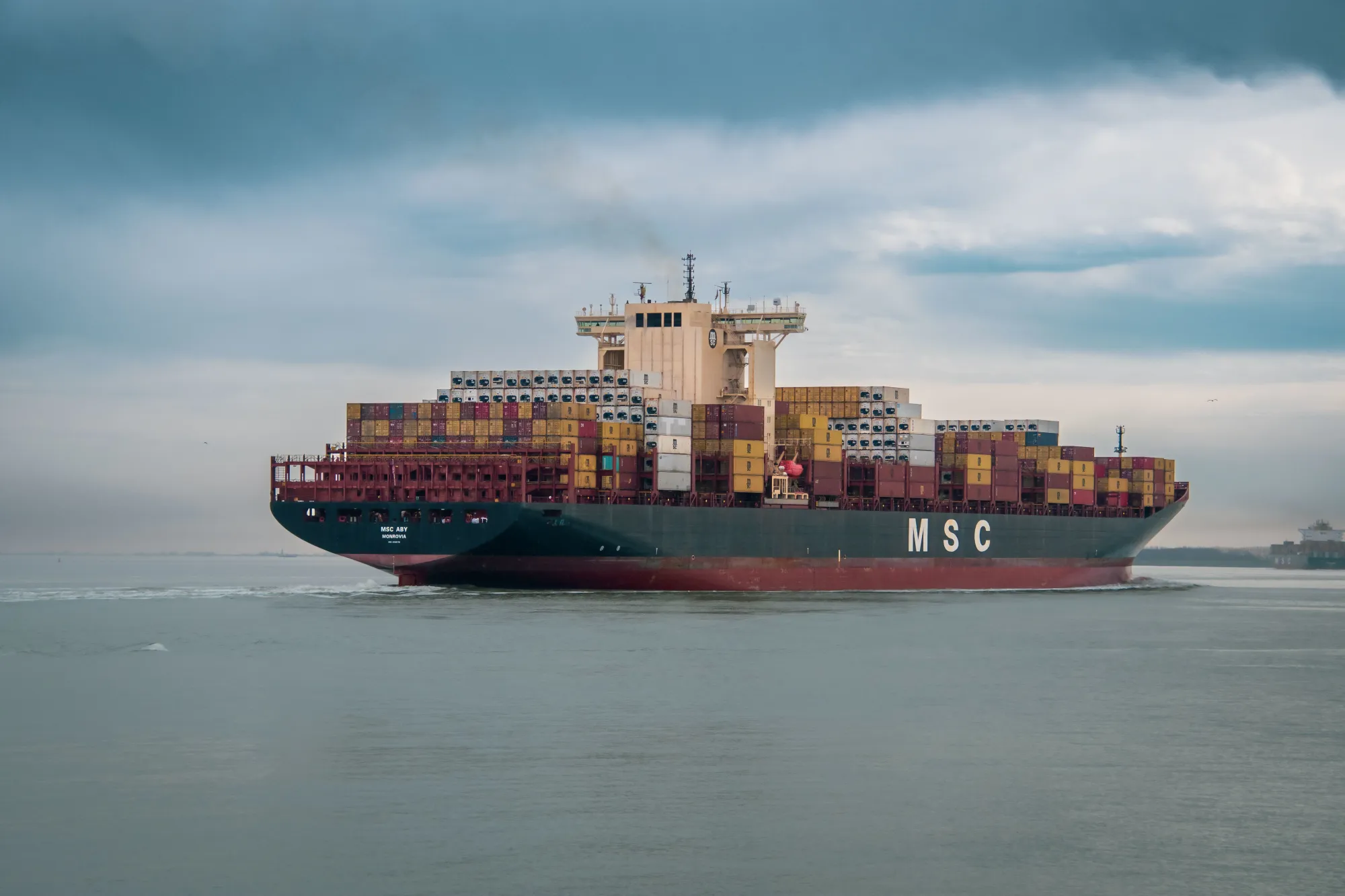
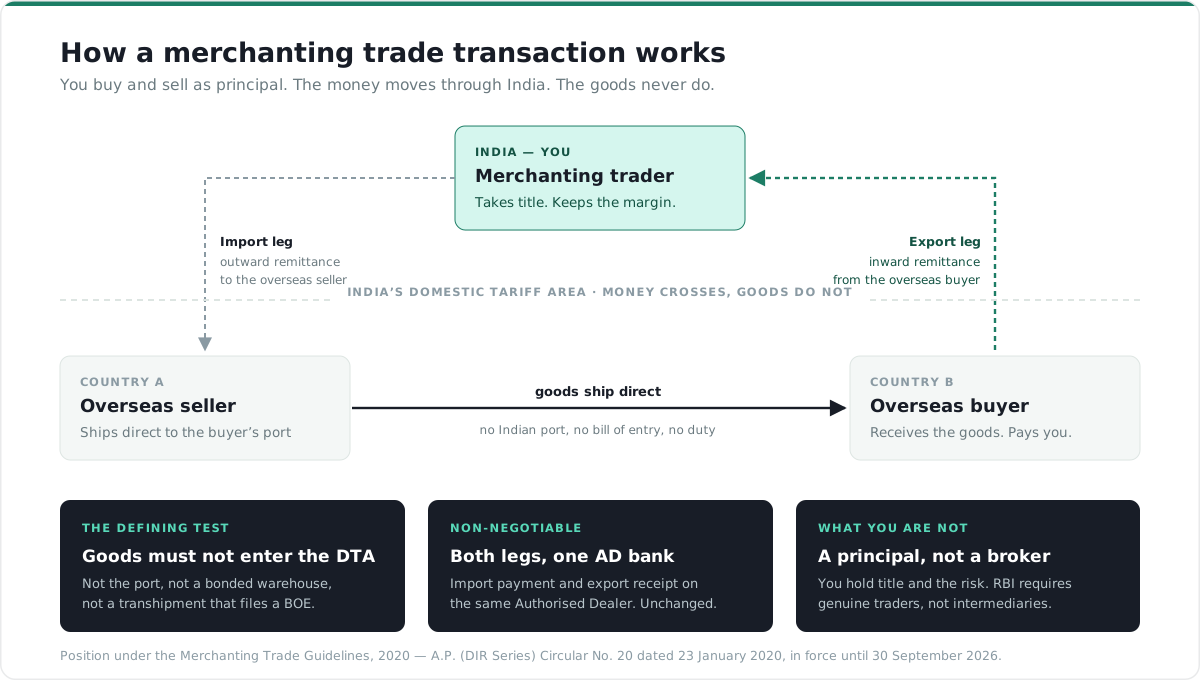
A merchanting trade transaction is a trade where an Indian entity buys goods from a seller in one foreign country and sells them to a buyer in another foreign country, with the goods shipping directly between those two countries and never entering India's Domestic Tariff Area. The Indian party is a principal, not a broker, it takes title, takes the risk, and keeps the margin between the import leg and the export leg. Merchanting trade is regulated by the Reserve Bank of India under FEMA, and both legs of the money must move through a single Authorised Dealer bank.
Now the part that matters more than the definition. The rulebook governing merchanting trade changed on 1 October 2026. On that date the Merchanting Trade Guidelines, 2020 were superseded, and six of the conditions a merchanting trader works to changed at once, including the nine-month deadline, which RBI no longer sets. Some banks have kept it in their own policy, and that is the change that matters most.
So this guide does two things. It sets out the rules for a transaction you start today. And it explains what happens to a deal that opened under the old rules and is still running.
Quick answer - find yourself here
If you have never done an MTT: you need a current account with an AD Category-I bank, a confirmed order from your overseas buyer, and goods that are freely importable and exportable under India's Foreign Trade Policy on the date of shipment. Both legs run through that one bank. A cycle you open today runs entirely under the 2026 Regulations and your bank's published policy.
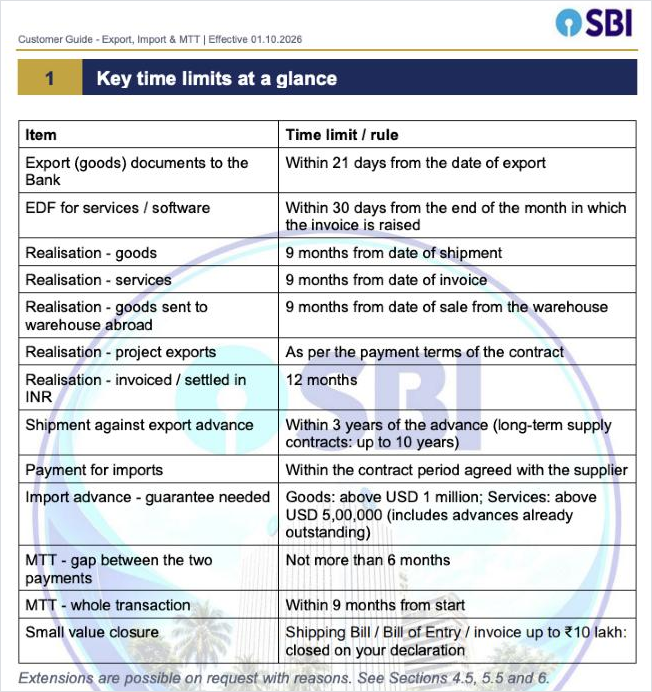
If your cycle opened before 1 October and is still running: the 2020 Guidelines were superseded on 1 October. The RBI rule now is a 6-month gap between the outward and inward remittance, or the other way round, which your AD bank can extend (Regulation 16(1)(a)). Anything in your deal that previously needed RBI approval is now handled by your AD bank (Regulation 20). Check your bank's policy: SBI's customer guide, effective 1 October 2026, still requires the whole MTT to finish within 9 months. Get your bank's treatment of the deal in writing.
If you are the CA or ops person signing off: the two things that change your file are the removal of the mandatory-profit condition and the shift of discretion from RBI circulars to your AD bank's own published SOP. Since 1 October, "what are the RBI rules" is partly the wrong question. The right one is "what does my bank's policy say."
The two rulebooks, side by side
Until 30 September 2026, merchanting trade ran on the Merchanting Trade Guidelines, 2020 - issued by RBI as A.P. (DIR Series) Circular No. 20 dated 23 January 2020.
Since 1 October 2026, it runs on the Foreign Exchange Management (Export and Import of Goods and Services) Regulations, 2026, notified vide Notification No. FEMA 23(R)/2026-RB dated 13 January 2026 and amended on 22 September 2026. RBI's Directions of 16 January 2026 (A.P. (DIR Series) Circular No. 20, RBI/2025-26/194) superseded the 2020 Guidelines, both Master Directions on export and import, and the 167 circulars listed in their Annex. The September amendment added Regulation 20, which gives AD banks the power to handle transactions undertaken before 1 October that previously needed RBI approval.
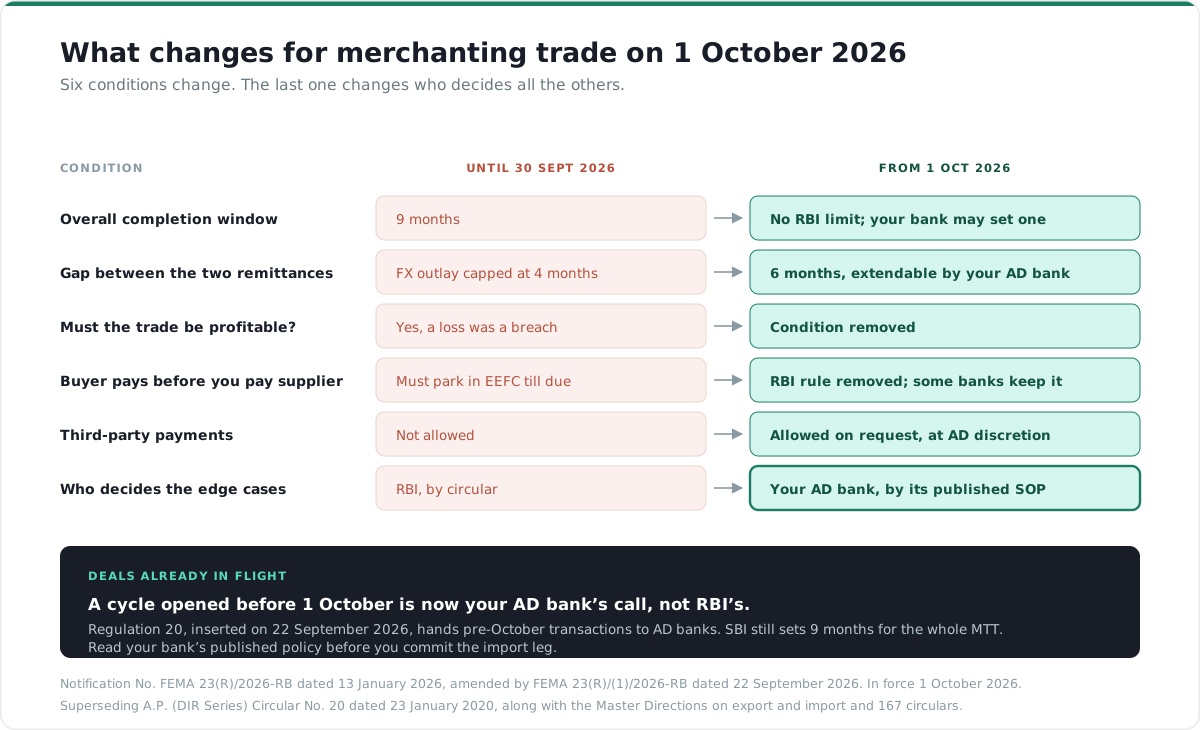
| Condition | Until 30 Sept 2026 | From 1 Oct 2026 |
|---|---|---|
| Overall completion window | 9 months | No RBI outer limit; your bank may set one |
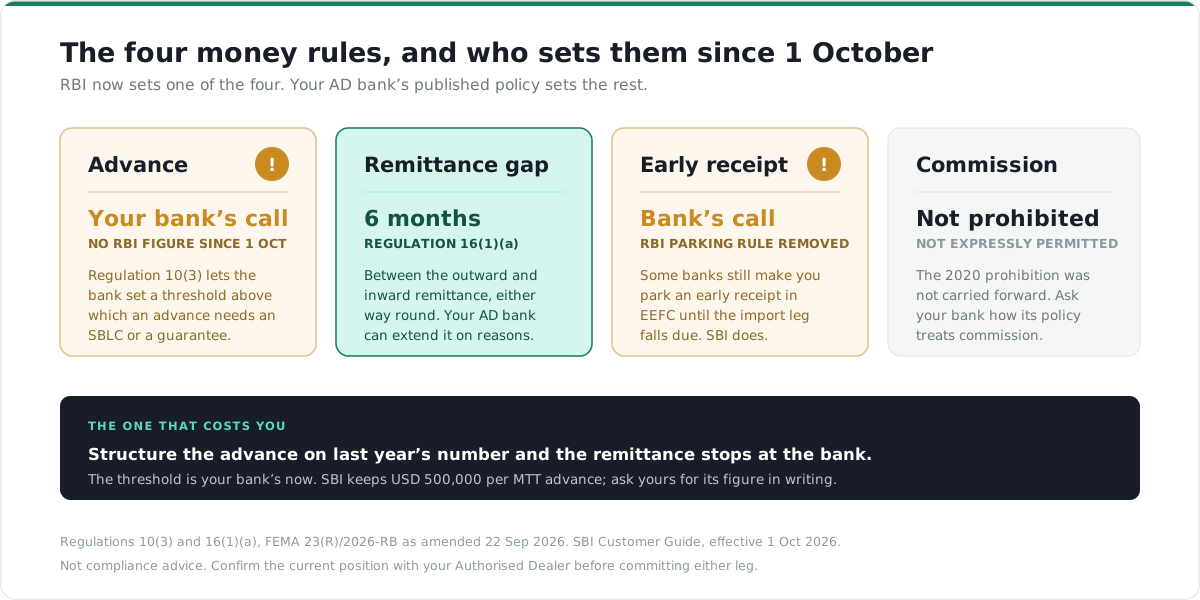
| Gap between the two remittances | Foreign exchange outlay capped at 4 months | 6 months, extendable by the AD bank on justified reasons |
| Must the trade be profitable? | Yes. A loss-making MTT was a breach | Requirement removed |
| Early inward remittance | Must be parked in EEFC or an interest-bearing INR account until the import leg falls due | RBI requirement removed; some banks keep it |
| Third-party payments | Not allowed | Allowed on request, with reasons, at AD discretion |
| Agency commission | Prohibited except in exceptional cases | Prohibition removed (though not expressly permitted either) |
| Both legs through one AD bank | Yes | Yes |
| Who decides the edge cases | RBI, via circular and Regional Office referral | Your AD bank, via its own published internal policy and SOP |
Read that last row twice. It is the change with the longest tail.
What changed on 1 October 2026
1. The 9-month clock is gone. Under the 2020 Guidelines the whole cycle, from the first of shipment, import payment or export receipt, to the last of them had to close inside nine months. The 2026 Regulations simply do not carry that condition forward. Long-cycle commodity trades that were structurally impossible to run compliantly out of India are now possible, where your bank's policy allows it.
2. The outlay rule is replaced, not extended. This is not the four-month rule with a bigger number on it. The old rule capped your foreign exchange outlay - how long your money could be out the door before it came back. The new rule is different in kind: the period between the outward remittance and the inward remittance, or the other way round, must not exceed six months, and the AD bank may extend it. It cuts both ways now. If your buyer pays you first, you are on a clock too.
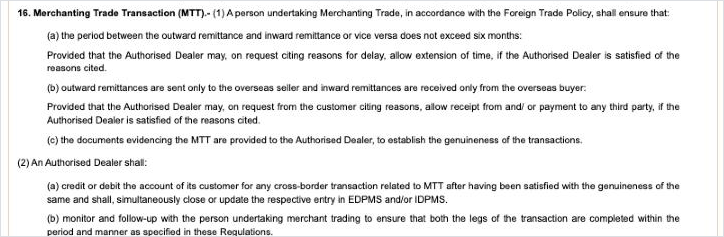
3. The profitability condition is gone. Until 30 September, RBI required the merchanting trade to result in a profit, calculated by subtracting import payments and related expenses from export proceeds for that specific transaction. That meant a genuine trade that went underwater on an FX move was, on paper, a FEMA problem. The 2026 Regulations do not carry that condition. If you have ever had to explain a thin or negative margin to a bank, you know why this matters.
4. Third-party payments are now possible. Under Regulation 16(1)(b) of the 2026 Regulations, outward remittance still goes to the overseas seller and inward still comes from the overseas buyer as the default, but the AD bank may permit payment to or receipt from a third party where you make a request with valid reasons. For anyone trading through group entities or regional treasury structures, this is the change that unlocks real structures.
5. Discretion moves from RBI to your bank. The 2026 framework requires AD banks to frame detailed internal policies and SOPs for handling and reporting these transactions, publish them on their websites, define who approves what, and run an escalation and appeal route for customer grievances. Banks are also barred from levying penalties for regulatory delays, and must route references to RBI through the PRAVAAH portal.
Note: RBI has stopped writing the rulebook and started writing the rules about who writes the rulebook. The practical consequence is that since 1 October, two merchanting traders with identical transactions at two different banks can get two different answers, and both are compliant. Pick your AD bank on the strength of its trade desk, not its FX card rate.
What a merchanting trade transaction actually is
Biggest misconception: merchanting trade is not drop-shipping with a bigger invoice, and it is not brokerage. In an MTT you buy the goods. Title passes to you. If the buyer walks, you are holding cargo in a foreign port. RBI's position under the 2020 Guidelines is explicit that merchanting traders must be genuine traders of goods and not mere financial intermediaries, and that AD banks must satisfy themselves you can actually perform the obligations under the order.
The defining test is physical, not financial: the goods must not enter India's Domestic Tariff Area. Not the port, not a bonded warehouse, not a transhipment stop that gets recorded on an Indian bill of entry. Cross that line and it stops being an MTT and becomes an import followed by an export, with the duty, the clearance and the paperwork that come with both.
One useful relaxation people miss: since the 2020 circular, goods under an MTT may undergo processing or value addition abroad, if the AD bank is satisfied with the documentary evidence. The earlier 2014 circular prohibited any transformation. If you were told years ago that MTT goods must ship untouched, that advice is a decade stale.
The failure modes that actually bite
These are the six that do the damage.
The bill of lading shows an Indian port. Your load port and discharge port must both be foreign. A routing that transhipments through Colombo is fine. One that transhipments through Nhava Sheva and generates Indian customs documentation is not. Check the routing before the booking is confirmed, not when the BL lands in your inbox.
You opened the import leg at one bank and the export leg at another. Both legs must go through the same AD bank. This trips up traders who have a good FX rate at one bank and a good credit line at another. There is no fix after the fact, you are asking your bank to regularise a transaction it cannot see half of.
The buyer paid you first and the money sat in the current account. Until 30 September, if export proceeds arrived before you paid the supplier, they had to be parked in an EEFC account or an interest-bearing INR account until the import leg fell due. The 2026 Regulations dropped that requirement, but your bank may not have: SBI's customer guide still keeps an early export-leg receipt in an EEFC or interest-bearing account, marked for the import payment. What applies everywhere is the six-month gap in Regulation 16(1)(a), and it runs both ways: if your buyer pays first, the clock to pay your supplier starts then.
One-to-one matching in EDPMS and IDPMS. Your AD bank enters both legs in EDPMS and IDPMS and closes or updates the entries once the receipt and the payment are both made (Regulation 18(1)(l)). It must monitor open entries and follow up with you for documents (Regulations 16(2)(b) and 18(1)(f)). An unmatched entry is not a filing nuisance. It is the first thing your bank will chase.
The caution list, and what replaced it. Under the 2020 Guidelines, merchanting traders with outstandings of 5% or more of their annual export earnings were liable for caution-listing. The 2026 Regulations do not carry that forward. On the export side, Regulation 13 now applies: if export proceeds stay unrealised for more than one year beyond the due date, or any extension your AD bank allowed, you may export further only against full advance or an irrevocable letter of credit. Exporters already on the Caution List on 30 September 2026 stay on it until they are removed. SBI's guide applies the same idea to MTT: a trade not completed in time means future MTTs need a standby LC or guarantee for the import advance, and full advance or an irrevocable LC for the export leg. Softer label, similar bite.
Agency commission, paid quietly. Until 30 September it was prohibited except in exceptional circumstances, and then only after the MTT was complete and only if paying it did not push the trade into a loss. The 2026 Regulations dropped the prohibition, but do not expressly permit it either. Do not budget for it until your bank's SOP says so in writing.
The step-by-step process
Before step 1 - the prerequisite that causes most of the failures. You need a confirmed order from your overseas buyer before you commit the import leg. This is not a commercial best practice, it is the structural assumption the entire framework rests on. It is why RBI permits a letter of credit to your supplier against a confirmed export order, and it is why banks ask for both contracts together. Commit the import leg on a verbal indication from the buyer and you have manufactured your own timeline problem.
- Sign both contracts. Purchase contract with the overseas seller, sales contract with the overseas buyer. Back to back, with the delivery instruction in the purchase contract naming the buyer's port.
- Confirm the goods are FTP-eligible. They must be permitted for both import and export under India's Foreign Trade Policy on the date of shipment. Restricted items need the licence; prohibited items are out regardless of margin.
- Open the file with one AD bank. Give them both contracts up front. Ask for their merchanting trade SOP in writing. Regulation 19(4) requires them to publish the policy and the main features of the SOP on their website.
- Arrange the shipment foreign-to-foreign. Verify load and discharge ports on the draft BL. If you are using a switch bill of lading to keep your supplier and buyer apart, tell the bank now, not later.
- Handle the import leg payment. Trade credit for the import leg follows your AD bank's policy; confirm the terms before you commit. If you are paying an advance, ask for your bank's threshold. The 2026 Regulations set no RBI figure; Regulation 10(3) lets your AD bank specify thresholds above which an advance needs a standby letter of credit or a guarantee. SBI's guide keeps USD 500,000 for an MTT import advance.
- Receive the export leg proceeds. Match against the import leg. Close the EDPMS and IDPMS entries.
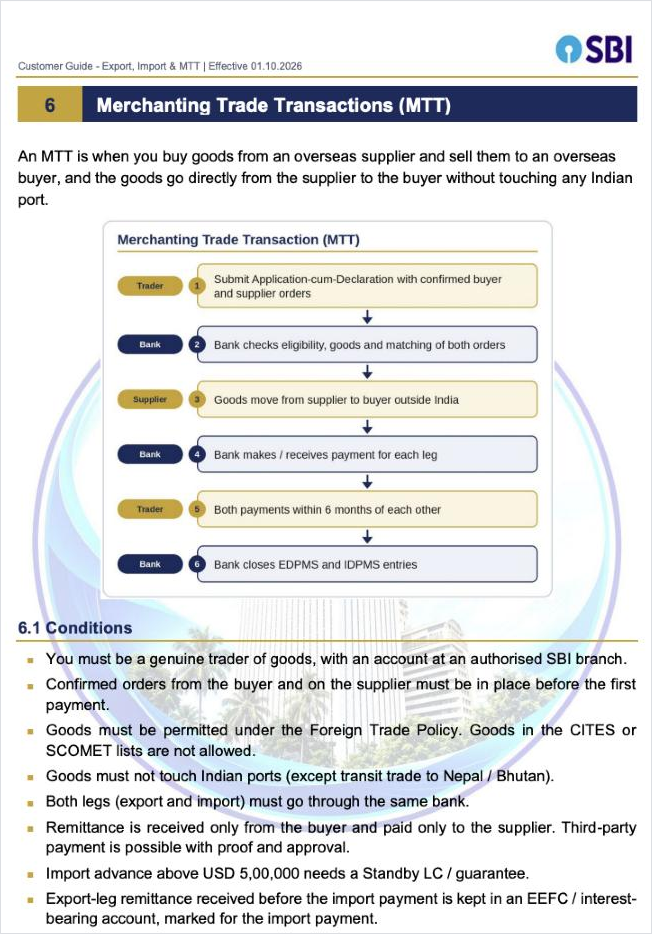
Documents your bank will ask for: purchase contract, sales contract, commercial invoices for both legs, the foreign-to-foreign bill of lading or airway bill, packing list, and insurance documents. Where originals are unavailable, non-negotiable copies authenticated by the bank handling the documents are acceptable.
The single most common rejection reason: a transport document that does not prove foreign-to-foreign movement on its face. Everything else can be explained. That cannot.
Deals that opened before 1 October
This section covers deals that opened before 1 October and are still running.
If you shipped in August 2026 on a 9-month cycle, that cycle closes in May 2027. It spent its first weeks under the 2020 Guidelines and runs the rest under the 2026 Regulations. The amendment of 22 September 2026 answered the main question: Regulation 20 gives AD banks the power to handle transactions undertaken before 1 October 2026 that previously needed RBI approval under the 2015 Regulations or the two Master Directions.

| Situation | What's clear | What isn't |
|---|---|---|
| Cycle opens and closes before 30 Sept | 2020 Guidelines apply throughout | Nothing |
| Cycle opens after 1 Oct | 2026 Regulations apply throughout | How your specific bank's SOP reads |
| Cycle opened before 1 Oct, still running | Your AD bank handles anything that previously needed RBI approval (Regulation 20) | How your bank's policy treats the deal: the old rule, the new one, or a regularisation |
RBI has addressed it by handing the decision to your AD bank, and banks must publish their policies under Regulation 19(4). SBI's, for one, still sets 9 months for the whole transaction. Read your bank's policy for how it treats open deals.
What to do about it: for any cycle that opened before 1 October and is still running, get your AD bank's treatment of it in writing. Not a phone call with the relationship manager, an email you can put in the file. Banks have unusual discretion here, and an assumption you made in August is worth confirming before the second leg moves.
GST on merchanting trade
No GST. Paragraph 7 of Schedule III of the CGST Act, 2017 treats the supply of goods from a place in the non-taxable territory to another place in the non-taxable territory, without the goods entering India, as neither a supply of goods nor a supply of services. It was inserted by Section 32 of the CGST (Amendment) Act, 2018, and came into force 1 February 2019 via Notification No. 2/2019-Central Tax dated 29 January 2019. Two dates sit close together there and get conflated, the notification is dated January, the provision takes effect in February.
The trap sits on the other side of that exemption. Because the transaction is outside GST's scope entirely, you cannot claim input tax credit on expenses attributable to it, bank charges, professional fees, and the rest. Report these in the exempt / non-GST supply section of your returns. Traders who model MTT margins on their domestic ITC assumptions find the gap at year end, not at transaction time.
Related structures you will be asked to compare
High sea sales. Frequently confused with merchanting trade, and the confusion is expensive. In a high sea sale the goods are already heading to India and title transfers in transit, before customs clearance, the goods do enter Indian territory and someone files a Bill of Entry. In an MTT they never do. The duty and GST consequences diverge completely, and so does who carries the reporting obligation.
Switch bill of lading. The instrument that keeps your supplier and your buyer from discovering each other, by replacing the original BL with a second set naming you as shipper. Legitimate and common in merchanting trade, and the document most likely to attract scrutiny from your bank's trade desk, because it changes what the transport document says on its face. Ask your AD bank how they treat it before the booking, not after.
EEFC account. Until 30 September, this was where an early export receipt had to sit. RBI no longer requires it, though some banks still do, and it remains the cheapest way to hold foreign currency against a known outflow rather than converting twice, see our explainer on the EEFC account. Import-leg financing also differs from a straight import, which our guide to payment methods in import trade covers side by side.
When the export leg lands
Once your buyer's payment arrives and both legs match, the trade is done, but the money still has to reach you cleanly, and the FX spread on the export leg is where a large share of a thin merchanting margin quietly disappears. EximPe's global trade account handles inward trade receipts with online regularisation and e-BRC generation, at 50% better FX margins than a standard bank counter.
One limit worth stating plainly, because it decides whether this is relevant to you: both legs of a merchanting trade must run through the same AD bank, and the 2026 Regulations did not relax that. You cannot bring in a separate provider for the export leg alone mid-cycle, the account has to be the AD relationship you run the whole transaction on, set up before the first leg moves.
Frequently Asked Questions
Frequently Asked Questions
An Indian company buys goods from a seller in one foreign country and sells them to a buyer in another, shipping the goods directly between those two countries. The goods never enter India. The company's profit is the margin between what it paid and what it received.
Since 1 October 2026 it is governed by the Foreign Exchange Management (Export and Import of Goods and Services) Regulations, 2026, notified vide Notification No. FEMA 23(R)/2026-RB dated 13 January 2026 and amended on 22 September 2026. Until 30 September 2026 it was governed by the Merchanting Trade Guidelines, 2020 (A.P. (DIR Series) Circular No. 20 dated 23 January 2020).
Not as an RBI rule. It applied until 30 September 2026, and the 2026 Regulations do not carry it forward; what they set is a six-month cap on the gap between the outward and inward remittance, which your AD bank can extend (Regulation 16(1)(a)). Your bank can still set an outer limit in its own policy, and SBI's customer guide does: 9 months for the whole transaction. Check yours.
The 2026 Regulations set no RBI figure. Regulation 10(3) lets your AD bank specify thresholds above which an advance needs a standby letter of credit or a guarantee, so the number is your bank's call. SBI's customer guide keeps USD 500,000 for an MTT import advance. Confirm your bank's threshold before you structure the payment.
No. Paragraph 7 of Schedule III of the CGST Act keeps it outside GST entirely, effective 1 February 2019. You also cannot claim input tax credit on related expenses.
No. Both legs must be routed through the same Authorised Dealer bank, and this has not changed under the 2026 Regulations.
Not since 1 October 2026. The 2020 Guidelines required a profit after subtracting import payments and related expenses from export proceeds; the 2026 Regulations do not carry that condition.
Yes, since the 2020 circular, subject to your AD bank being satisfied with the documentary evidence and the bona fides of the transaction. The earlier 2014 rules prohibited any transformation.